
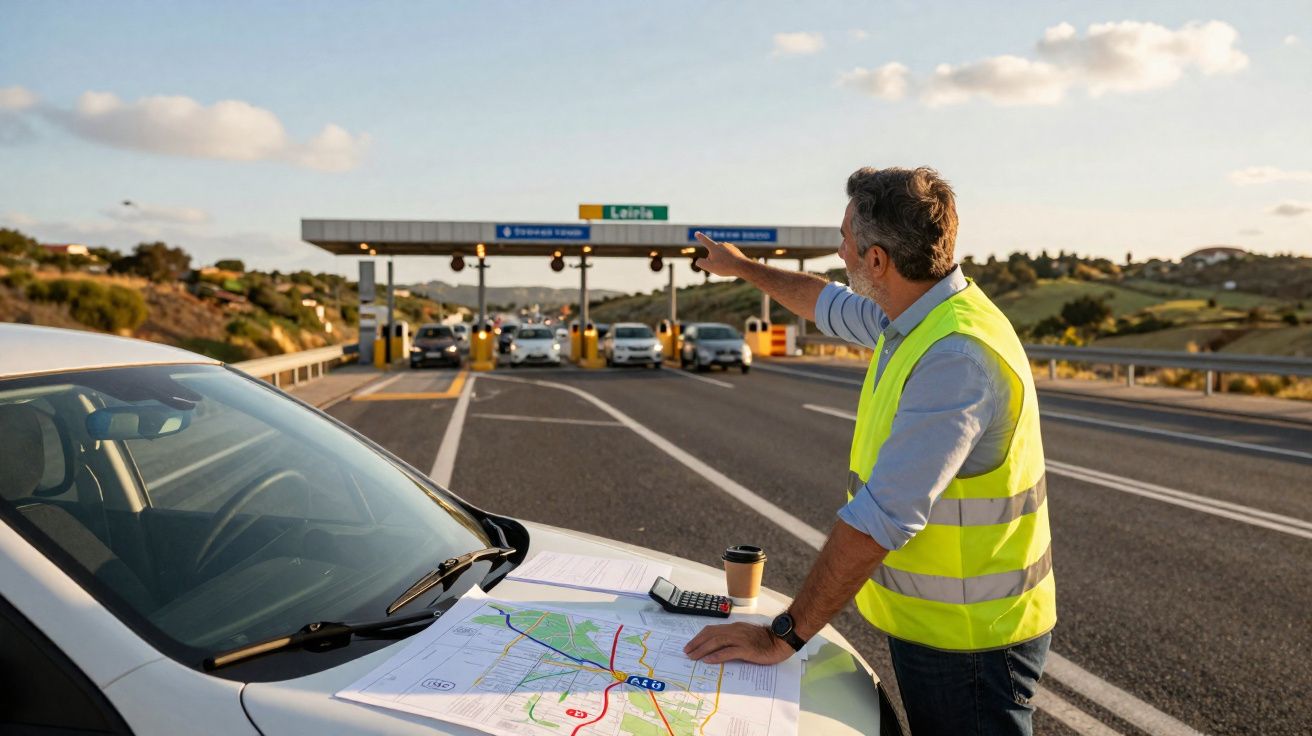
After toll exemptions ended on sections of the A8 and A19 on 16 February, the Intermunicipal Community of the Leiria Region (CIMRL) is now preparing a mechanism to ensure continued support for communities affected by Storm Kristin.
The move follows notification from Infraestruturas de Portugal that the full restoration of traffic conditions on the alternative routes is only expected to be completed by the end of June. Until then, several constraints will remain on roads across the region.
According to Jorge Vala, President of the CIM of the Leiria Region, “it is up to us to guarantee a solution for citizens, workers and businesses”, stressing that there are still “many collapsed embankments” and that the alternative roads do not offer adequate levels of safety or traffic flow.
Among the main critical points identified are the EN 242, linking Marinha Grande to Leiria, and the IC2, where works are under way to stabilise slopes, reinstate road surfaces and clear forestry debris.
Paulo Batista Santos, the CIMRL’s First Executive Secretary, said the regulation being drafted will allow residents and companies to submit toll invoices to the organisation for reimbursement of the amounts paid.
This approach is already being used in specific situations, such as for military personnel involved in operations supporting local populations, who were provided with Via Verde equipment to avoid direct charges. The proposal includes compensating tolls on the A8, between the industrial zones of Marinha Grande and Pousos (Leiria), and on the A19, between the Azoia and São Jorge junctions.
CIMRL: Financial impact could exceed three million euros
According to the association, estimated costs are around €700,000 for the A19 and could exceed €2.5 million for the A8. The CIM of the Leiria Region considers it incomprehensible that these costs are not covered by the Government, warning of a significant impact on municipal budgets.
The intermunicipal regulation sets out an exceptional, temporary compensation scheme running until 30 June 2026, with the financial burden to be shared between CIMRL municipalities, the concessionaires and the State.






Comments
No comments yet. Be the first to comment!
Leave a Comment