
Sweat, fragrance and steamy bathrooms all take their turn - and jewellery is often the thing that comes off worst.
You don’t need strong chemicals or trial-and-error to get the shine back. With a few everyday cupboard basics, you can brighten silver quickly at home.
Why silver darkens
That greyish, smoky layer on a ring isn’t grime. It’s silver sulfide, formed when silver reacts with tiny amounts of sulphur found in the air and on everyday materials such as skin, wool, rubber and certain cosmetics. Warmth and moisture make the reaction happen faster. The upside is that tarnish is only a surface layer, so you can remove it without wearing away the metal.
"Think of tarnish as a reversible coat on top of silver, not damage inside the metal."
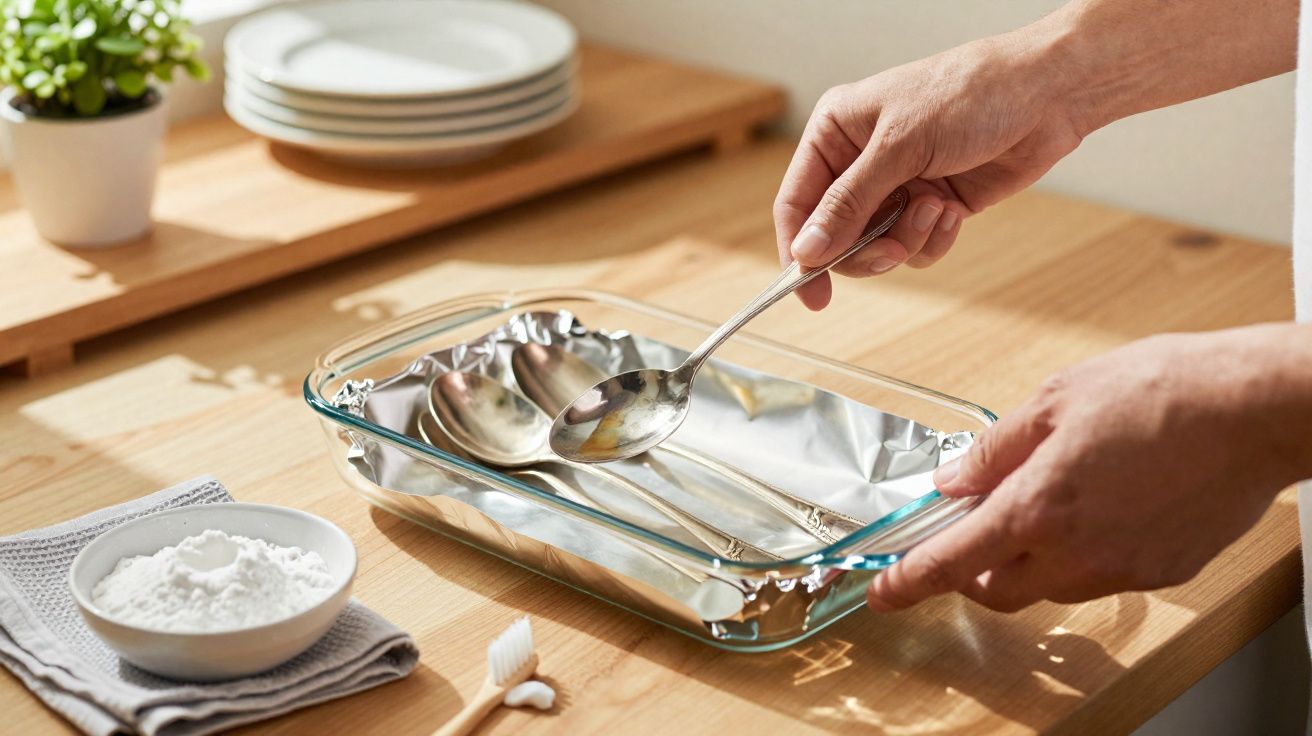
The kitchen-foil bath for de-tarnishing silver jewellery
This approach relies on a mild electrochemical exchange: the aluminium foil attracts the sulphur, and the silver releases the darkened layer so its natural colour returns.
What you need
- A glass or ceramic bowl
- Aluminium foil to line the bowl (shiny side facing up)
- Hot water (just off the boil)
- 1 tablespoon of bicarbonate of soda per litre of water
- 1 tablespoon of table salt per litre of water
- A soft microfibre cloth
How to do it
- Line the bowl with foil, then set the jewellery in so each piece is touching the foil.
- Add the bicarbonate of soda and salt, then pour in enough hot water to fully cover the items.
- Leave for 5–10 minutes. A slight sulphur smell (a bit like egg) can appear as the sulphur transfers to the foil.
- Rinse under cool water and dry immediately with a soft cloth.
"Heat, foil, salt and baking soda team up to convert silver sulfide back into silver-no scrubbing, no micro-scratches."
For chains, nudge them once or twice so different links make contact with the foil. If the tarnish is heavy, mix a fresh solution and run the bath again. For jewellery with hinges, moving parts or glued elements, keep the soak brief.
Toothpaste for stubborn crevices
Standard white toothpaste (no gels and no microbeads) works as a gentle, low-grade polish. Put a pea-sized amount on a soft toothbrush dampened with water. Lightly work it into fiddly spots such as clasps, filigree and hallmark stamps. Rinse thoroughly with lukewarm water and dry completely. Avoid whitening toothpastes as they can be overly abrasive.
A gentle soapy rinse for frequent upkeep
For regular weekly maintenance, add a few drops of neutral washing-up liquid to warm water. Soak the jewellery for 10 minutes, then use a soft brush to loosen skin oils and traces of hand cream. Rinse and pat dry. This simple habit helps slow tarnish and preserves shine between deeper cleans.
What to avoid, always
- Bleach, ammonia and aggressive solvents, which can attack the metal and any surface finishes.
- Abrasive pads, kitchen roll and harsh polishing pastes, which can scratch and soften engraved details.
- Long soaks for plated jewellery, as too much exposure may strip a thin silver layer.
- Boiling water on items with glued components or shell inlays, because adhesives and organic materials can fail.
"When in doubt, choose the least aggressive method first. You can always repeat; you can’t un-scratch."
Care for gemstone or pearl pieces in silver settings
Silver set with porous or delicate materials needs more caution. Don’t soak opal, turquoise, lapis, malachite, pearls, coral or amber. Instead, wipe only the silver areas with a barely damp microfibre cloth, then dry at once. If dirt is packed around claws, use a soft brush dipped in soapy water while keeping moisture away from the stone. If a setting seems loose or the piece feels delicate, take it to a jeweller for a quick steam clean and inspection.
Storage that slows future tarnish
- Give silver a quick wipe after each wear to remove sweat and sun cream.
- Store pieces separately in soft pouches or fabric-lined boxes.
- Use anti-tarnish strips or silica gel packets in jewellery drawers.
- Keep silver away from rubber bands and wool, which can release sulphur.
- Put jewellery on last, once perfume and lotions have dried.
Quick comparison of methods
| Method | Best for | Time | Risk level |
|---|---|---|---|
| Foil + baking soda bath | Heavily tarnished plain silver | 10–15 min | Low, avoid for glued stones |
| Toothpaste spot polish | Crevices and detailed reliefs | 5–10 min | Medium, can scratch if overdone |
| Soapy warm rinse | Weekly upkeep and light film | 10–12 min | Very low |
| Pro jeweler clean | Set pieces, antique or fragile items | Varies | Low with the right tools |
A quick routine you’ll actually keep up
Add a repeating reminder in your calendar: one short clean each month. Doing this prevents thick tarnish from building up, which means less time spent on bigger fixes. If you’re cleaning heirlooms, take photos beforehand to monitor condition - particularly on antique finishes you want to keep.
Why this is trending now
As silver prices have risen, more people have turned to vintage shops, bringing home older pieces with a natural patina. At the same time, the foil-bath hack has resurfaced on social media. It’s popular because it leans on chemistry rather than hard rubbing, helping protect plating and fine engraving that abrasive pastes can blur.
Extra tips worth knowing
- Your skin chemistry plays a part. High-sulphur diets, some medications and humid coastal air can make silver tarnish quicker, so increase cleaning frequency if needed.
- Look at the hallmarks. “925” or “sterling” indicates solid silver. “HGE”, “EPNS” or “plated” pieces should be treated more gently and for less time.
- Ultrasonic cleaners can be fine for plain silver but risky for many stones. Never use them with opal, emerald, pearl or glued settings.
- Keep an anti-tarnish cloth in your drawer for a fast wipe before storing items.
- When travelling, pack silver in a small zip bag with an anti-tarnish strip, and don’t store it in hotel bathrooms.
If you’re selling pieces or handing them on, include a simple care card. Record what method was used, the cleaning dates, and any sensitivities (plated, glued stones, enamel). That note helps the next owner keep the finish stable and reduces the chance of accidental damage.
Wondering about value? For everyday items, tiny changes in weight won’t affect price much, but preserved surface detail will. Crisp stamps, sharp edges and intact plating tend to matter more for resale than shine alone. Careful cleaning keeps those features safe while restoring the brightness you notice most when the piece is on your hand.



Comments
No comments yet. Be the first to comment!
Leave a Comment