
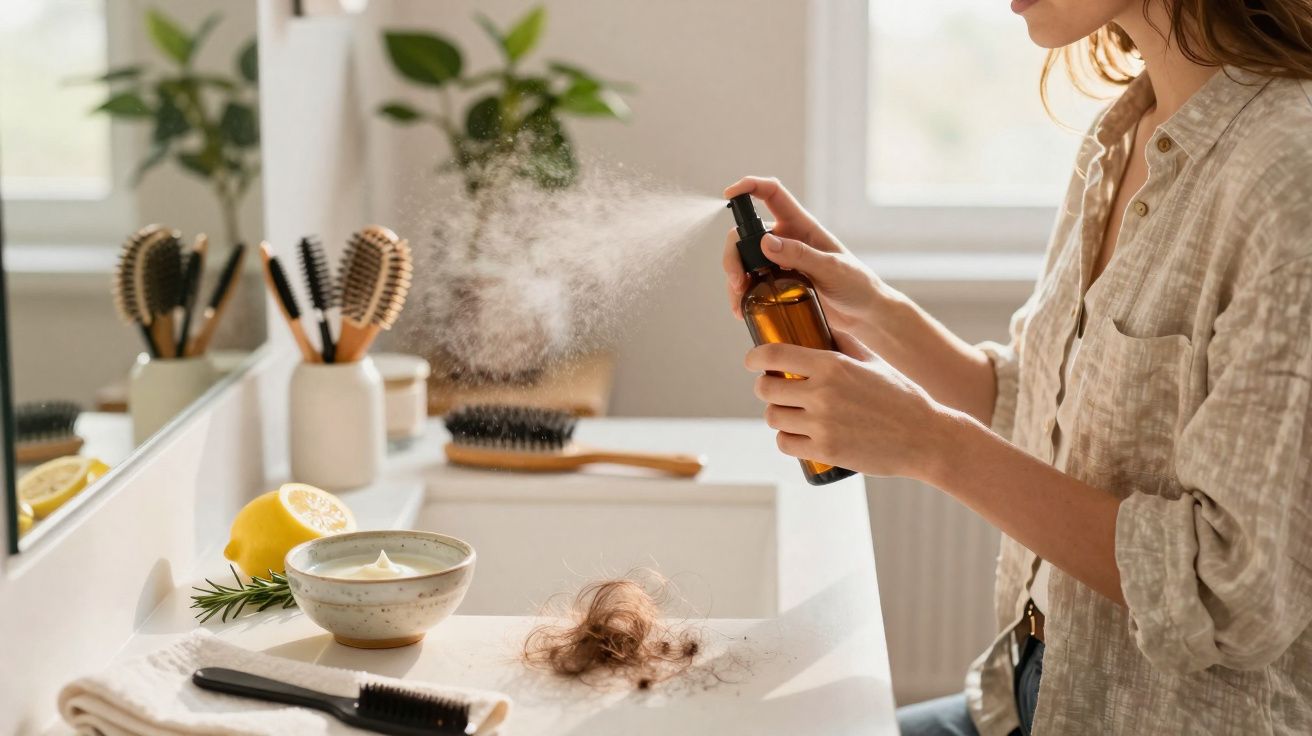
Hairbrushes pick up far more than loose strands. Natural oils, styling sprays, dust and lint combine into a dull grey coating that clings to the bristles and tugs at your scalp. Dropping a brush into water sounds sensible, but it can ruin handles, loosen padded bases and warp wooden backs. In salons, hairdressers use a faster, drier approach.
Picture a quiet studio: music turned down, the floor dusted with freshly cut ends, and a senior stylist lining up a row of weary-looking brushes on the back counter. She doesn’t plunge them into a sink. Instead, she reaches for an amber spray bottle with a faint tea tree-and-vinegar scent, gives each brush a couple of crisp mists, then works the base with a tiny toothbrush like she’s buffing leather. The grey film lifts in soft rolls. A quick wipe with a microfibre cloth, a short blast of cool air from the dryer, and the bristles shine again as though they’ve never met hairspray. No soaking. No swelling. No fuss. One bottle, about ten minutes, and every tool looks spotless-made with what you likely already have in the cupboard.
The grime your brush hides - and why hairdressers never soak brushes
If you inspect a well-used hairbrush, you’ll often spot a pale ring at the base of the bristles. That “halo” is sebum mixed with styling residue and everyday dust. Leave it there and it increases drag, steals shine and carries odour from roots to ends.
A long soak feels like the obvious fix, but it causes real damage: wooden handles can swell, glue can lift, and water can creep under the cushion of paddle brushes. Hairdressers don’t soak brushes - ever. In a salon, tools have to last and perform daily, so softening the base or warping the bristle bed isn’t a risk worth taking.
There’s a practical science issue too. Oils don’t shift easily with plain water; they cling to nylon and natural boar bristles like a thin varnish. A water bath often just redistributes the film. A lightly acidic spray can break the bond quickly, and a small amount of gentle surfactant helps the loosened residue lift so you can wipe it away-without full immersion.
Hairbrush cleaning, salon-style - the natural mixture hairdressers use (no soaking)
In many salons, the go-to solution is a simple spray you can mix at home:
- 1 part distilled white vinegar
- 1 part warm water
- 1 teaspoon mild, plant-based shampoo
- 5–6 drops tea tree oil
Pour everything into a spray bottle and shake well. First, remove trapped hairs with a tail comb. Then mist both sides of the bristles, leave it for 60–90 seconds, and scrub along the base and rows using a soft toothbrush. Wipe down with a microfibre cloth, then finish with a brief blast of cool air. Done: clean, bright bristles without soaking.
A few common mistakes are easy to avoid:
- Using too much essential oil can leave its own residue, so keep the drops minimal.
- Very hot water can loosen adhesive in padded brush bases-warm is plenty.
- With cushion brushes, don’t spray straight into vent holes; mist the bristles and work in from the sides.
If you’ve ever had a favourite boar-bristle brush turn cloudy and sticky overnight, this is the straightforward way to bring it back.
How often matters less than the rhythm you can actually keep. Weekly is ideal, but realistically most people won’t manage that. A quick two-minute clean after a heavy styling day beats an occasional deep clean that risks damage.
“Vinegar, a touch of gentle shampoo, and tea tree - that combo cuts through product, kills the stink, and keeps the pad dry,” says Mia, a Shoreditch stylist who cleans forty-plus brushes a week.
Key pointers to remember:
- Ratio to remember: 1:1 vinegar to water, plus a teaspoon of mild shampoo and a few drops of tea tree.
- Best tools: tail comb to lift hair, soft toothbrush for the base, microfibre cloth for wiping.
- Drying trick: a 30‑second cool blast helps protect wood and cushions from creeping moisture.
- For stubborn hairspray: mist again, wait another minute, then scrub across the rows on a diagonal.
- Sensitive to scent? Swap tea tree for eucalyptus, or use a single drop of lemon.
Why this mix works - and which brushes benefit most
Vinegar is mildly acidic, which helps loosen mineral grit that binds oils to the bristles and softens the tackiness of hairspray. The small amount of shampoo behaves like a gentle “lifter”, surrounding the loosened grime so it can be wiped away cleanly. Tea tree adds a fresh, clean scent and helps keep unpleasant odours at bay. What surprises most people is the speed: mist, wait, scrub, wipe, finished.
This no-soak method suits several brush types particularly well:
- Boar-bristle brushes: they dislike baths because water can swell the base and the bristles take ages to dry.
- Paddle brushes with cushions: keeping moisture out of the pad protects the structure and glue.
- Round ceramic barrels: spraying and wiping avoids trapped water under vents and reduces the risk of rusty interiors.
- Nylon detanglers and wet brushes: they tolerate the routine well and clean up quickly.
You’ll feel the difference immediately. A clean brush glides rather than squeaks and snags. Blow-dries tend to set faster because residue isn’t competing with the heat. Your scalp can feel lighter, and the bristles look refreshed. Share the trick and someone will likely message you the next morning with a “before and after” photo.
One extra habit that helps: clear the brush of hair after every use, not just on cleaning days. Less trapped hair means less lint and product build-up, and it reduces how hard you need to scrub at the base later.
Your brush, your ritual - keeping it fresh without the faff
Routines only stick when they’re quick and mildly satisfying. Store the spray near your hairdryer, keep the toothbrush with your tail comb, and leave a folded microfibre cloth by the mirror. Two mists, a short pause, a light scrub-it’s surprisingly calming.
Clean your brush on days you’ve used hairspray or dry shampoo; skip it when you’ve gone product-free or simply air-dried. If you prefer a softer night-time scent, you can swap tea tree for lavender. Bring children’s brushes into the same routine and they often end up using them more.
Every few months, do a quick condition check: look for loose bristles, cracks in cushions, or sharp edges that could catch hair. Small inspections help keep tools out of landfill and money in your pocket.
A final hygiene note that salons take seriously: if you’ve had a scalp infection, persistent dandruff flare-ups, or anything contagious like head lice in the household, cleaning may not be enough-replacing the brush can be the safer choice. For shared tools (for example, family brushes), label them and avoid swapping to reduce cross-contamination.
Not every “natural” tip earns its keep. This one works because it borrows the quiet pragmatism of working stylists: tools must last, stations must look spotless, and there’s no time for drama. A bottle, a toothbrush and a cloth-that’s the whole kit. The rest is just habit.
| Key point | Detail | Why it helps you |
|---|---|---|
| Mixture ratio | 1:1 white vinegar to warm water + 1 tsp mild shampoo + 5–6 drops tea tree | A clear recipe you can mix in two minutes |
| No-soak method | Spray, wait 60–90 seconds, scrub with a toothbrush, wipe, cool-dry | A fast routine that protects wooden handles and cushions |
| Brush types | Ideal for boar-bristle, paddle, ceramic barrel, and nylon detanglers | Know what works without risking your favourite tools |
FAQ:
Can I skip the shampoo and use only vinegar and water?
You can, and it will still reduce odour and shift some film. The teaspoon of mild shampoo helps lift oils so the wipe-down comes out cleaner.Will vinegar damage boar bristles or wooden handles?
Not when used as a light mist. Avoid soaking, aim the spray at the bristles, and dry with a short cool blast.What if I hate the smell of vinegar?
The scent fades as it dries. Add a drop of lemon, or swap tea tree for lavender to soften the note.How often should I clean my hairbrush?
After heavy product days, or weekly if you can build the habit. A quick 90‑second wipe beats a rare deep clean that risks damage.Can this mix disinfect like salon solutions?
It’s a practical clean for home use. For professional disinfection, salons clean first, then use approved products to disinfect.




Comments
No comments yet. Be the first to comment!
Leave a Comment