
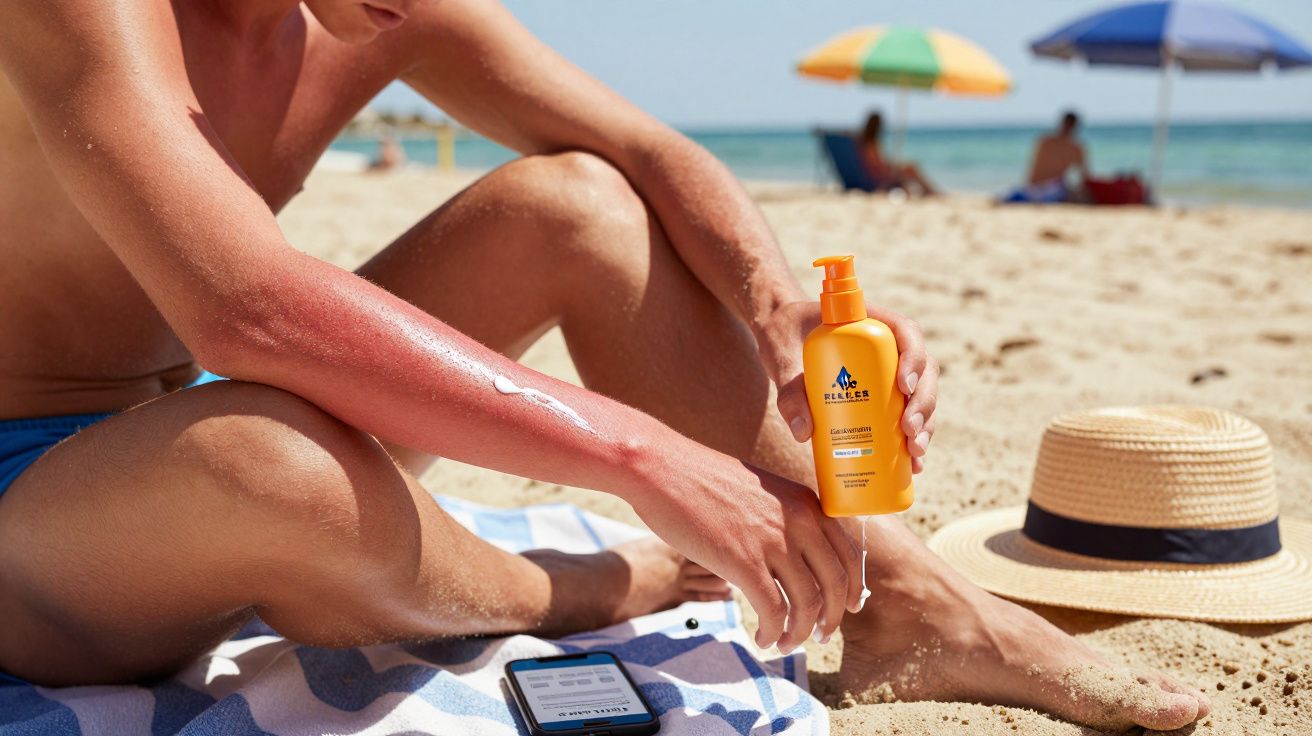
It has been a challenging period for sunscreen products. Earlier this year, testing commissioned by the consumer organisation Choice reported that several sunscreens were not providing the level of protection shoppers would reasonably expect.
In one striking example, a product marketed as sun protection factor (SPF) 50+ reportedly returned a tested result as low as SPF 4.
That finding set off a chain reaction. Some sunscreen companies temporarily halted sales, while others issued pauses or recalls. Further recalls have since followed, alongside media investigations that have raised questions about how sunscreens are formulated and how SPF testing is carried out.
Most recently, Australia’s Therapeutic Goods Administration (TGA) stated that multiple sunscreens share a common base formula supplied by a single manufacturer. The TGA also said early testing suggests certain sunscreens built on that base formula could perform as low as SPF 4.
With headlines moving quickly and product lists changing, it is understandable that many people are now unsure whether the sunscreen in their bag is doing what it says on the label. Below is what we currently understand about the TGA’s announcement and the possible reasons behind it.
Sunscreen SPF: why this matters
Since SPF ratings were introduced, they have acted as a straightforward guide for consumers about the level of sun protection a product should deliver.
However, measuring a product’s SPF is not simple. The standard approach typically involves applying sunscreen to volunteers’ skin, exposing the area to ultraviolet (UV) light, and then assessing how much redness (erythema) develops over a set period.
Because people’s skin responds differently, and because laboratories and testers can vary in their methods, results may not always line up across different facilities. A sunscreen might appear to achieve a high SPF in one laboratory, yet provide substantially lower protection when assessed elsewhere.
A sunscreen that falls short of its claimed SPF can still provide some protection. But it increases the likelihood of sunburn, DNA damage and, over time, the development of skin cancer.
The TGA “base formula” and why it affects sunscreen performance
The TGA’s current concerns centre on a shared base formula used across a number of sunscreens. This base formula (sometimes described as the core or vehicle) is essentially the structure that holds a sunscreen together and typically includes:
- solvents / carrier liquids (such as water, oils and silicones)
- emulsifiers, surfactants and stabilisers (helping ingredients combine evenly rather than separating)
- thickeners or gels
- preservatives and antioxidants
- pigments, tints, fragrances and texture enhancers
Manufacturers then add other components to this base-most importantly UV filters. In some cases, the base may be sold on to other businesses with UV filters already incorporated.
Certain products also contain additional ingredients, such as photostabilisers, designed to help UV filters remain effective for longer when exposed to sunlight.
A well-designed base has several vital jobs to do. It needs to:
- distribute UV filters evenly (preventing clumps or separation)
- stay stable over time
- shield UV filters from breaking down when exposed to sunlight
- feel acceptable on the skin (spread easily and adhere well)
It is common for different brands to start with the same base and then make minor adjustments-for instance, changing the colour or adding a particular scent.
Although UV filters are essential, they cannot perform properly without a robust base beneath them. If the base formula is weak, unstable or poorly designed, the finished sunscreen may underperform. And where many products share the same base, problems can potentially spread across multiple brands and product lines.
The TGA has said it has identified at least 21 products that use this same base formula.
How can a base formula fail in a sunscreen with UV filters?
The TGA has not publicly confirmed the precise reason for its concern about this specific base formula. Nonetheless, in general terms, a sunscreen base formula can fail in several ways, including:
- poor dispersion or aggregation: UV filters may clump together or settle, leaving areas with insufficient protection
- photodegradation: without effective stabilisers, filters can break down in sunlight
- chemical incompatibility: certain additives (including pigments or fragrances) may react poorly with UV filters
- dilution by inert ingredients: excessive filler can reduce the effective concentration of active UV filters
- physical instability: over time the formula may separate, change viscosity or crystallise
- manufacturing or packaging stress: inadequate mixing, exposure to heat or light during production, or unsuitable packaging can degrade the base
Importantly, not every sunscreen made with the same base formula will necessarily fail. Final performance can vary depending on small ingredient changes, how carefully manufacturing is controlled, differences between batches and how the product is stored.
How to find out whether your sunscreen is affected
The TGA publishes updates on affected brands and products on its website, and Choice is also providing consumer information.
Individual brands may also issue their own recall notices, including batch details and options for refunds.
If you have the product to hand, you can contact the company directly, provide the batch number and ask whether your specific unit is affected.
What to do if your sunscreen is on a recall list
If you discover your sunscreen is affected:
- do not depend on it for sun protection, particularly during prolonged outdoor exposure
- take it back to the retailer for a refund or replacement (some brands are offering refunds or vouchers)
- keep checking for further TGA updates, as additional products may be added while investigations continue
- speak with a health professional if you are concerned about skin damage or previous sun exposure
Practical sunscreen advice while investigations continue
Regardless of brand, sunscreen SPF on the label assumes the product is applied adequately. Many people apply too little, which can dramatically reduce real-world protection. As a general guide, adults often need roughly 30–40 ml (around a shot-glass amount) to cover the body, and it should be reapplied regularly-especially after swimming, sweating or towel-drying.
Storage also matters. Leaving sunscreen in a hot car, in direct sunlight, or using it well past its expiry date can reduce stability. If the product looks separated, unusually watery, grainy or smells “off”, it may not be performing as intended and should be replaced.
The take-home message on sunscreen testing, formulation and the TGA review
These events do not show that all sunscreens are untrustworthy. They do, however, underline how crucial good sunscreen design, sound formulation and strong regulatory oversight are. The TGA’s work may ultimately lead to tighter testing expectations, improved formulation standards and clearer guidance for consumers.
In the meantime, until there is a complete picture of which brands and batches are affected, it may be sensible to choose established, trusted brands-particularly those that publish testing information, operate transparently and have a strong reputation.
Finally, sunscreen is only one part of sun safety. Build multiple layers of protection: wear protective clothing, a hat and sunglasses, seek shade, and avoid extended time in direct sun where possible.
Mike Climstein, Associate Professor, Faculty of Health, Southern Cross University; Michael Stapelberg, Adjunct Associate Professor, Faculty of Health, Southern Cross University; and Nedeljka Rosic, Senior Lecturer, Faculty of Health, Southern Cross University
This article is republished from The Conversation under a Creative Commons licence. You can read the original article via The Conversation.





Comments
No comments yet. Be the first to comment!
Leave a Comment