
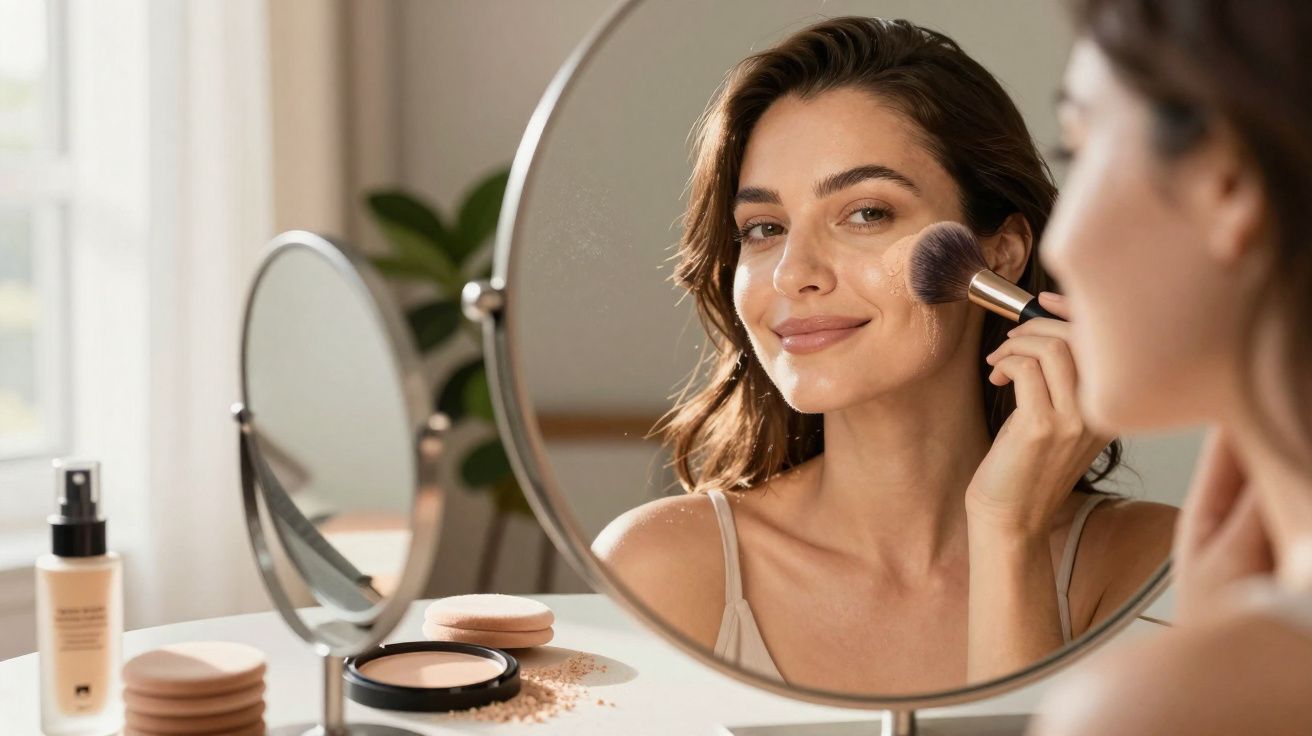
The woman in the café thought nobody was paying attention, yet half the room could see her mirror.
She had followed every supposed rule: primer, foundation, concealer, setting powder and a touch of highlighter. Two hours later, her under-eyes looked like a contour map. Fine lines had etched themselves into the product, foundation had gathered around her smile, and a pale band of make-up clung to the side of her nose.
She did not look badly done; she simply looked older and a little more tired than when she first sat down.
She rubbed at the area with her fingertip, trying to smooth the lines away, then added another dusting of powder as if by habit. Ten minutes on, the creases were back and even more obvious. She stared at her reflection, sighed quietly and gave up. Her make-up was no longer working with her skin.
What almost nobody says out loud is that the deepest creasing often begins with one very common step people think they must do. And it may be the step you need to cut back on.
The setting powder habit that makes make-up crease more
A subtle shift is happening in bathrooms and dressing rooms everywhere. More and more make-up artists are quietly saying the same thing behind the scenes: stop piling on so much powder. That old belief that everything must be sealed under a thick layer of setting powder is exactly why so many faces are creasing by lunchtime.
Powder feels reassuring. It suggests control, longer wear and a matte finish that will not budge. The trouble is that skin is never still. It folds when we laugh, gathers when we squint, warms up, gets slightly oily and loses moisture. A heavy layer of powder does not move with any of that; it breaks.
So your concealer may be perfectly fine. Your foundation may be excellent. The real problem is often the automatic urge to dust, bake and then dust again, just in case.
On a shoot in London, a young model arrived wearing what looked like perfect social media make-up. There was full coverage, sharp contour and heavily baked under-eyes. The camera test told a very different story. Under studio lighting, every smile carved tracks through her concealer. Her grin split the powder into tiny ridges, rather like a dried-up riverbed.
The make-up artist removed product from one side of her face, then rebuilt it with a thinner base and almost no powder, using only a light press under the eyes and around the nostrils. Same woman, same face, half an hour later: one side looked tight and lined, while the other looked like real skin with make-up sitting naturally on top.
That side-by-side comparison was brutal. Everyone in the room could see it, especially the model herself. She kept glancing from one side to the other, lifting her eyebrows, smiling and frowning. On the over-powdered side, the creases appeared straight away. On the lighter side, the product shifted a little, then settled back softly, more like fabric than plaster.
When you overload the skin with powder, the explanation is simple. You are laying dry product over creamy formulas on top of moving skin. Every small expression makes that powder fracture and collect. When your skin releases a little oil, or your sunscreen warms beneath it, the powder catches on that and gathers into lines.
Heavy powder also makes texture stand out more. Pores appear larger, under-eyes seem drier and expression lines fill with pigment. It can even make long-wear formulas look unreliable, because the powder interferes with the way they are meant to set on the skin.
We were taught that more powder means more staying power. In reality, targeted powdering almost always beats covering the whole face. It allows your base to flex with your features instead of shattering every time you laugh.
How to set make-up and use setting powder less
The answer is not to ban powder completely. It is to use it sparingly, precisely and with a very light hand. Start by seeing your face as separate zones rather than one flat surface. For most people, the areas that genuinely need setting are under the eyes, beside the nose, between the brows, and perhaps the chin and smile lines.
Use a small fluffy brush or a damp sponge, take the tiniest amount of finely milled translucent powder, and press it into the skin rather than sweeping it across. Pressing helps the powder blend into the creamy base instead of sitting on top of it.
The rest of the face can often be left without powder, or only touched with whatever remains on the brush. That slight natural sheen that shows through an hour later is not a mistake. It is simply skin behaving like skin.
One quick step changes everything: before reaching for powder, look closely and gently tap away any creasing that has already started. Pat under the eyes with a clean finger or sponge. Tap along the smile lines. Then, and only then, add the faintest dusting of powder where those lines usually form.
If you put powder straight on top of already-creased concealer, you are effectively locking the fold in place. It may look smooth for a few minutes, but once your face moves again, those lines become more pronounced because stiff, dry product is trapped inside them.
And in real life, very few people are topping up their make-up every two hours. A quick press and a tiny amount of powder on the move is realistic. Rebuilding your whole base in an office toilet is not.
“People assume powder stops movement,” says a professional artist who works on long television shoots. “It does not. Your face will always move. The trick is using just enough powder so the make-up moves with the skin instead of breaking away from it.”
There is another mistake almost everyone makes: using the same heavy-handed technique for every skin type and every day. Baking with thick triangles of powder under the eyes was designed for harsh lights and short wear. On dry or mature skin, it can be particularly unforgiving.
- Pick finely milled translucent or soft-focus powders rather than heavy, talc-rich ones.
- Set only the areas that become shiny or crease, rather than powdering from the hairline to the jaw.
- On dry or textured areas, press with a damp sponge instead of sweeping with a large brush.
- Let skincare absorb fully before applying base, so you are not fighting excess slip.
It also helps to allow moisturiser and SPF to settle before you start your base. If you rush in too soon, foundation can slide, which makes people reach for more powder than they actually need. A short wait gives products time to sink in and keeps the finish smoother for longer.
Another useful habit is to check your make-up in natural daylight before leaving the house. Bright bathroom lighting can make skin look more polished than it really is, which tempts you to powder far more than necessary. A quick glance by a window often shows you whether you truly need extra setting or just a light touch.
A different way to think about long-wear make-up
Next time you spot your reflection at 4 p.m. and notice those little concealer lines, try something bold: do not reach straight for more powder. Smooth the area gently with clean fingers, perhaps mist on a little hydrating spray, then leave it alone. See what your face looks like once your natural oils and the product have had time to rebalance.
Often, the creases people dislike most are the result of overcorrecting earlier in the day. Too much powder at 8 a.m. leads to cracking by 11, then more powder over the top at lunch to fix it, and by late afternoon you are left with a cakey mask stuck to every fold. Breaking that cycle is less about buying more products and more about stopping one habit.
Your make-up is not failing because you skipped a step. It usually fails because you added one step too many. When you stop automatically loading on powder, foundation and concealer can sit closer to the skin, warm up with it and move with your expressions.
| Key point | Detail | Why it matters |
|---|---|---|
| Use less powder | Move from all-over powdering to targeted application by area | Cuts creasing and keeps the complexion looking more natural through the day |
| Tap before setting | Smooth small lines first, then press on a very thin layer of powder | Prevents existing folds from being sealed into the make-up |
| Let skin breathe | Accept a little glow and a bit of movement in the base | Creates a fresher finish that looks better in real life than under a filter |
FAQs
Do I actually need powder if I want less creasing?
Not necessarily. If your skin is normal to dry, you can often leave the outer parts of the face unset and only powder under the eyes and around the nose. Oilier skin usually benefits from a light, targeted dusting in the T-zone.Why does my concealer crease even when I use a crease-resistant formula?
No product can stop the skin from folding. Crease-resistant formulas only move more gracefully. If you apply too much and then over-powder, even the best concealer will still settle into lines.Is baking always a bad idea for under-eyes?
Not always, but it can be rough on dry, thin or mature skin, especially for everyday wear. For most people, a light set with a small amount of powder looks smoother and is less ageing.What kind of powder helps avoid a cakey finish?
Look for finely milled translucent powders or soft-focus formulas with a blurring effect. Loose powders are often easier to apply lightly than heavy pressed powders.How can I touch up creases during the day without making them worse?
First, gently press the area with a clean finger or sponge to soften the line. If you still need extra help, use the smallest possible amount of powder and press it on, rather than sweeping it across. Often, the tap alone is enough.




Comments
No comments yet. Be the first to comment!
Leave a Comment