
The woman on the Tube looked as though she’d stepped straight out of a mood chart.
She had on a cobalt-blue blazer, tomato-red nails, and a worn green tote bag with “Breathe” printed across it in flaking white lettering. She was staring at her phone, her jaw set tight, yet every time the screen flashed, the blue around her shoulders seemed to glow even brighter.
You’ve probably seen the same thing in yourself, even if you’ve never put it into words. The way you reach for the same hoodie on days when you feel on edge. The way your hand pauses between a black phone case and a yellow one, and something in you settles the choice before you do.
Colours are communicating constantly.
The real question is: what are they saying about you today?
What your favourite colour reveals about your mood
Start here: the colour you’re most drawn to is seldom a coincidence.
That shade you keep returning to - on clothes, water bottles, wallpapers, lipsticks, notebooks - often reflects what your emotional system is missing or asking for. People who love blue commonly want steadiness and calm. Those who favour red often reach for excitement, strength, or passion. People pulled towards green are usually looking for balance and a feeling of “enough”.
That does not mean you are trapped in one fixed category. You are not forever “a blue person” in the way someone might be “a Virgo” or “a runner”. Your preferred colour can shift with seasons, relationships, moves, grief, promotion, or exhaustion. That change is revealing in itself.
When someone who has always sworn by black suddenly cannot stop buying orange, it is rarely only about style.
Think about a major change you have lived through - a new job, a new baby, burnout, or relocating to another city. Many stylists will quietly tell you they can often guess roughly where a client is in life simply by the colours they reach for first on the rail. That is not sorcery; it is because the nervous system is always looking for something it can manage, and colour is one of the easiest things to reach for.
A 2020 survey by a large paint company found that people who had been through a breakup in the previous year were twice as likely to repaint a room in a warmer shade. They were not necessarily thinking, “I need emotional warmth, I’ll choose coral.” They were just being drawn towards it.
That is how colour works. You “just like it”, and that instinct is already information.
Psychologists often describe colour in terms of alertness and comfort.
Red, orange and vivid yellow tend to raise energy and sharpen attention. Blue, green and gentle pink usually feel more soothing. Black often suggests control, protection, or stepping back. White tends to point towards a clean slate and a longing for clarity.
Your favourite colour tends to sit close to your emotional comfort zone. If life feels chaotic, blue may become your anchor. If everything feels flat, red might suddenly seem appealing because your body wants a jolt.
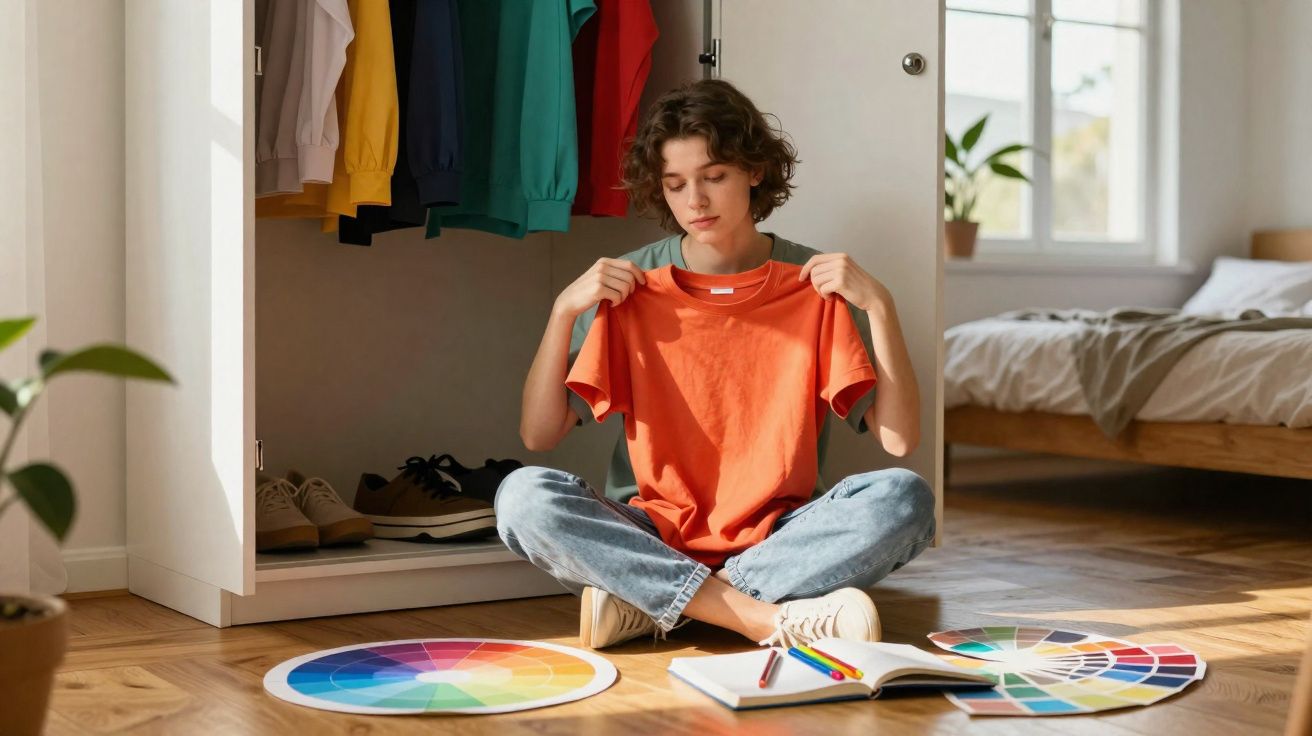
When you treat colour as a set of emotional captions, your wardrobe, your home and even your phone screen start to read like a diary.
Colour psychology and your favourite colour: how to use it as a personal emotional tool
One simple approach is to build tiny colour rituals into your day.
Not full-blown feng shui, and not redecorating the whole house. Start with small decisions. Choose your water bottle according to the feeling you want, not the feeling you woke up with. Pick your video-call top as though it were supportive medicine rather than just something clean.
If blue soothes you, keep a blue notebook for stressful meetings.
If yellow gives you a lift, set your morning alarm against a yellow background. If green helps you feel rooted, leave one clearly green object on your desk and look at it when your thoughts start to scatter.
Colour is one of the cheapest and quickest emotional tools you have. You simply need to use it deliberately.
One common mistake is using colour only as protection. Wearing black all the time “because it goes with everything” can quietly mean “because I do not want to be noticed”. That is not wrong, but it does conceal useful clues.
There is also the guilt issue. People say things like, “I love pink, but it is not professional,” or “I would never paint a wall red, that is far too much.” So they live in beige and then wonder why everything feels dull.
To be honest, nobody does the same thing every day anyway.
Think of colour less as a fixed identity and more as a playlist. Some days call for your “focus” shades. Other days call for your “comfort” shades. You are allowed to skip tracks.
One extra way to work with colour is to notice the spaces where you spend most of your time. Natural light, shared rooms and work settings can all change how a colour feels. A tone that seems energising in a shop might feel oppressive in a small flat, while the same shade can be surprisingly uplifting in daylight. Paying attention to context helps you use colour more accurately, rather than treating every room and every outfit the same.
If you live or work with other people, colour can also be a quiet boundary. A particular mug, scarf or notebook can become a small signal that a piece of the day is yours, even in busy surroundings. Those tiny private choices can make a surprising difference to how settled you feel.
“Colour is a force which directly affects the soul,” wrote the artist Wassily Kandinsky. He spent years observing how people responded not just to a picture’s subject, but to its colours. The subject altered. The emotional pull remained.
Use your favourite colour as a cue
Notice when you want it more than usual. Ask yourself: “What am I needing right now?” Calm, attention, comfort, control?Shift small colour anchors
Think mugs, phone cases, notebooks, socks and pillowcases. Tiny changes are less daunting than repainting a room, yet they can still alter your emotional atmosphere.Create low-pressure colour zones
A corner of a room, a noticeboard, or your lock screen can be a place where you lean fully into the shade you secretly love, without worrying about taste, status or trends.Pay attention to colours you avoid
The shades you strongly dislike can be just as revealing as the ones you love. They often touch feelings you are not ready to face yet.Match colour to the task, not only to preference
Use energising shades such as red and orange for workouts or creative work, and calmer shades like blue and green for sleep, reading or deep thinking.
Let your favourite colours change when you do
There is a particular kind of honesty in saying, “I used to be a blue person, and now I am all about green.”
That shift often means your emotional needs are changing. Perhaps you no longer need quite as much protection as before. Perhaps you are craving growth, possibility or softness rather than control.
We have all had that moment when we look at an old favourite jacket and realise it no longer feels like us. The fabric is still fine. It is simply that the colour no longer matches what is going on inside.
You do not need to overhaul your palette overnight. You can let your colours move gradually, the way the seasons do.
| Key point | Detail | Value for the reader |
|---|---|---|
| Favourite colour as an emotional mirror | Reveals what your nervous system is looking for: calm, energy, control or warmth | Gives you language for your current feelings and hidden needs |
| Small, intentional colour rituals | Use objects, clothes and screens as daily mood prompts | Makes emotional self-regulation simple, visual and low effort |
| Letting colour preferences evolve | Notice changes without judgement or clinging to one identity | Helps you track internal shifts and adjust your surroundings gently |
FAQ
Question 1: Does liking a certain colour mean something is “wrong” with my emotions?
Answer: Not at all. Colours do not diagnose you; they point to needs. Loving black may simply mean you appreciate elegance or privacy. Loving yellow may mean you are drawn to optimism or lightness. The aim is not to “fix” your colour preference, but to listen to what it suggests.Question 2: Can my favourite colour really change as I go through different life stages?
Answer: Yes. Many people find that colours they disliked in their 20s become comforting in their 30s or 40s. As responsibilities, energy levels and relationships shift, your emotional needs shift too, and your colour choices often follow.Question 3: Is there a single best colour for mental health?
Answer: No colour works for everyone. Softer blues and greens often feel calming to many people, while highly saturated reds can feel intense. The best colour is the one that helps your body soften a little when you see it, and that differs from person to person.Question 4: What if I love bold colours but my job expects neutral shades?
Answer: Keep your enjoyment in the details. Try bright socks, a colourful mug, a vivid notebook cover or a lively phone wallpaper. You can present a neutral image at work and still feed your inner world in small private ways.Question 5: How can I start using colour more consciously without overthinking it?
Answer: Choose one area for a week - your lock screen, water bottle or work notebook. Pick a colour based on how you want to feel rather than what “matches”. Notice any small changes in calm, energy or focus, and let that guide you rather than a rigid rulebook.




Comments
No comments yet. Be the first to comment!
Leave a Comment