
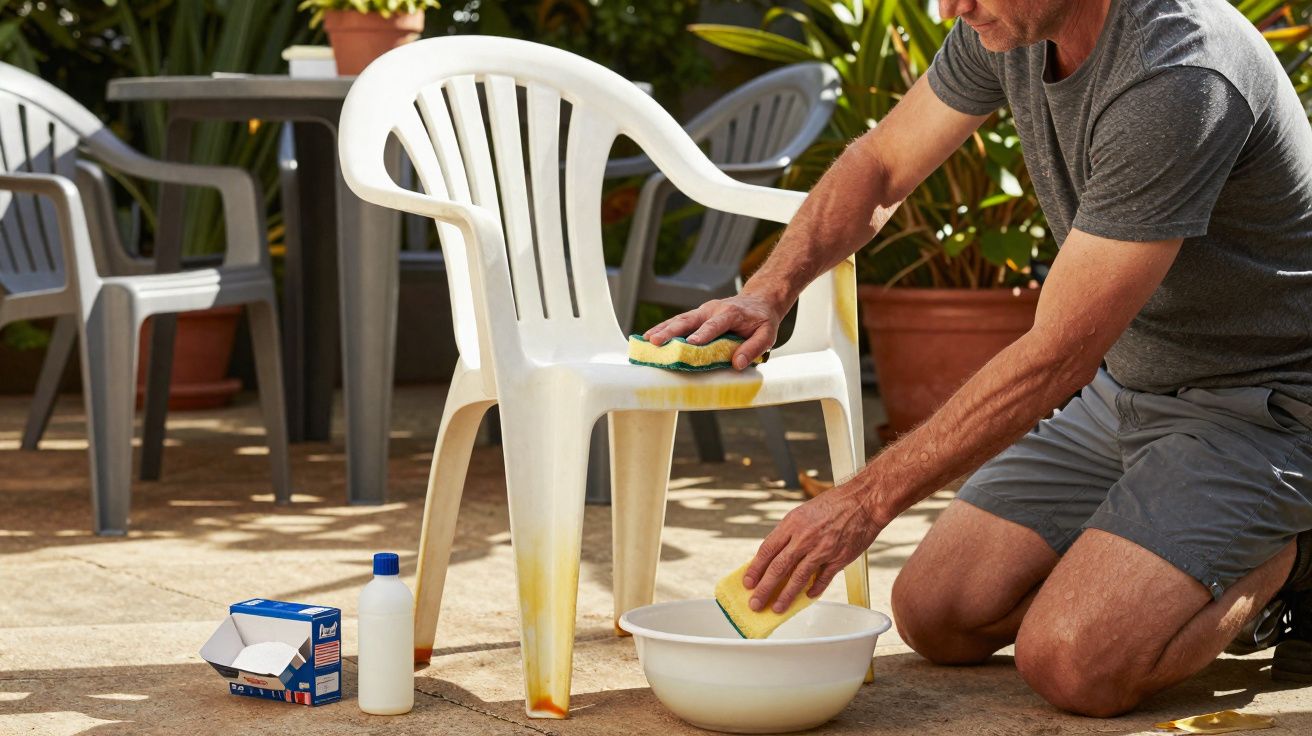
A small household trick can still give you hope.
Outdoor chairs often look older than they are after just one winter. Sand, UV light, damp and microalgae all take their toll. With a simple blend of everyday cupboard staples, you can bring back a surprising amount of shine - no specialist kit, no repainting.
Why plastic garden furniture turns grey so quickly
Ultraviolet radiation breaks down polymers at the surface, leaving it slightly roughened. That rougher finish behaves like it’s more porous, so it holds on to grime much faster. Damp conditions encourage green growth, mould and those stubborn black specks. Even relatively new sets made from PVC or polyrattan can end up looking dull after a wet season.
Dirty or damaged? A quick check for plastic garden furniture
Just dirty: a dull film, green algae, yellowish shadows, but the surface still feels smooth.
Deeply damaged: a chalky layer that wipes off on your hand, crumbling, visible cracks. A split backrest can look “fine” until it suddenly gives way.
If there are structural cracks or a crumbly surface, safety comes first: a weakened plastic shell can fail without warning under load and should be disposed of.
The kitchen-cupboard mix for dull and yellowed plastics (plastic garden furniture)
The effective combination is warm water, vinegar, a little soap and a pinch of bicarbonate of soda. It lifts limescale, neutralises organic residues and stays gentle on the material.
Ingredients and quantities
- 3 litres of warm water
- 250 millilitres of clear household vinegar (5–8%)
- 3 tablespoons of bicarbonate of soda (baking soda)
- 1 generous squirt of liquid soap, black soap or mild washing-up liquid
- Optional for heavily yellowed white: a little washing soda; for spot treatment, clay stone
Mix the water and soap first, then stir in the vinegar, and add the bicarbonate of soda last. It will fizz briefly - use straight away and don’t store in an airtight container.
How to do it
- Brush off dust and cobwebs with a dry broom. Use a soft brush first in seams and joints.
- Apply the solution generously and work in the shade so it doesn’t evaporate too quickly.
- Leave for 10–15 minutes. During this time, the acid and surfactants loosen the build-up.
- Wipe with a soft sponge, following the direction of the surface texture. Use an old toothbrush for corners and tight areas.
- Rinse thoroughly with clean water. Lift away remaining water with a microfibre cloth.
White or coloured: small differences, big results
On white furniture, using a touch more bicarbonate of soda works like a gentle polish. Localised yellowing can be dampened briefly with washing soda and then rinsed off promptly. On coloured finishes, reduce the bicarbonate of soda so the pigments don’t start to look flat; here, the water, vinegar and soap do most of the heavy lifting.
Avoid common mistakes
- No chlorine bleach, no strong solvents, no limescale removers: they can strip colour or weaken the material.
- No scouring pads, wire wool or metal brushes: micro-scratches make the surface attract dirt even faster.
- Pressure washers only with care and distance - and never aimed at already weathered areas.
- No cooking oil for “shine”: it leaves a tacky film that attracts dust.
Never combine vinegar and chlorine-based cleaners. This can produce toxic chlorine gas. Always rinse residues away with plenty of water.
A routine that keeps the shine
Seasonal care plan
- Every two weeks: a quick wipe with warm soapy water, then dry off.
- After heavy rain: squeegee or wipe away standing water and dry to prevent water marks.
- In summer: park under a parasol, sail shade or pergola where possible. Less UV means slower ageing.
- In autumn: clean thoroughly, let everything dry completely, then store under a cover or in a garage/basement.
Quick help at a glance
| Problem | Mix adjustment | Dwell time | Tool |
|---|---|---|---|
| Grey film, dust | Base recipe | 5–10 min | Soft sponge |
| Green growth | Slightly more vinegar | 10–15 min | Soft brush |
| Yellowed white | More bicarbonate of soda; spot washing soda | 15 min (local) | Microfibre cloth |
| Coloured and dull | Less bicarbonate of soda | 10 min | Sponge, plenty of rinsing |
Why the mix works
Vinegar dissolves limescale marks and mineral particles that help deposits cling to the surface. Soap breaks up greasy films and keeps loosened dirt suspended in the liquid instead of redepositing. Bicarbonate of soda buffers the acidity, adds mild abrasion and helps lift organic residues. Warm water speeds everything up and lets the surfactants work more effectively.
Add protection after cleaning (optional, but worthwhile)
Once the furniture is clean and fully dry, a light protective step can make the results last longer. A UV-protectant plastic restorer (often sold in the car-care aisle) can deepen the colour slightly and leave the surface feeling smoother. For everyday use, this can reduce how quickly grime sticks again between washes.
If you cover furniture outdoors, choose breathable covers and avoid trapping moisture underneath. Ventilation matters: a dry surface stays cleaner, and algae has less chance to return.
When cleaning is no longer enough
If the surface has gone chalky and degraded, you can only improve the look so far with washing. A plastic care product with UV blockers can darken the tone and smooth the finish a little. On severely weathered pieces, a plastic adhesion primer plus exterior-grade paint can be the next step. Any load-bearing part with cracks should be retired - cosmetics won’t stop a break.
Safety, environment, practical tips
- Protect plants from splashes and don’t allow rinse water to run into ponds.
- Wear gloves, especially when using washing soda, as the powder is alkaline.
- Don’t mix vinegar and bicarbonate of soda in sealed bottles - the gas produced builds pressure.
- Test each step on an inconspicuous area first to see how the plastic responds.
Also useful: know the material, save money
Garden furniture is usually made from polypropylene, PVC or a painted ABS blend. Polyrattan (plastic weave) also tolerates the solution above, but the weave needs a brush rather than a sponge to reach into the gaps. Painted surfaces are more sensitive: be gentler and skip washing soda altogether.
The savings can be significant. A family-sized plastic set can easily cost £130–£350. The vinegar–soap–bicarbonate of soda mix typically costs well under £1 per clean. Two hours of hands-on work and a tub of cleaning solution often bring back a near “like new” finish - while also reducing waste, packaging and transport.



Comments
No comments yet. Be the first to comment!
Leave a Comment