
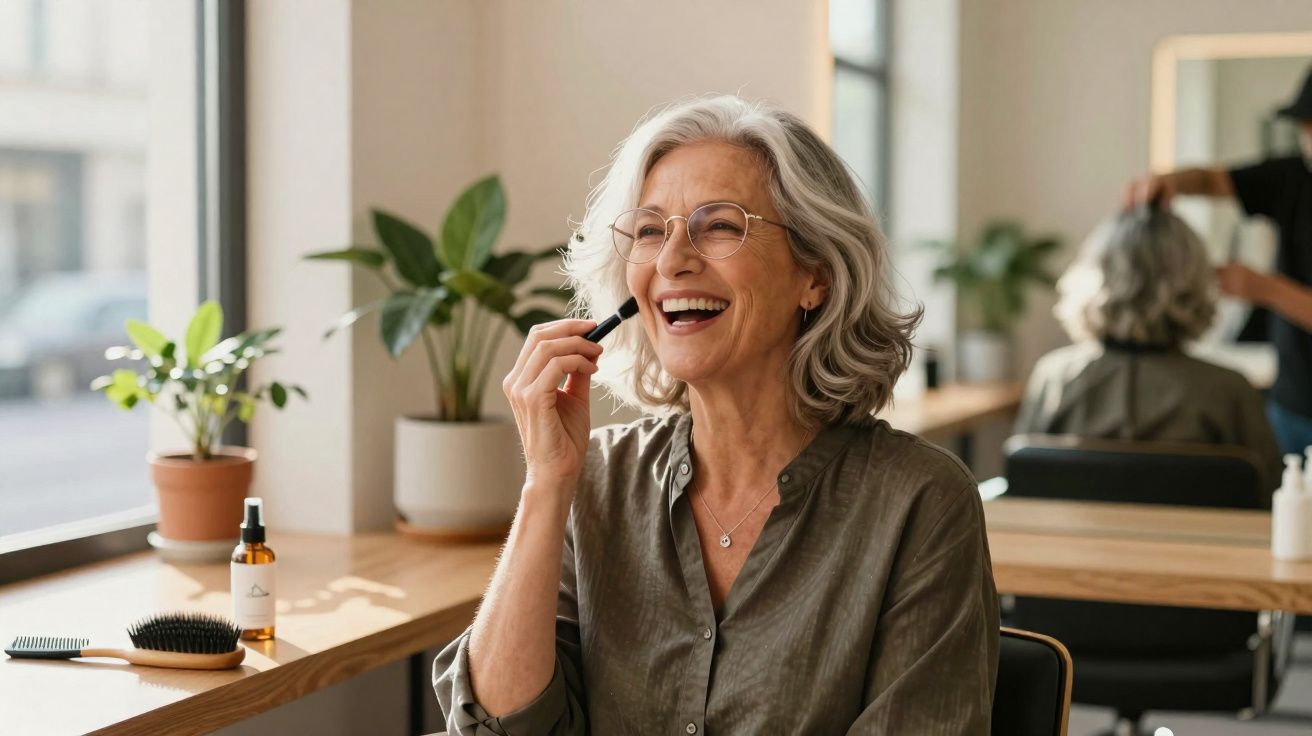
Past the age of 70, the line between a bright, contemporary appearance and one that feels ageing is often drawn by one repeat styling habit.
Most women accept that lines and wrinkles are part of life, yet many don’t realise how strongly hair can either sharpen or soften facial features. After 70 - particularly with grey or salt-and-pepper hair - one widespread styling error can quietly add years.
The number one hairstyle mistake that ages women over 70
Speak to any seasoned hairdresser who regularly styles mature clients and you’ll hear a familiar refrain: the “too done” look is one of the quickest ways to make the face appear older.
Over-styled, overly polished hair is what creates the classic “granny hairdo” effect – no matter how fashionable your clothes are.
It isn’t really about hair length, hair colour, or age itself. The issue is rigidity. When hair looks stiff, sprayed solid, or locked into place, the whole face can seem heavier and more severe.
Common examples include:
- ultra-sleek, tightly scraped-back buns
- rigid French twists with no movement
- perfect, helmet-like blow-dries that do not move when you walk
- tight, sharply drawn ringlets or rollers curls
On a younger face, these same styles can read as red-carpet glamour. On a face aged 70 or above, they can spotlight every line and pull attention towards areas that have softened. The stark contrast between fixed hair and naturally changing skin texture tends to magnify age.
French celebrity stylist Delphine Courteille calls this the “Sunday best” effect - as though you’ve dressed up for a school photograph. The look may be polished, but it doesn’t feel current, and that disconnect is what often comes across as “old-fashioned”.
Why being ‘too coiffed’ adds years to your features
After 70, facial proportions shift: cheeks can lose volume, the jawline becomes less defined, and the neck may appear shorter. When hair is pulled back tightly or frozen with product, the eye goes straight to these areas.
Soft movement around the face acts like a visual filter: it blurs hard lines, adds light and brings the eye to your smile instead of your wrinkles.
Another downside of strict styling is that it frequently presses the roots flat. With less height at the crown, the neck can look shorter and the overall outline more compressed. That “squashed” silhouette can make even an energetic woman seem weary.
There’s also a signalling effect. Styles associated with an older era - roller sets, fixed curls, perfectly sprayed chignons - can suggest, without a word being spoken, that you’ve stopped refreshing your look. People often interpret that as “older”, even if you feel anything but.
What to do instead: modern, softer styling ideas for women over 70
The answer to a “granny hairdo” isn’t messiness. It’s purposeful softness - hair that holds its shape while still looking touchable and mobile.
Gentle waves and undone texture
Loose waves aren’t only for women in their twenties. On grey or white hair, a soft wave can look elegant and bring light to the face.
Ask your stylist for a cut that lends itself to:
- wavy blow-dries with a round brush
- soft waves created with a wide curling iron, fingers-combed afterwards
- air-dried texture supported by a light mousse or cream
Aim for movement through the mid-lengths and ends, rather than tight curls. Keeping a few face-framing pieces slightly longer and softly curved inwards can lift the cheekbones and make the jawline appear gentler.
Relaxed updos instead of severe buns
If you prefer your hair off your neck, you don’t need to abandon updos - just swap sculpted for softer.
A loose chignon or soft low bun that lets a few strands fall around the temples instantly looks younger than a slicked-back knot.
Consider a low bun at the nape with a subtle side parting, or a half-up style that leaves some hair down. Both approaches open the face while retaining enough softness to avoid that rigid, “set” effect.
When neglected hair makes you look older than you feel
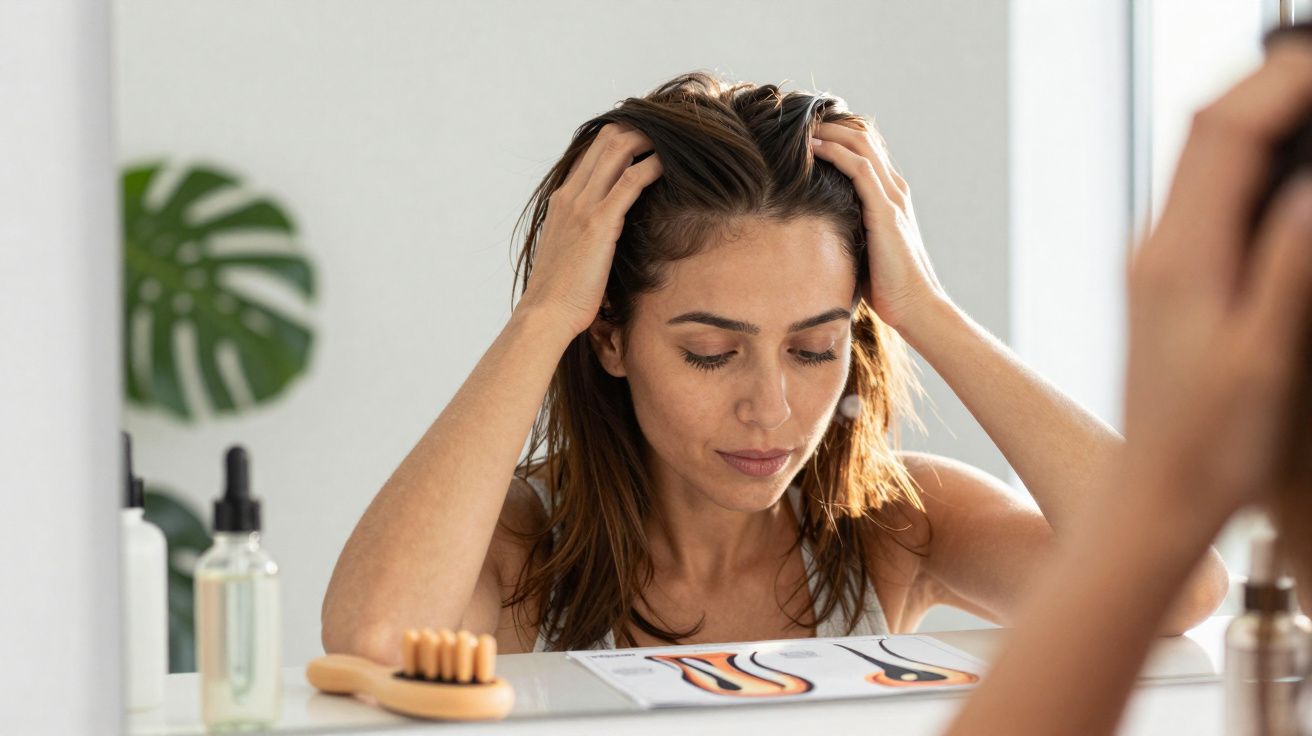
Another ageing trigger is less glamorous but just as important: not keeping the hair itself in good condition. Even a modern cut can look harsh or exhausted if the hair is dry, dull, or frizzy.
Grey and salt-and-pepper hair naturally contain less pigment and often less moisture. The hair fibre may become more porous and the ends can look coarse. On a mature face, that roughness can be unforgiving.
Frizz, yellowish tones and lifeless ends can give the impression of low energy and poor health, even when you feel fantastic.
For this reason, stylists who work with older clients often recommend treating haircare with the same seriousness as skincare: consistent nourishment, protection, and routine maintenance - not only focusing on colour or the cut.
Key care ingredients for grey hair over 70
| Ingredient | Role |
|---|---|
| Keratin | Helps strengthen the fibre and reduce breakage in fragile, ageing hair. |
| Amino acids | Support elasticity and softness, making hair less brittle and more manageable. |
| Silk proteins | Add shine and a smoother surface, reducing frizz and dryness. |
Regular intensive treatments - such as steam masks in a salon or a rich at-home mask once a week - can increase shine and calm halo frizz. A glossier surface reflects light back towards the face, much like a subtle highlighter does on the skin.
Three rejuvenating cuts that flatter grey hair after 70
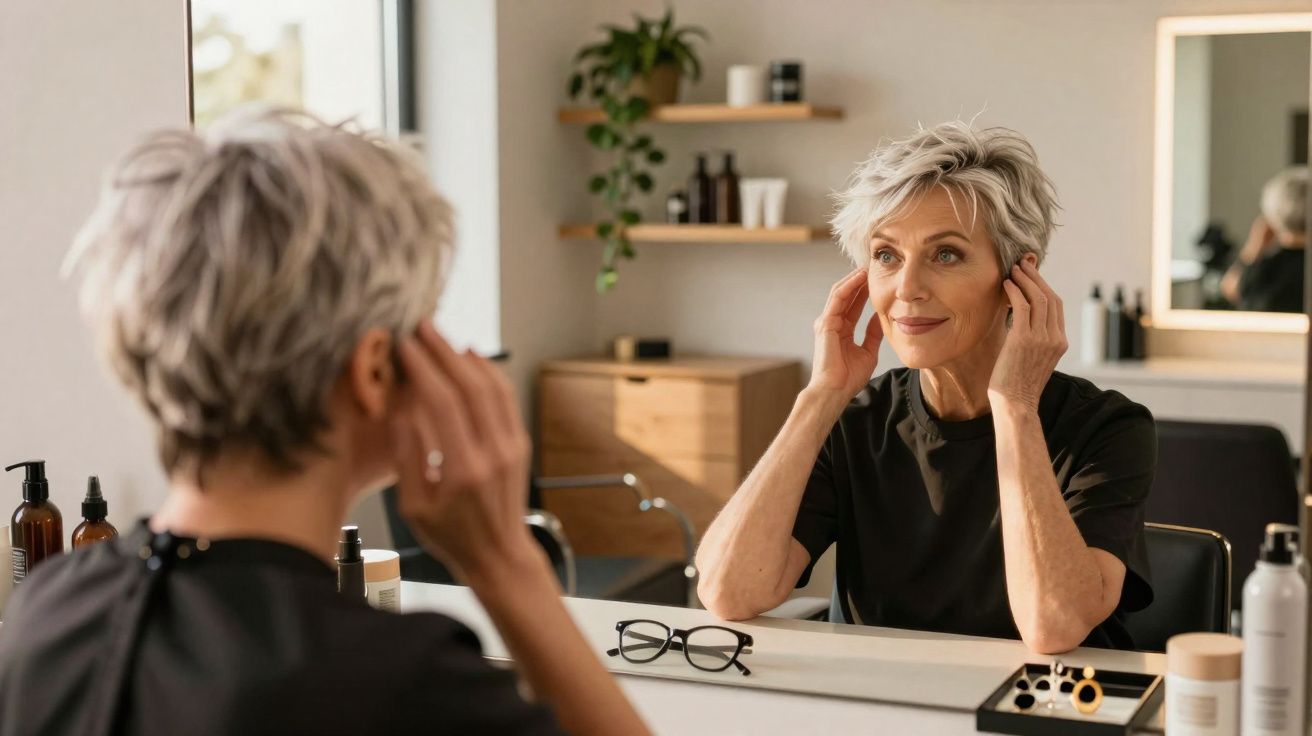
The soft mid-length pixie
A traditional pixie can feel too harsh on certain faces, but a slightly longer, layered version can be transformative after 70. A softer pixie keeps more length on top and around the ears.
That extra length makes room for:
- gentle lift at the crown, helping the neck look longer
- side-swept sections that skim the forehead, softening forehead lines
- a lightly tousled finish that looks deliberate rather than “set”
Styling is quick with a texturising paste or a light mousse. The crucial point is to avoid pressing everything flat with gel or saturating it with heavy spray.
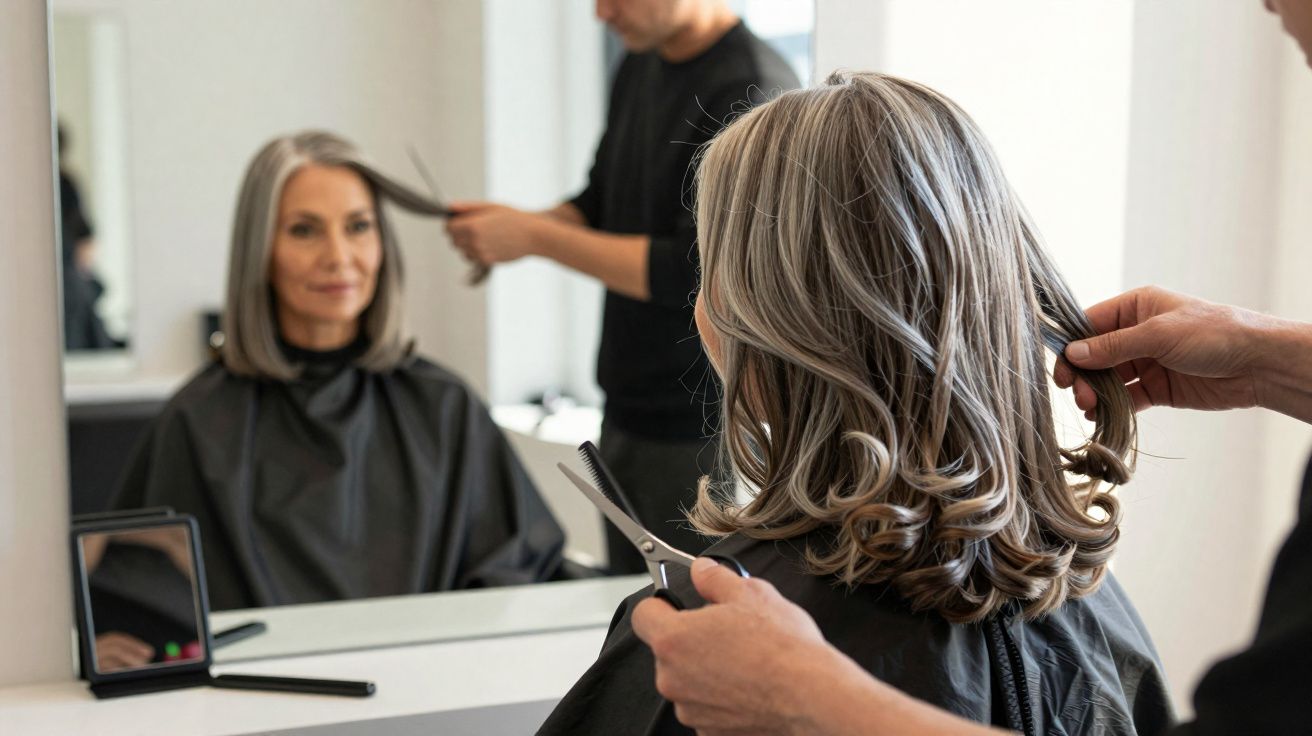
The layered bob
A blunt, one-length bob can look weighty and severe. A layered bob is typically kinder to fine, greying hair.
Light layers create movement and bounce, which visually lift the whole lower part of the face.
Ask for a bob that falls somewhere between the chin and the collarbone, with soft layers and possibly a slight forward angle. This shape frames the face and can help disguise jowls or a jawline that has softened.
You can wear it sleek with root volume or with a mild wave; both options tend to look current and polished.
The modern ‘butterfly’ cut
The butterfly cut - a trend popularised by younger influencers - can adapt surprisingly well for older women who still have healthy length.
It blends longer layers with shorter, face-framing pieces at the front. These shorter sections function almost like built-in curtain bangs, pulling attention towards the eyes and cheekbones rather than the lower face.
On grey or white hair, the layered movement also stops the colour from appearing flat. If you want extra brightness without full-on colouring, you can add a gentle, cool-toned or pearly glaze.
How glasses, clothes and hair all interact after 70
Many women update their spectacle frames in their sixties or seventies, yet keep the haircut they’ve had for decades - and the combination doesn’t always work.
Strong, chunky frames paired with heavy hair around the face can overwhelm your features. The eye has nowhere to settle, and the overall effect can feel busy. In that situation, softer, feathered layers at the temples can open up the eye area and make the transition from hair to glasses look gentler.
By contrast, very minimal, rimless frames can handle a more defined haircut, such as a sharper layered bob. It’s the balance between hair and glasses that creates a modern, cohesive impression.
Practical scenarios: adjusting your look without starting from zero
If you’ve relied on the same set blow-dry for 30 years, you don’t need a dramatic chop to look more refreshed. A practical strategy is to adjust one element at a time.
Picture a 72-year-old woman with a short, very set perm, styled identically every time. Her hairdresser might begin by loosening the curl pattern, then swap lacquer for a softer styling cream. At the next appointment, they could introduce a few slightly longer pieces around the face, or take bulk out at the sides while adding lift at the crown. Gradually, the look becomes lighter - while she keeps both her length and her comfort zone.
Or consider an 80-year-old with long grey hair that always ends up in a tight bun. Without changing the length at all, she could move to a low, loose bun with a side parting, then pull out two fine strands at the front. It’s a five-minute change in the morning, yet the face can appear more open, more awake, and softer.
Key terms and risks worth knowing
Stylists often use the words “texture” and “structure”. Texture describes how hair looks and feels on the surface - straight, wavy, curly, frizzy. Structure is the internal blueprint of the cut: where the weight sits, where the layers land, and how volume is placed. After 70, working with texture (airiness, soft waves) and structure (crown lift, less heaviness at the ends) is usually more flattering than focusing on length alone.
It’s also worth being cautious about trends that aren’t adapted. An ultra-graphic fringe or a severe geometric bob copied straight from a teenager’s TikTok can be just as ageing as a dated roller set if it fights your features. The strongest anti-age hair choices are the ones that suit your natural hair type, your routine, and the impression you want to give: active, current, and unmistakably you - just not “done” to death.
Comments
No comments yet. Be the first to comment!
Leave a Comment