
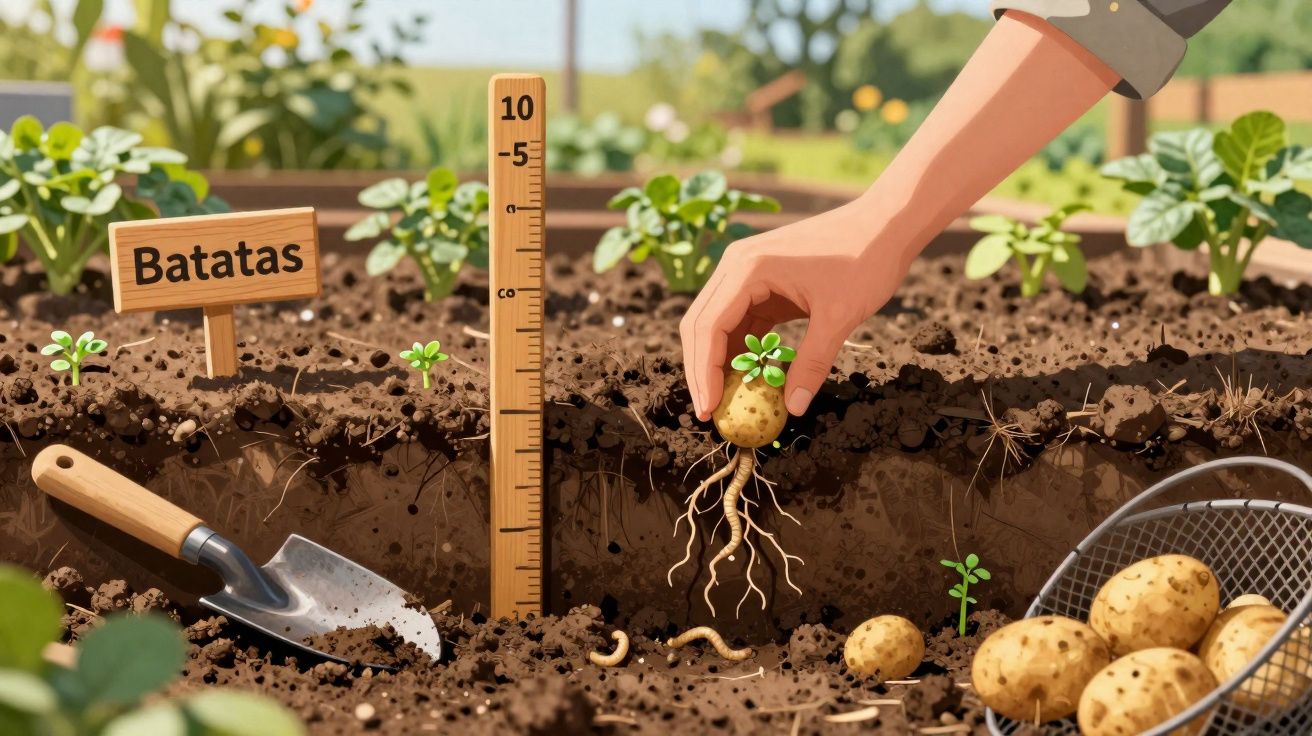
Many gardeners settle for a handful of puny tubers, even though the problem is often just a few centimetres beneath the soil.
When people plant potatoes in spring, they tend to focus on varieties, fertiliser or slugs - and overlook what may be the single biggest lever of all: planting depth. This seemingly minor detail can be the difference between crates brimming in autumn and a harvest that barely fills a small bucket.
The crucial zone for potato planting depth: how deep potatoes should really go
A seed potato is essentially a compact store of energy. From it, roots and stems must develop first, and then the new tubers. It needs enough soil above it to protect it from cold and light, but it mustn’t be placed so deep that the shoots spend ages battling to reach the surface.
"In most gardens, the optimal range is around 10 to 15 centimetres of soil above the potato."
In practical terms, that means preparing the planting hole so the tuber ends up roughly 10 to 15 centimetres below the future soil surface. If you work with a hoe or plough, pull a furrow, place the tubers in it, then cover them so that this depth is achieved.
Why this band works so reliably:
- Soil at this depth holds moisture more evenly without becoming waterlogged.
- Late frosts are less likely to reach the tubers.
- Young shoots don’t have to push through a thick “cap” of soil and reach the air sooner.
- The layer blocks light, which would otherwise turn tubers green and inedible.
If potatoes sit much deeper than this, emergence is slowed. The plant uses up too much energy on the journey upwards and arrives at the light weakened. If planted too shallowly, you risk sun scorch, drying out and green patches.
How soil type changes the ideal planting depth
The 10 to 15 centimetres guideline is a strong starting point, but it doesn’t behave identically in every soil. If you understand your ground, you can fine-tune.
Heavy clay and loam: plant a little shallower
In dense clay- or loam-rich soils, water can linger and drainage is slower. If tubers are sitting too deep in a wet zone, rotting becomes more likely.
A sensible approach on these plots:
- Loosen the soil thoroughly before planting and break up large clods.
- Work when the ground has dried a little and is no longer sticky.
- Keep seed potatoes towards the middle of the range, around 10 to 12 centimetres deep.
On persistently wet ground, it also helps to plant into a slightly raised bed or a ridge. Excess water can then run off more easily, rather than leaving tubers standing in soggy conditions.
Sandy, loose soils: slightly deeper can help
Light, sandy soils let water drain away quickly. Here, the main risks are drought stress and nutrients washing down beyond the roots.
"On dry, sandy plots, it’s worth using the full 15 centimetres so the potatoes sit in the moister layer."
At the same time, improving the soil with compost or well-rotted farmyard manure is beneficial. Moisture stays in the root zone for longer, and the plants have better access to nutrients.
Climate, frost and planting depth: how the factors interact
Soil isn’t the only variable; the weather around planting time matters too. In areas prone to late frosts, correct depth on its own may not be enough.
Frost-prone areas: plant deeper and protect with earthing up
If you garden in a cooler location, place tubers towards the upper end of the recommended range - roughly 15 centimetres deep. As soon as shoots appear, an early earthing-up is worthwhile to shield young growth from cold snaps.
If temperatures drop sharply again, you still have options:
- Pull more soil up around the shoots until only the tips remain visible.
- If necessary, cover with horticultural fleece so the soil doesn’t cool as dramatically.
Dry spells: don’t overdo depth - protect from above instead
In drier regions, many hobby gardeners are tempted to plant potatoes extra deep in the hope of accessing more moisture. In practice, this offers little benefit. Shoots take longer to reach the surface, and the soil below can still dry out.
"In dry conditions, a mulch layer helps far more than an exaggerated planting depth."
Straw, grass clippings (wilted first) or leaves spread over the soil reduce evaporation. The ground retains moisture for longer, while the tubers remain in the ideal zone.
Spacing, earthing up and care: without these, the crop stays small
Planting at the right depth only delivers its full effect when the rest of the basics are correct. The spacing between plants and consistent earthing up are particularly important.
Bed spacing: room for plenty of tubers
| Parameter | Recommendation |
|---|---|
| Spacing within the row | 30–40 cm |
| Row spacing | 60–75 cm |
| Planting depth | 10–15 cm |
With these distances, potato plants have enough space to build strong foliage. More leaf area means more photosynthesis - and therefore more energy for a larger number of well-formed tubers.
Earthing up: the modest extra that can lift yields noticeably
Once the shoots reach about 15 to 20 centimetres tall, the key care step after planting begins: earthing up. This involves pulling soil from between the rows up against the stems to form a small ridge.
This single action delivers several benefits at once:
- Newly developing tubers stay dark and don’t turn green.
- Extra space is created for additional tubers to form.
- Plants stand more firmly and are less likely to topple in wind.
- Weeds are covered and struggle to regrow.
One to three rounds of earthing up across the season are enough. Staying consistent here can noticeably increase what you harvest from the same square metres.
Planting potatoes step by step
For anyone who prefers a practical checklist, here is a straightforward method that works well in the home garden:
- Loosen the soil to a depth of 15 to 20 centimetres and remove large stones.
- Mark out rows with 60 to 75 centimetres between them.
- Make planting holes or depressions so the tubers will sit 10 to 15 centimetres below the surface.
- Place pre-sprouted seed potatoes with the eyes facing upwards, spaced 30 to 40 centimetres apart.
- Cover with loose soil and do not tread it down.
- If conditions are dry, water gently without washing soil off the tubers.
Adjusting depth to your soil and local climate, while sticking to these basics, lays the groundwork for full crates in autumn.
Why a few centimetres make such a difference
You’ll notice the impact of correct depth in several ways: potatoes emerge more evenly, the crop looks more uniform, and plants cope better with stress. Uneven planting depths, by contrast, often create a patchwork of strong and weak plants.
Disease pressure can also shift. In very wet layers, tubers placed too deep face a higher risk of rot and fungal issues. Planting too shallow, on the other hand, encourages green tubers with elevated solanine levels, making them unsuitable for the plate.
If you’re unsure, try planting two or three rows at different depths in one bed and compare later. Small trials like this quickly show how your soil responds - and they provide clear ideas for planting more precisely next year.






Comments
No comments yet. Be the first to comment!
Leave a Comment