
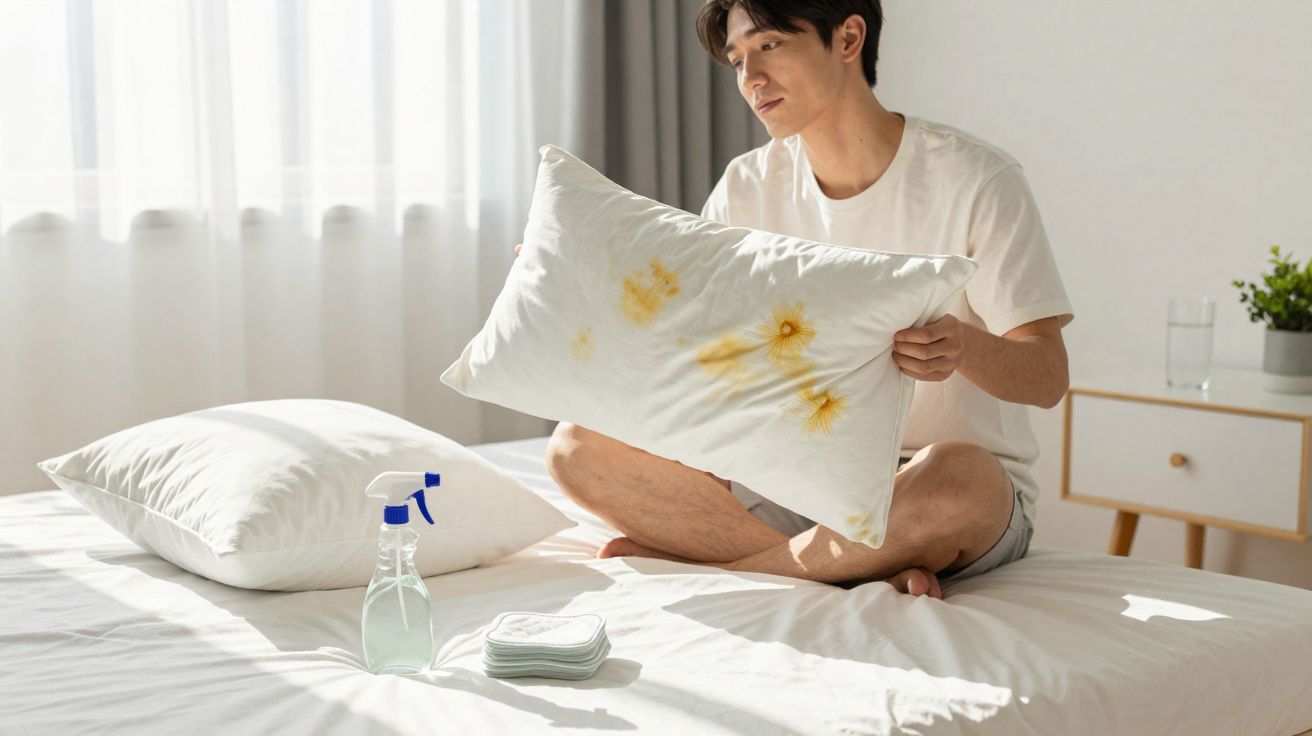
Behind these seemingly harmless marks, there can be very real health risks.
Plenty of people shrug it off: “It’s just sweat.” Yet yellow stains on a pillow can reveal far more about your body, sleeping habits and hygiene than you might expect. If you take a closer look and act, you can significantly cut down on allergies, stale bedroom air and even skin issues.
What’s really behind yellow stains on a pillow
Yellow discolouration is far from unusual - it’s almost standard, because it develops slowly and gradually. At its heart is a build-up of bodily fluids and care products that seep into the pillow night after night.
“Our bodies spend around a third of our lives in bed - plenty of time to press sweat, oils and saliva deep into the pillow.”
The main causes at a glance
- Sweat and skin oils: The biggest contributor. Sweat contains salts, urea and other metabolic by-products that remain in the fabric and can turn it yellowish.
- Saliva: Many people sleep with their mouth slightly open. Dribbling saliva leaves tide marks that tend to darken over time.
- Dead skin flakes: Your skin is constantly renewing itself. Those tiny flakes end up in the pillow and become food for micro-organisms.
- Residue from hair and skincare products: Oily products, creams, serums and hairspray soak into the fabric and add to the discolouration.
Even if a freshly washed pillowcase looks spotless, the pillow itself steadily absorbs these substances over months and years. Each time you wash the cover, some of what’s already in the pillow remains behind.
When a pillow becomes a health trap
Appearance is only part of the story. Yellowed pillows can worsen bedroom air quality and encourage physical complaints - particularly when they’re old or repeatedly damp.
Common effects of dirty pillows
- Allergic reactions: House dust mites thrive in warm, humid pillows. Their droppings are considered one of the most frequent indoor allergy triggers.
- Respiratory issues: If you already deal with asthma, a chronic cough or sensitive airways, mites, mould spores and bacteria in the pillow often make symptoms worse.
- Skin irritation and spots: Resting your face for hours each night on a germ-laden surface makes redness, blemishes and acne flare-ups more likely.
- Reduced sleep comfort: Moisture and grime cause the filling to clump, making the pillow uneven and less supportive.
“House dust mites and bacteria use the warm, damp conditions in dirty pillows as the perfect breeding ground - right next to your airways and skin.”
If you regularly wake with itchy eyes, a blocked nose or a scratchy throat, don’t only blame pollen - consider the pillow that sits just a few centimetres from your face all night.
How to prevent yellow pillow stains effectively
The good news is that a few straightforward routines can noticeably reduce both discolouration and a large share of the germ load. It doesn’t take much effort, but the impact on comfort and wellbeing can be substantial.
| Measure | Everyday benefit |
|---|---|
| Use a pillow protector | An extra layer (often water-repellent) catches sweat and oil before they reach the pillow itself. |
| Change pillowcases often | Switching weekly reduces skin oils, flakes and mites significantly; if you sweat heavily, change every three to four days. |
| Air out the pillow daily | Moisture can escape, the environment becomes drier, and mites feel less at home. |
| Fluff the pillow regularly | The filling spreads more evenly, and heat and damp are less likely to build up. |
Heavy sweating - or going to bed with wet hair - speeds the whole process up. In those situations, an extra layer such as an absorbent cotton cloth or a thicker protector can be particularly worthwhile.
What to do if your pillow is already yellow
Once staining is clearly visible, it’s better to do more than simply hide it. Many pillows can be cleaned surprisingly well - the care label is often enough to guide your first steps.
Cleaning methods that genuinely help
- Machine-wash as the label allows: Synthetic pillows and many feather pillows can go in the washing machine. A gentle or delicates cycle with a mild detergent is often sufficient.
- Pre-treat the stains: A mix of hydrogen peroxide and water (about 1:5) can lighten older sweat marks. Always test on an inconspicuous area first.
- Household vinegar for stubborn marks: A ratio of about 1 part vinegar to 3 parts water can help reduce odours and yellowing.
- Dry in the sun: UV light has a mild disinfecting effect. Drying the pillow completely helps prevent mould forming inside.
“Heavily yellowed, lumpy or musty-smelling pillows don’t belong back in a pillowcase - they belong in the bin.”
Many experts recommend replacing pillows, depending on quality and use, roughly every one to two years. If you sweat a lot at night or have allergies, it’s usually best to stick to the shorter end of that range.
The right pillow: hygiene starts at the point of purchase
You can set yourself up for a cleaner bedroom from the moment you choose a pillow in a shop or online. Not every model tolerates machine washing, and not every material suits allergy sufferers.
What to look for when buying your next pillow (yellow pillow stains prevention)
- Material: Allergy-friendly options such as latex or memory foam are often less appealing to mites than traditional down fillings.
- Breathability: Air-permeable covers and fillings move moisture away faster and reduce sweat build-up.
- Washability: Ideally, the entire pillow can be cleaned, not only the cover. Notes such as “washable up to 60°C” are a clear advantage.
- Support and firmness: The better your head and neck are supported, the more settled your sleep tends to be - and the less you toss and turn while sweating.
A high-quality pillow paired with a dense, washable protector can greatly reduce the tendency towards yellow stains and extend the pillow’s usable life.
How to tell when your pillow is truly past it
Not every visible stain is immediately a disaster. What matters is the overall picture - how it looks, smells and feels.
- The pillow smells musty even though the pillowcase has been freshly washed.
- Discolouration returns quickly after each wash.
- The filling has clumped or formed deep dips.
- You wake more often with neck tension or headaches.
If several of these apply, replacing the pillow is usually more sensible than attempting yet another deep clean. This is especially important for children, allergy sufferers and anyone with respiratory conditions.
What technical terms and risks mean in everyday life
House dust mites are tiny arachnids that you can’t see with the naked eye. They feed on skin flakes and love warm, damp textiles. The mites themselves aren’t the main issue; it’s their droppings that can trigger allergies when inhaled. Yellow, moist pillows provide an ideal habitat for them.
Hydrogen peroxide has a bleaching and antimicrobial effect. At too high a concentration it can damage fabrics or irritate skin, which is why strongly diluted mixes and gloves are part of safe use. If you’re unsure, choose a mild detergent with an “anti-stain” additive instead.
A practical everyday example: if you apply rich night creams, let them absorb properly before your head hits the pillow. Waiting ten minutes - or placing a thin cotton cloth between your face and the pillow - shortens the route for oils and active ingredients into the filling. The same applies to hair oils or masks designed to work overnight - protect the pillow with a towel or a dedicated pillowcase.
Yellow stains on a pillow, then, aren’t just a cosmetic annoyance; they’re a fairly honest reflection of your sleep hygiene. If you take them seriously, clean regularly and replace your pillow from time to time, you’re likely to breathe more freely at night, be kinder to your skin and start the day feeling noticeably more refreshed.




Comments
No comments yet. Be the first to comment!
Leave a Comment