
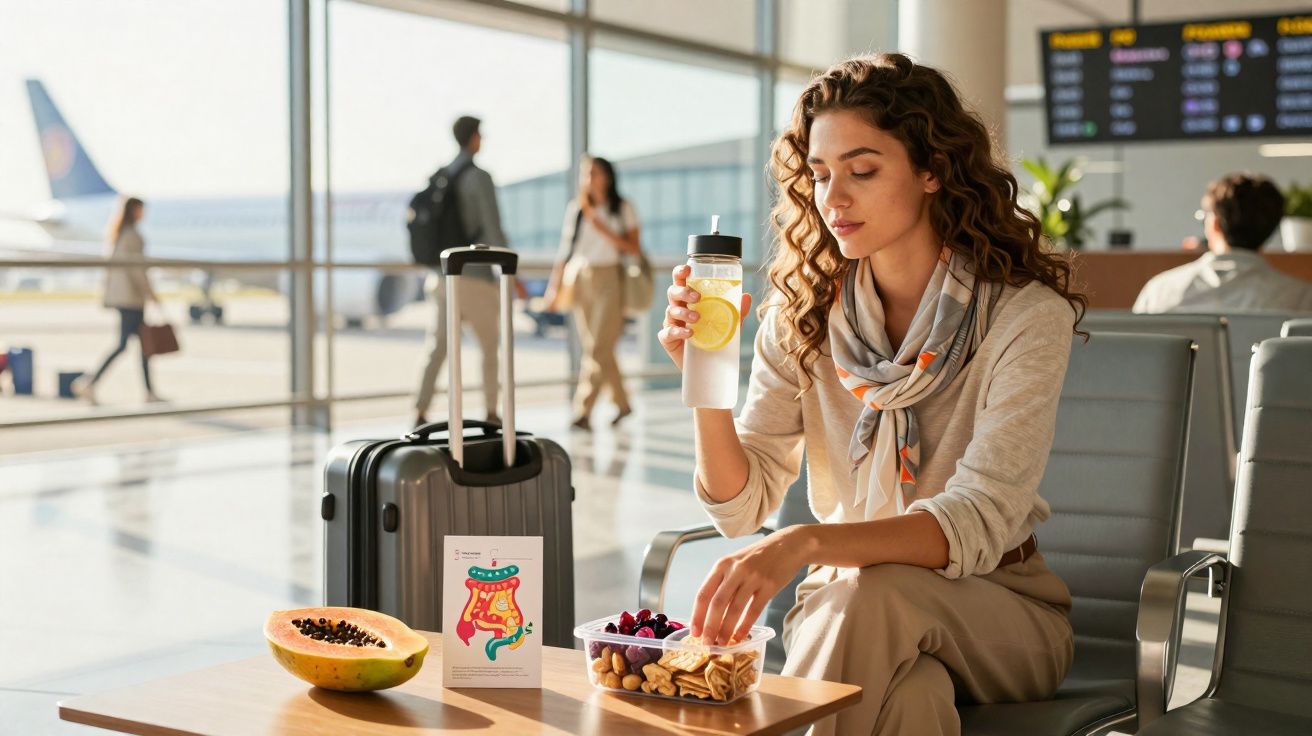
The stomach is rumbling, the suitcase is packed, the tickets are on the table - and yet an all-too-familiar issue appears: the moment you set off, your bowels start misbehaving. A gastroenterologist explains which five straightforward strategies can keep your gut steady on holiday, and why getting ready starts days before you leave.
Why your gut suddenly plays up on holiday
The body thrives on routine - and travel removes it. Different meal times, unfamiliar foods, a new environment, and possibly jet lag can all unsettle the bowel.
At the heart of this is the microbiome: billions of bacteria that affect digestion, immune defences and even mood. These bacteria run on a daily rhythm. If you start eating in the middle of the night, flying, sleeping too little and rushing around packing, that system can fall out of sync.
Many travellers feel the effects very quickly:
- Constipation, sometimes going several days without a bowel movement
- Sudden-onset diarrhoea
- Bloating and cramping abdominal pain
- General tiredness and a washed-out feeling
"The gut reacts sensitively to stress, lack of sleep and unfamiliar routines - often more strongly than to the foreign food itself."
Another influence is pre-departure stress. Check-in procedures, traffic jams on the motorway, children in tow, the fear of forgetting something - all of this activates the nervous system. That nervous system is closely linked to the gut. When the mind is under pressure, the bowel tenses up too.
First key to holiday gut health: drink properly - starting before you travel
Travel is dehydrating. Air conditioning in the car, dry cabin air on planes, long waits without drinking - the body loses fluid. In response, the bowel draws even more water out of the stool, making it harder and more difficult to pass.
How much fluid is sensible
As a rough guide, specialists suggest:
- On a normal day: around 1.5 to 2 litres of water or unsweetened tea per day
- During long drives or flights: an additional about 0.25 litres per hour
A refillable water bottle that you fill at home is ideal. That way, you don’t begin your holiday already dehydrated. If you buy a large bottle straight after airport security, you’ll usually be better covered on the flight as well.
Sugary soft drinks and large amounts of alcohol are less helpful. Both can irritate the gut and pull fluid from the body. A glass of wine in the evening is rarely an issue; the combination of several cocktails, too little sleep and heat is more likely to be.
"Drinking enough softens the stool - it’s one of the simplest ways to prevent constipation when travelling."
The right provisions: snacks that are kind to your gut
A lot of trouble starts with the very first snack at the station or motorway services. Greasy croissants, white bread rolls, crisps and heavily processed snack foods may fill you up, but they do little to support stable digestion.
Which snacks make sense on the move
- Fresh fruit: apple, banana, pear or berries in a reusable container
- Nuts and almonds: a small handful provides fibre and healthy fats
- Vegetable sticks: for example carrot, pepper or cucumber, prepared at home
- Wholegrain options: filled wholegrain sandwiches instead of white-bread sandwiches
These choices help keep blood sugar steadier, supply fibre and support the gut flora. With that kind of preparation, you’re far less likely to rely on fast food just before boarding.
Increase fibre in good time - not only once you’re at the hotel
Fibre is effectively the main food source for gut bacteria. It’s found in vegetables, fruit, wholegrains and pulses. A common mistake is switching abruptly on holiday to lots of salad, wholegrain bread and beans - far more than you normally eat at home.
The gut often struggles with that sudden change. Instead of smoother digestion, you may end up with bloating and a rumbling stomach.
"It’s better to increase your fibre intake slowly starting a few days before departure."
In practical terms, that means:
- Around five to seven days before your trip, plan one extra portion of vegetables each day.
- Gradually swap white bread for wholemeal/wholegrain bread.
- Add small amounts of lentils, chickpeas or beans to soups or salads.
- Include fibre-rich fruit such as pears, berries or bananas.
This gives your gut bacteria time to adjust to the new “fuel”, so they tend to respond more calmly to unfamiliar foods once you’re away.
Movement: every bit counts, not just a run on the beach
Your bowel benefits from movement. Sitting for long periods - in the car, on a train or on a plane - slows intestinal activity. For many people, the travel day is spent almost entirely seated.
Small tricks with a big impact
- On a train or plane, stand up briefly every 60 to 90 minutes
- Take the stairs rather than the escalator or lift
- During service-station stops, walk briskly for a few minutes instead of only sitting at a table
- On your first day, plan a short walk even if the journey has been tiring
"Moving your body also stimulates bowel movement - a few short walks are often enough."
Gentle activities such as swimming, cycling or an evening stroll can get circulation going and relax the abdominal muscles. Especially after a generous hotel buffet, a quick walk round the block can make a noticeable difference.
A stress brake for the bowels: routines and proper pauses
For many people, stress quite literally “hits the stomach”. The gut has its own nervous system, and it reacts very sensitively to internal tension. Pre-flight nerves, worrying about finding a toilet while travelling, or family arguments can either block the bowel or stimulate it too much.
Simple measures to reduce travel stress
- Build extra time into travel days to avoid rushing
- Do a short breathing exercise before setting off: inhale slowly through the nose, hold briefly, then exhale for twice as long
- Identify toilets at the station, airport or hotel early on so there’s no uncertainty
- Keep meal times as similar to home as possible
These small routines tell the body, “All is well.” The bowel relaxes and tends to work more consistently.
When it’s sensible to seek medical advice
Even with good preparation, the gut remains sensitive. If you live with long-term issues - such as irritable bowel syndrome (IBS), inflammatory bowel disease, or known food intolerances - it’s wise to discuss travel plans with your treating clinician or practice.
It also helps to carry a few basics in hand luggage:
- Any medicines you need to take regularly anyway
- Electrolyte solution, if appropriate, for emergencies involving diarrhoea
- Any individually prescribed products, for example for IBS
If you notice severe pain for several days, fever, blood in the stool or intense diarrhoea, you should seek medical help locally. In those situations, safety clearly comes before holiday plans.
What terms like microbiome and bowel transit actually mean
The microbiome describes the entirety of microorganisms living in the gut. They support digestion, produce certain vitamins and influence immune defences. If this system is thrown off by stress, diet or medication, you often feel it straight away in your abdomen.
Clinicians use bowel transit to describe the time food takes to travel from the mouth to being passed. If transit is too slow, constipation is more likely; if it’s too fast, diarrhoea is more likely. Fluid intake, fibre, movement and stress levels all influence this process directly.
"If you don’t turn your daily routine completely upside down on holiday, and instead offer your body a little familiar structure, your gut often feels much more relaxed."
In practical terms: drinking plenty, choosing thoughtful snacks, increasing fibre gradually, moving regularly and using small anti-stress rituals combine into a highly effective package. That way, your gut is more likely to stay a quiet companion - rather than becoming the unexpected disruption on a dream beach.





Comments
No comments yet. Be the first to comment!
Leave a Comment