
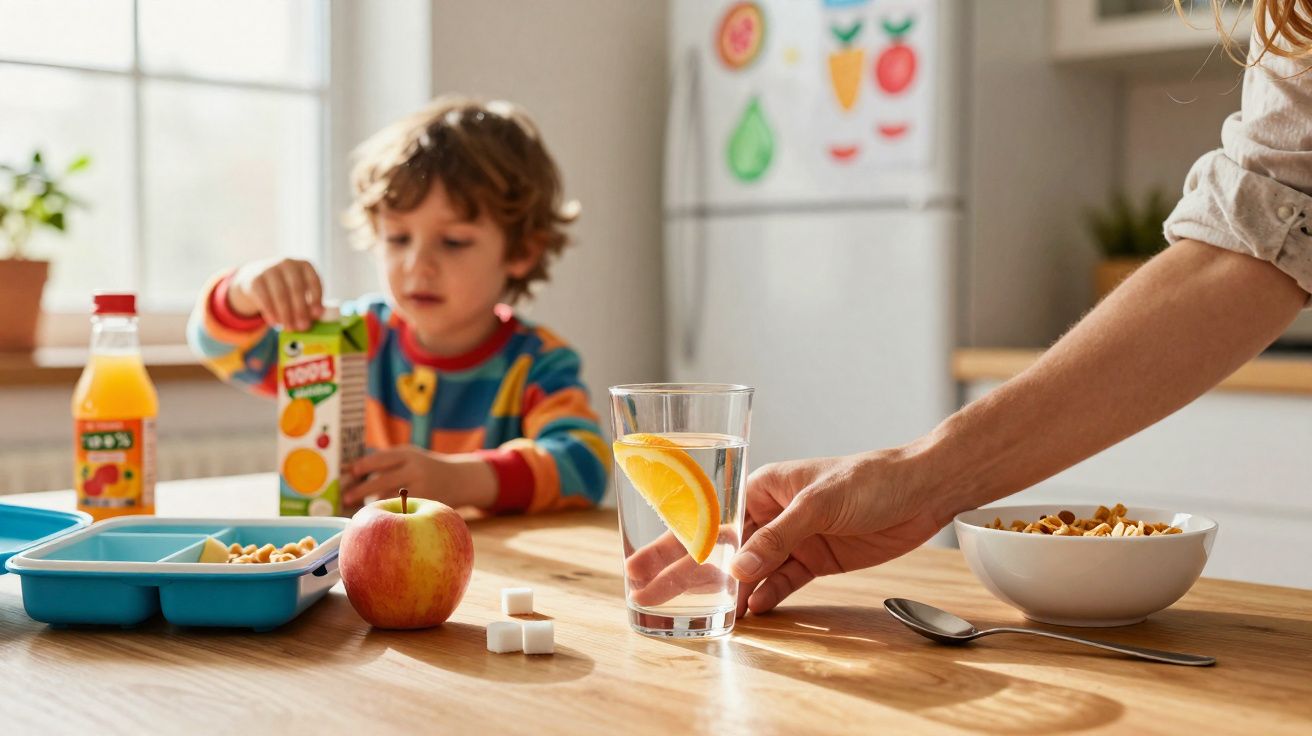
Parents often reach for orange juice or drinking chocolate at breakfast, hoping they are doing something good for their child. A nutrition expert is now warning that these familiar routines frequently conceal a substantial excess of liquid sugar, which can overwhelm a child’s body first thing in the morning - affecting energy, concentration and, in the long run, health.
When the day starts with a sugar surge
Orange juice, multivitamin juice, instant drinking chocolate from a sachet - in many households these are seen as “better” choices than lemonade or cola. After all, the packaging features fruit or milk and often includes claims such as “no added sugar” or “rich in vitamin C”.
This is exactly where the expert’s criticism begins: while these drinks may provide vitamins, they can also deliver very large amounts of rapidly available sugar - and, unlike in a piece of fruit, that sugar comes in liquid form.
“Liquid sugar slips through the body with hardly any brakes - children drink more than is good for them without realising.”
According to the nutrition adviser, a large glass of orange juice at breakfast can already account for most of the daily sugar amount recommended for children. Add drinking chocolate, sweetened cereal, spreads - and the day is often “over-sugared” before lunch even arrives.
What the term “free sugar” really means
The key point is this: even if a carton says “100% juice, no added sugar”, the drink can still be a sugar bomb. The sugar in juices counts as what is known as “free sugar”.
Why juice doesn’t work like whole fruit
When children eat a whole apple, they have to chew it, and the fibre slows down how quickly the sugar is absorbed. That gives the body time to respond, and a feeling of fullness can develop.
With juice, it’s different:
- The fruit fibres are almost entirely missing.
- The drink moves through the stomach and intestines very quickly.
- Blood sugar rises sharply - and then drops again steeply.
The expert explains that free sugar affects the body like “ordinary table sugar”, even if it originally came from an orange. What matters is not where the sugar comes from, but the form in which it is consumed.
“No added sugar doesn’t mean low in sugar - juice naturally contains a lot of sugar, just without a spoonful being tipped into the glass.”
How much sugar is actually in a child’s cup?
The World Health Organization recommends that children have only a very limited amount of free sugar per day. The expert gives a concrete example: a large glass of orange juice can provide around 18 grams of sugar. For children, the daily maximum is often cited as roughly 25 grams - meaning most of the day’s limit may already be used up at breakfast.
Drinking chocolate is not any better. In many products, the first ingredient listed is sugar - which means it makes up the largest share of the powder.
- In some cocoa powders, sugar is the main ingredient.
- Cocoa itself often appears only in second place.
- In practice, the cup contains a sweetened flavour with a little cocoa aroma.
If you stir two to three generously heaped teaspoons of powder into a mug of milk, you are effectively serving several spoonfuls of sugar - on top of the milk’s natural lactose.
Why liquid sugar doesn’t fill children up
Another issue is that liquid sugar hardly creates a sense of fullness. While a breakfast rich in wholegrains keeps children going for longer, sugary juice can rush through the body.
What follows from these sugar spikes:
- Rapid rise in blood sugar.
- A brief burst of energy, with children seeming overexcited.
- A quick drop in blood sugar - a so-called “tendency towards low blood sugar”.
- Tiredness, concentration problems and cravings for something sweet.
“Starting the day with a sugar surge lays the groundwork for constant ups and downs in energy and mood.”
Teachers often report that some children become restless or sluggish by around nine o’clock in the morning. What children eat and drink early in the day plays a much bigger part than many parents realise.
What children should drink in the morning instead
The expert isn’t suggesting anything radical - but rather a classic that is often overlooked in daily life: water.
Water as the default - juice as the exception (for children and liquid sugar)
After a night’s sleep, the body primarily needs fluids, not a sugar load. Water is the best fit: it rehydrates without putting stress on the pancreas.
Parents can follow a simple rule of thumb:
- Everyday drink: water, unsweetened tea or lightly flavoured water (for example with lemon slices or berries).
- Juice: at most a small glass a day, ideally diluted.
- Drinking chocolate: rarely and intentionally, preferably lightly sweetened or made with less powder.
The nutrition expert emphasises that the goal is not to ban everything. A small juice can be perfectly fine - what matters is portion size and frequency. Switching from a large glass to a small one, or mixing juice with water, noticeably reduces the sugar load.
Unsweetened alternatives children genuinely like
Many parents flinch when they hear: “Water only!” They anticipate complaints at the breakfast table. In reality, children often adapt surprisingly quickly to less sweetness if the approach is consistent but relaxed.
Everyday tips that work
A few strategies that tend to go down well in families:
- Juice spritzer instead of straight juice, gradually increasing the water ratio.
- Colourful drinks bottles that make water feel more appealing.
- Herbal tea or fruit tea without sugar, served lukewarm.
- Chicory drink or malt coffee for older children, slightly milky, without sugar.
- Rituals: “water first”, with juice only on certain days or at the weekend.
“Taste can be trained - if you reduce sweetness slowly, you’ll find children start asking for less sugar on their own.”
Parents can also adjust breakfast as a whole: more wholegrains, nuts, yoghurt with no added sugar and fresh fruit help children stay full for longer and feel less need to sweeten things.
Long-term effects: more than “just a bit of sugar”
Liquid sugar is not only about weight. It also affects teeth, metabolism and eating habits. Children who get sweet drinks from an early age face a higher risk of tooth decay, concentration issues and, later on, an unhelpful relationship with sugary foods.
Nutrition medicine specialists point out that the body is worse at “counting” liquid calories. Children often drink far more than they would eat if the same amount of energy were presented as solid food. That can promote excess weight without children ever feeling “properly full”.
The combination with other sweet foods also matters. If juice is paired with sweetened cereal, sugary spreads and a sweet snack in the lunchbox, total sugar intake can quickly add up to levels well above recommendations.
How parents can make the switch step by step
A sudden, strict change often leads only to arguments. A gradual shift in habits is usually more effective. One possible plan:
| Phase | Morning drinks | Goal |
|---|---|---|
| Week 1–2 | Half a glass of juice, half a glass of water, less drinking-chocolate powder | Children get used to less sweetness |
| Week 3–4 | Juice spritzer with a high water content, water as the default | Thirst is mostly quenched with water |
| From week 5 | Water or unsweetened tea, juice only occasionally in small amounts | Sugar from drinks falls significantly in the long term |
It also helps to involve children. They can choose their own drinks bottle, pick the fruit for flavouring water, or have a say in which tea to try. When children are told that sugar tastes good but can be hard work for the body in large amounts, parents are often surprised by how understanding they can be.
In the end, this is not about strict diet rules, but about everyday routines that become healthier without much extra effort. When water and unsweetened drinks become normal and juice or drinking chocolate stays a small treat, things usually settle quickly - for children, parents and blood sugar.






Comments
No comments yet. Be the first to comment!
Leave a Comment