
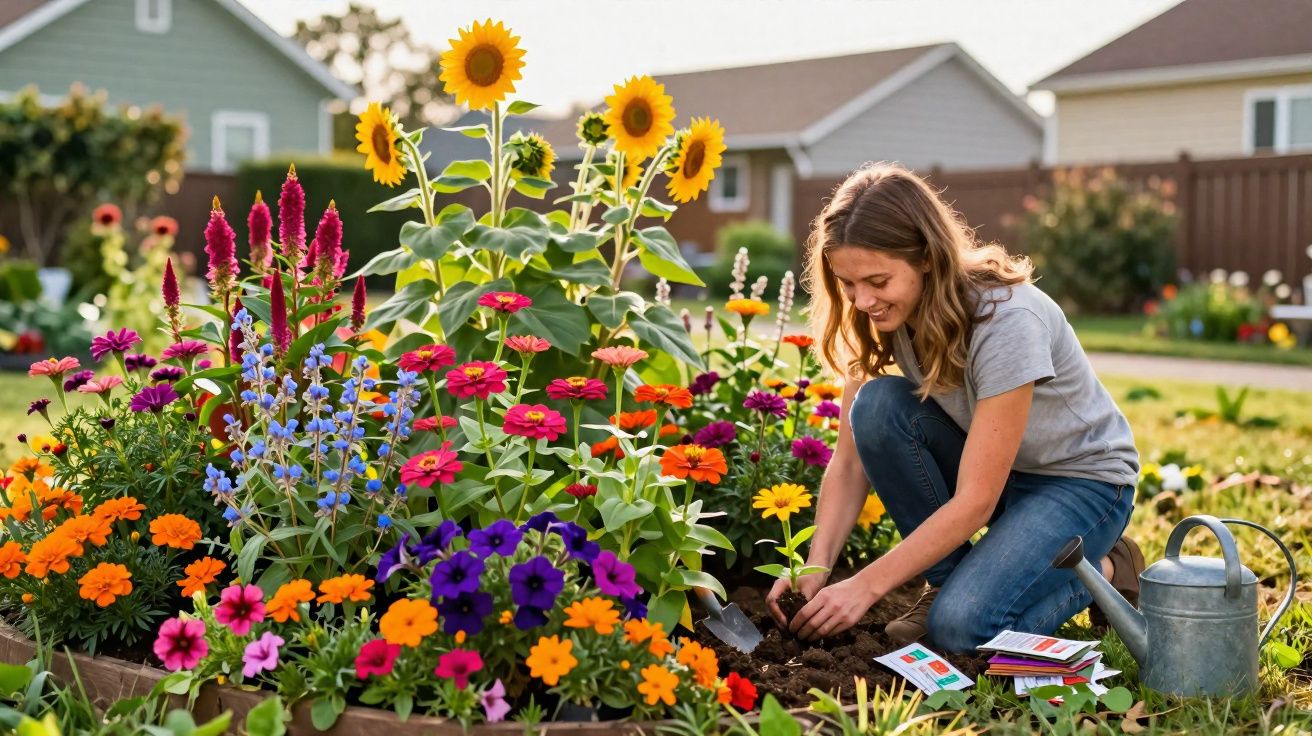
Sow smartly in early spring and, by the start of summer, you can be looking at a generous sea of flowers. Some annuals grow so quickly that, in just a few weeks, they turn bare soil into a dense, colourful display. The best part is that you don’t need expert skills or a high-tech greenhouse-what matters most is timing, sunshine and choosing the right plants.
Getting spring sowing off to a turbo start with annual flowers
The secret behind a record-speed flower garden is choosing annual flowers that need only about 45 to 90 days from seed to bloom. If you start seeds indoors or in a greenhouse from March and plant out after the last frosts, you make full use of the growing season.
- Only sow once the soil feels at least warm to the touch
- Position: as sunny as possible, with free-draining soil that doesn’t become waterlogged
- Keep evenly moist, but don’t keep the compost soaking wet
- Thin seedlings promptly after they emerge
Thinning is the step many home gardeners miss. When young plants are crowded, they compete, stay stunted and produce fewer flowers. Give them space and you’re usually rewarded with noticeably stronger, fuller blooms.
"If you reach for seed packets in March and April, you can enjoy lush beds as early as June-without paying for expensive plug plants."
Zinnias: fast-growing colour hits
Zinnias are a classic choice when you want quick, bold colour. If you sow them on a warm indoor windowsill, they get going rapidly and can be moved into borders or pots after the last frosts in mid-May. In milder areas, you can also sow them directly outdoors from May.
Taller varieties are brilliant as cut flowers for vases, while compact types neatly fill gaps in borders and window boxes. If you regularly remove faded flower heads, you effectively push the plant into making fresh buds, keeping it flowering enthusiastically for longer.
Gomphrena: globe blooms that shrug off heat
Globe amaranth (Gomphrena) is an excellent match for summers that turn hot and dry. These plants cope with strong sun and dry spells far better than many traditional bedding flowers. Once they’ve rooted in well, they can flower from high summer well into autumn.
Their round flower heads can also be dried and used for wreaths or dried arrangements. If you want an attractive plant that doesn’t demand much attention, this one fits perfectly.
Tagetes and nasturtiums: edging plants with extra benefits
Tagetes: compact, scented power bloomers
Marigolds (Tagetes) are a go-to for the front of a border. They germinate readily, grow quickly and keep producing rich yellows, oranges and reds for months. Fine-leaved, low-growing varieties form dense cushions and often carry a light citrus-like scent.
On top of their looks, some Tagetes types are valued as helpful companions among vegetables. Substances released by their roots can reduce certain nematodes (soil-dwelling pests). That’s ornament and soil support in one-hard to beat for practicality.
Nasturtiums: climbers, ground cover and salad garnish
Nasturtiums can be sown directly outdoors from April. They’ll scramble up fences and obelisks or spill casually over walls and the edges of pots. In early summer, they quickly get going with showy yellow, orange or red flowers.
In very hot summers they often slow down a little with flowering, but they’re all the more impressive earlier in the season. Another advantage: the leaves and flowers are edible, adding a peppery kick to salads and sandwiches.
Sunflowers, celosias and spider flower for height and drama
Sunflowers: bold pillars for summer borders
If you want quick structure, it’s hard to ignore sunflowers. They shoot up fast and, depending on the variety, either form compact, bushy plants or dramatic giants that can grow to over 2 metres.
Before buying, check the variety notes: choose dwarf forms for small gardens or balconies, and go for taller types with big heads if you’re aiming for a cottage-garden feel. Later on, birds will appreciate the ripened seeds.
Celosias: glowing “flames” in the border
Celosias (often sold as cockscomb) add an almost exotic texture to beds. Their flower heads can look like plumes or little flames and, in sunshine, appear almost like crinkled silk paper. Even a few plants make a strong statement, especially alongside simpler partners such as zinnias or Tagetes.
Spider flower: airy character with presence
Cleome, commonly known as spider flower, grows quickly from seed and forms long, airy flower spikes. Because it has a light, transparent look, it adds height without making tall plantings feel heavy or blocking other plants.
It’s best placed towards the back of borders and looks most striking when planted in small groups. Its unusual shape makes it stand out in both modern and traditional gardens.
Borage and petunias: gap fillers that insects adore
Borage: blue stars for bees and bumblebees
Borage grows rapidly, flowers generously and attracts countless pollinators. Its blue, star-shaped blooms hover above soft, slightly hairy foliage, supplying nectar for bees, bumblebees and butterflies. It’s equally at home in a herb plot or an ornamental bed.
It also self-seeds readily. If you’d rather it didn’t spread, remove the spent flower stems in good time. The fresh flowers are considered edible and are often used as decoration in drinks and salads.
Petunias: long-lasting colour for patios and balconies
Petunias are summer-flower staples and respond well to good care. If you raise them from seed, they need an early start in warmth, but they repay you with a long flowering period from early summer into autumn.
Single or double, trailing or upright-the range of forms is huge. With regular feeding and deadheading, they keep their momentum. Pair them with zinnias and celosias in containers and you can create a real burst of colour.
Turning nine quick growers into lush beds in record time
For a truly dense look, don’t plant just one variety in large blocks-mix the nine fast starters with a bit of strategy. Put tall sunflowers and spider flowers at the back, place medium-height zinnias and celosias in the middle, and bring Tagetes, nasturtiums and petunias to the front. Let borage weave between as a flexible gap filler.
| Plant | When to sow | Key advantage |
|---|---|---|
| Zinnia | March indoors / May outdoors | Strong colour, ideal as a cut flower |
| Gomphrena | March–April, start warm | Tolerates heat and drought |
| Tagetes | April–May outdoors | Neat edging, helps in the veg patch |
| Sunflower | April–May, direct sow | Fast height, bird food in autumn |
| Borage | April, direct sow | Magnet for pollinators |
| Nasturtium | April–May, direct sow | Edible flowers, climbs or trails |
| Celosia | March–April, start off under cover | Striking, vivid flower shapes |
| Petunia | February–March, start off under cover | Long-flowering for pots and balconies |
| Spider flower | March–April, start off under cover | Airy structure, eye-catching form |
"If you combine different heights, you can create an almost three-dimensional flower picture in under three months."
Practical tips for beginners and the impatient
If you’ve never raised plants from seed before, start modestly: choose fewer species, but sow them in several rows or pots. That way, any failures are easier to absorb. A straightforward approach is to sow into seed trays with low-nutrient compost, prick out into richer compost, then plant outdoors from mid-May.
In windy gardens, it pays to add a support cane early for sunflowers and spider flower. Seedlings that grow up with a support are less likely to snap or flop in summer storms.
Why fast-flowering annuals are more than decoration
These rapid bloomers don’t just add colour-they also help support the garden’s ecological balance. More flowers means more insects, which in turn provides more food for birds and other beneficial wildlife. Borage, zinnia, nasturtium and Tagetes are often considered especially insect-friendly.
If you grow vegetables, you can also use the nine plants deliberately as companions. Planted among tomatoes, peppers or brassicas, they can confuse pests, bring in pollinators and make vegetable beds look more inviting. Many gardeners notice the whole space feels more lively as soon as annual flower mixes are added.
Another advantage is that these flowers are forgiving. If you miss a watering day or sow a bit too thickly, you still have a good chance of a decent result. That makes them an ideal first project for children and new gardeners-quick, visible progress is motivating and encourages more garden plans.





Comments
No comments yet. Be the first to comment!
Leave a Comment