
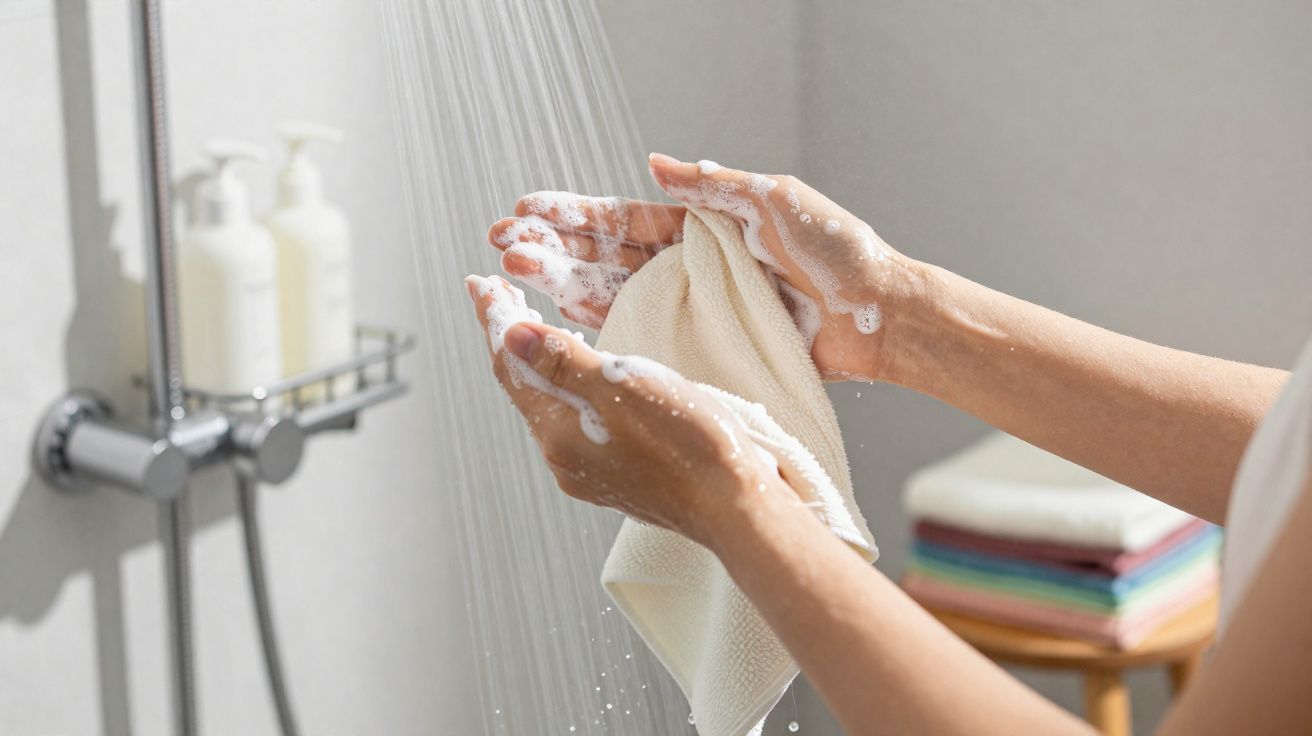
Some people are convinced a rough cotton flannel is the only thing that leaves them feeling truly fresh. Others argue it is an unhygienic throwback that should have disappeared decades ago. So where does medical science land on the flannel debate, and what do doctors actually suggest for a genuinely hygienic shower routine?
Hand washing in the shower: simple, direct and often safer
Clinical advice generally favours the most straightforward approach: washing your body using clean hands. For most day-to-day showers, clean hands plus a mild cleanser will comfortably shift sweat, body odour and any obvious grime.
Because you can wash your hands first, you immediately remove a large proportion of microbes sitting on the skin. After that, your hands become a surprisingly effective “tool”: you can sense tenderness, spots, irritation or lumps, and naturally adjust how much pressure you use.
With routine washing, direct contact between clean hands, soap and skin is typically sufficient for hygiene, provided you spend long enough rubbing.
In practice, doctors often recommend focusing on technique rather than gadgets. A simple order of steps is commonly advised:
- Rinse your body with warm (not scorching) water
- Put a small amount of soap or shower gel into your hands
- Work over each area thoroughly, with extra attention to armpits, groin, buttocks and feet
- Rinse well until your skin no longer feels slick or soapy
If you spend about one to two minutes actively rubbing, you achieve most of the cleansing effect. The friction from your hands, together with the soap’s surfactants, helps lift sweat, sebum and many surface microbes away from the skin.
There is also a practical hygiene bonus that is easy to miss: fewer items in the shower means fewer damp surfaces for bacteria and fungi to settle on. Hands dry quickly; a flannel often stays moist for much longer.
The flannel: helpful tool or bacterial sponge?
A flannel is not automatically “bad”. It can be genuinely useful for people with reduced mobility who struggle to reach their back or feet. It can also provide gentle exfoliation by loosening dead skin cells that can make skin look dull. And for many, the slightly scrubbed sensation is simply satisfying.
The worry is what happens between showers. A flannel that remains wet, folded up, or stored in a steamy bathroom can become an ideal habitat for microbes-bacteria, yeasts such as Candida, and even moulds.
A flannel that stays damp and never properly dries can shift from cleaning the skin to transferring microbes back onto it.
That does not mean flannels are forbidden. It means they are only a sensible choice if you are strict about how you look after them. Hygiene advice tends to boil down to three essentials: replace them often, rinse them thoroughly, and dry them fast.
How to use a flannel without turning it into a germ trap
If you prefer a flannel-or need one for comfort or mobility-adopting a few firm habits can substantially reduce contamination risk.
| Practice | Why it matters |
|---|---|
| Change every 2–3 days | Reduces the time bacteria and fungi have to multiply |
| Rinse well after each shower | Washes away soap, shed skin cells and sweat that microbes feed on |
| Wring and dry in a ventilated place | Persistent moisture encourages growth; drying slows it down |
| Machine-wash regularly at high temperature | Hotter washes and detergent lower the microbial load more effectively |
| Throw away at the first sign of odour or stains | Smells or discolouration can indicate established microbial colonies |
Microfibre flannels (or mitts) can be a slightly better option than thick cotton because they typically dry faster and hold less water. Even so, the same rules still apply: wash, rotate and dry them properly.
A quick note on other shower accessories: shower poufs, loofahs and sponges can pose similar (or greater) problems because they trap water and have lots of crevices. If you use them, treat them like flannels-keep them personal, rinse them thoroughly, and ensure they dry fully between uses.
Which method is “cleaner”? What doctors actually prioritise in a shower routine
When clinicians weigh in, they usually step past the nostalgia (or dislike) for flannels and focus on two practical questions: does it remove sweat and dirt effectively, and does it minimise irritation or infection risk?
For healthy adults with normal skin, washing with clean hands often comes out on top. It involves fewer objects, lowers the chance of bacterial build-up on damp materials, and is typically easier to do consistently.
For most people, a basic shower using clean hands, mild soap and thorough rubbing is both hygienic and adequate.
That said, a flannel can still be sensible in certain circumstances, including:
- Older adults or anyone with reduced mobility who finds bending or twisting difficult
- Occasional exfoliation once or twice weekly (rather than daily) to reduce irritation
- Washing feet or back when those areas are awkward to reach by hand
In these situations, medical guidance usually leans towards using a clean flannel that dries quickly-and keeping on top of laundry. The problem is not the tool itself; it is stagnant moisture.
Building a shower routine that protects your skin
The hand-versus-flannel debate matters less than many people think, because how you wash affects your skin barrier. That outer layer-rich in lipids and helpful skin microbes-helps keep moisture in and blocks infection.
If you wash too often, scrub too hard, or rely on harsh products, you can strip away natural oils. The result can be tightness, itchiness, and a higher chance of eczema flare-ups or tiny cracks. This is one reason doctors often suggest gentle cleansers, frequently labelled pH neutral or designed for sensitive skin.
To stay clean while supporting the skin barrier, small tweaks can help:
- Keep showers fairly brief, usually under 10 minutes
- Choose warm water rather than very hot water to avoid drying the skin
- Focus soap on areas most prone to sweat and odour, rather than repeatedly soaping the entire body through the day
- Dry by patting with a towel instead of vigorous rubbing
- Use a plain moisturiser afterwards if your skin feels dry
People with very dry, delicate or eczema-prone skin often do better using hands instead of rough cloths. Hands allow gentler pressure, and you can stop quickly if the skin begins to sting or redden.
Different bodies, different needs: when shower routines should change
Shower needs are not identical for everyone. A teenager training daily at a football academy faces different challenges from an office worker who does a gentle cycle commute.
If you sweat heavily, do physical work, or wear tight synthetic clothing, it is worth paying extra attention to areas where heat, friction and moisture build up-such as the groin, under-breast folds and feet. In these zones, sweat plus warmth plus fabric can encourage fungal problems. Careful washing with hands, drying well, and choosing breathable underwear usually matters more than whether you use a flannel.
On the other hand, someone who is less active and has sensitive skin may be best served by one thorough shower a day, mainly using hands and a fragrance-free cleanser, with any exfoliating cloth saved for occasional use.
People who are prone to recurrent skin infections, have diabetes, or are immunocompromised may want to be particularly cautious with shared bathrooms and damp fabrics. In those cases, using personal items only, drying them fully, and laundering them frequently becomes even more important.
Practical scenarios: what happens if habits slip?
It can help to picture what “risk” looks like in everyday life. Imagine a shared student house where one flannel lives in the shower for weeks and several people use it. It stays damp, never fully dries, and develops a slightly musty smell. In that situation, a housemate with athlete’s foot or a mild fungal rash could, in theory, contribute to spreading those organisms through shared fabric.
Or consider a busy parent who grabs a quick shower and leaves the same face flannel hanging in a warm bathroom for a fortnight. Old make-up residue, skin oils and constant humidity create comfortable conditions for facial bacteria and yeasts. That might not cause illness, but it can worsen acne or set off local irritation.
Shower hygiene is less about being flawless and more about reducing the small, repeated chances microbes have to multiply.
Using bare hands for most washing, keeping flannels clearly personal, and laundering them regularly cuts those opportunities down-without turning showering into an exhausting routine.
Terms and details that often get misunderstood
Two labels commonly seen on wash products are “antibacterial” and “pH neutral”. Antibacterial soaps include ingredients intended to kill bacteria rather than simply remove them. In everyday life, they are rarely necessary and can disrupt the normal balance of skin flora. Doctors typically reserve stronger antibacterial products for specific medical situations, not for daily showers in otherwise healthy people.
pH neutral usually means close to the skin’s natural acidity, which is around pH 5.5. Cleansers in that region are often less irritating-particularly for sensitive or damaged skin. They will not make you “more clean” than other products, but they can make regular washing more comfortable and easier to stick with over time.
Once you understand those basics, the flannel-versus-hands argument becomes much less dramatic: clean hands, sensible products, and careful handling of damp fabrics do the real work of keeping your shower routine properly hygienic.




Comments
No comments yet. Be the first to comment!
Leave a Comment