
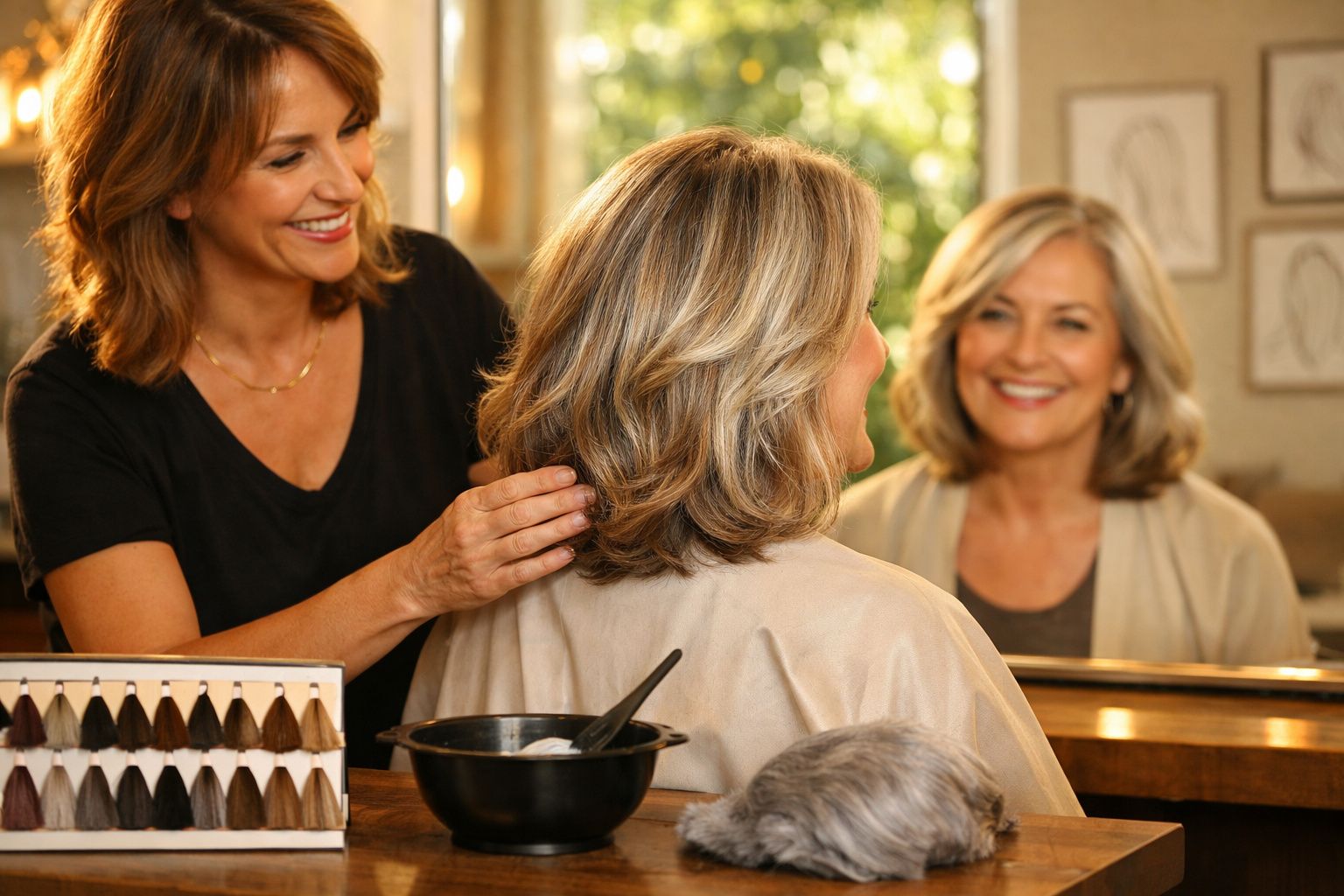
Past 50, it’s often the little adjustments that make the biggest difference - and hair colour is one of the quickest wins. A small shift in tone can soften your features, make hair look fuller and give skin an instant “rested” lift.
You don’t need to go for a dramatic chop or an all-out makeover to look fresher. According to stylists, the most age-flattering move is usually a strategic tweak to colour - especially as menopause changes skin tone and hair texture, making harsh shades feel less forgiving.
The golden rule this stylist gives every woman over 50
French hairdresser Delphine Courteille, who works with women in their 50s and 60s every day, sticks to one straightforward principle. It’s not about chasing whatever’s trending.
The closer you move back towards your natural softness, the younger your features tend to look.
Her “rule of gold” is simple: once you’re in your fifties, move away from severe, high-contrast colour and back towards shades that look plausible on you.
If you’ve been living in an icy, near-white blonde for years, she recommends warming it slightly. Think creamy vanilla, soft honey or beige rather than polar platinum. If you love very dark hair, she suggests backing away from jet black and choosing something kinder like chocolate, chestnut or a soft mocha brown.
The goal isn’t to erase your style. It’s to remove the sharp edges that can highlight fine lines, under-eye darkness and softness around the jaw. Bold, flat colour can be striking in your 20s; over 50, it often puts every hint of tiredness under a spotlight.
Why “natural” colour makes you look less tired
With age, three things often shift at the same time: skin loses some of its brightness, hair gets finer, and your natural shade can cool and fade. Holding on to an ultra-cold or very dark artificial colour while everything else softens can look visually “off”.
Softer, slightly warmer tones blur shadows on the face, while flat, inky tones tend to carve them out.
Warm reflects act a bit like a ring light for the complexion. Gold, caramel or coppery notes bounce light back onto the skin, softening the look of under-eye circles and helping cheeks appear lifted. Very cool ash or blue-black shades, by contrast, can pull colour from the face and make features look harder.
Courteille’s rule of thumb: if your colour looks “painted on” rather than lived-in, it’s probably ageing you.
Highlights and balayage: subtle tools, big anti-age payoff
Once your base shade feels more natural, specific techniques can do a lot of the anti-ageing heavy lifting. Two go-to options for women 50+ are highlights and balayage.
- Highlights: fine, lighter strands placed throughout the hair for contrast and movement
- Balayage: hand-painted lightening, usually from mid-lengths to ends, for a sun-kissed effect
- Hair contouring: light and dark pieces placed around the face to sculpt the features
Used well, these methods do three jobs at once: they soften regrowth, create the illusion of thicker hair and brighten the face without shouting “I’ve just had my colour done”.
A few lighter strands around the face can visually lift the cheekbones and open up the eye area.
If your hair is fine, balayage can be especially helpful. A dark, solid shade may make hair look denser, but it can also read heavier and flatter. Adding delicate lighter ribbons gives depth and movement, which can trick the eye into seeing more volume at the roots and through the lengths.
The most flattering shades after 50
Stylists generally start with your natural base and skin tone, but there are colour families that tend to suit many women over 50.
| Hair type / base | Younger-looking options | What to be cautious with |
|---|---|---|
| Natural blonde or light brown | Honey, golden blonde, beige, soft caramel, ash-blonde mixed with warm lights | Very icy, white or bluish blondes all over |
| Medium to dark brown | Chocolate, hazelnut, light mahogany, warm chestnut with discreet highlights | Jet black, ultra-cool dark browns with no dimension |
| Significant natural grey | Silver, pearl grey, luminous white with toning and brightening treatments | Trying to hide every grey with flat, dark box dye |
Warm blondes like honey, gold and caramel often flatter mature skin because they echo the warmth that naturally fades over time. Light chestnut, soft auburn and hazelnut browns can stop olive or neutral skin tones from looking flat.
If you prefer darker hair, many stylists recommend shifting from “ink” to “chocolate”. A deep brown with subtle auburn or coffee lights still looks dark and polished, but it reflects light and softens the hairline.
Leaning into grey: when silver is the younger choice
For some women, the most anti-ageing move is unexpectedly bold: stop battling the grey and sharpen it instead.
Clean, bright silver or white hair can look genuinely modern when the cut and texture are right. Courteille and other colourists often use cool or pearly toners to cancel yellow tones, then add very soft highlights or lowlights to avoid a flat, “steel helmet” finish.
Managed grey tends to look fresher than patchy dye jobs where dark colour and white roots are constantly battling.
Shine is the make-or-break detail. Grey hair is usually drier and more porous, so glossing treatments, masks and oils become part of the colour plan, not just aftercare.
How often should you colour after 50?
Mature hair is often finer, drier and more delicate, which means the schedule that worked in your 30s may not suit anymore.
Many colourists suggest:
- Root touch-ups or face-framing highlights every 6–8 weeks instead of every 4
- Balayage refresh every 3–6 months, because the grow-out is softer
- Gloss or toner sessions between big services to maintain shine without more damage
Leaving more time between strong chemical services helps protect density and avoids that dull, over-processed finish that can age hair fast.
Home colour vs salon: what changes after 50
Box dye can still be an option, but after 50 there’s less room for mistakes. Hair can take colour differently from roots to ends, and grey hairs may resist pigment or grab it unevenly.
The more contrast you have - dark dye, very pale skin, strong regrowth - the more every little mistake shows.
In-salon colour offers custom formulas, precise placement and bond-protecting additives. If you do colour at home, experts typically advise staying close to your current shade, avoiding big jumps, and focusing on roots rather than doing all-over colour every time.
Practical scenarios: adjusting your colour at 50, 60 and beyond
If you’ve always been a bottle blonde
A woman who has worn cool, almost white highlights for years may notice that, at 52, her skin suddenly looks hollow and washed out. A stylist might keep the blonde but introduce warmer honey lights around the face and a slightly deeper beige root shadow. The effect: still blonde, but with more contrast, healthier shine and a softer jawline.
If you’re clinging to jet black
On a 58-year-old with olive skin and strong black dye, the eye is drawn to every wrinkle and to the white root line that appears within two weeks. By stepping down to a rich chocolate brown with scattered caramel strands, the face looks less severe, and root re-growth blends more gently.
If you’re half-grey and fed up
A woman of 63 with salt-and-pepper hair and faded brown dye often feels “messy” rather than edgy. A colourist can strip back old colour, then add cool-toned highlights and a silver gloss. The result is a deliberate silver look that aligns with her skin tone, instead of an in-between stage that reads as neglect.
Technical terms that actually matter
Stylists use plenty of jargon, but a few terms are genuinely useful when you’re talking about anti-ageing colour:
- Base: your main overall shade, the colour you see at the roots
- Tone: the character of the colour – warm (gold, copper), cool (ash, pearl) or neutral
- Lowlights: slightly darker strands scattered through the hair to add depth
- Gloss/toner: semi-permanent colour that refines tone and adds shine without major lightening
Knowing the language helps you ask for “a warmer tone” or “a softer base with fine highlights” rather than saying “something younger”, which can mean anything once you’re in the chair.
Colour, skincare and styling: how the effects add up
Hair colour doesn’t work on its own. The same honey lights that lift your features will look much better if your skin is well hydrated and your cut adds movement around the jaw and cheekbones.
Many stylists now think in combinations: soft, natural-looking colour for a gentler effect, a lightly layered cut for lift, and styling products that enhance shine rather than stiffness. Together, these choices can take years off without anyone being able to say exactly what changed - which is usually the point.


Comments
No comments yet. Be the first to comment!
Leave a Comment