
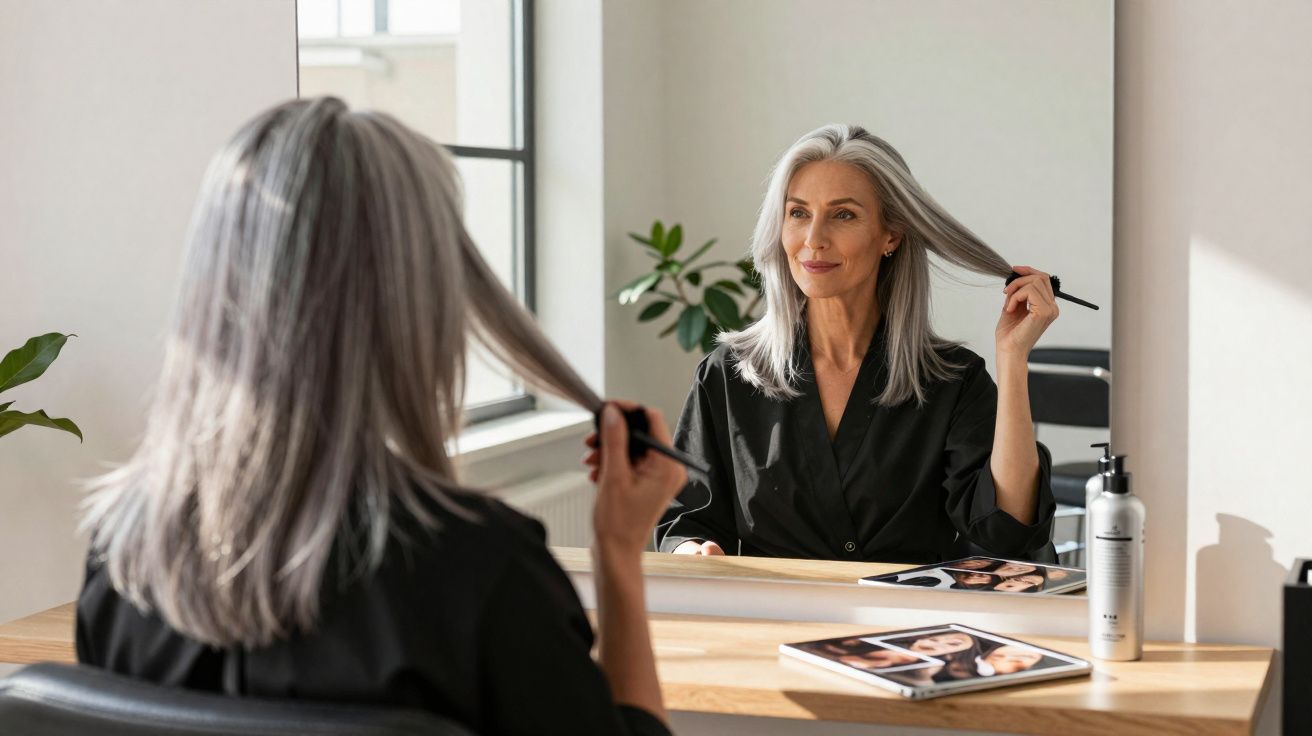
The woman in the salon chair fixed her eyes on the mirror, lips pressed together, the cutting cape tugged snugly up to her throat.
Her hair had become a gentle blend of blonde and silver after months of putting off colour appointments. “So… are we letting it go grey?” the stylist asked, with a smile that felt like a caution. A junior assistant drifted past and muttered, “A grey reset? That’s bold.” The word landed like a dare rather than praise.
A chair away, another client flicked through Instagram reels declaring the “death of balayage”. The clips followed the same script: stylists calling grown-out balayage “lazy”, telling “women over 35” to stop “hiding” and to “commit” to either full grey or full colour. No grey area. No permission to sit in the middle.
By the time the foils appeared, the real question was unavoidable: who decided a woman with grey hair is either courageous… or making a mistake?
Grey hair vs balayage: when trends turn into judgment
The loudest hair “trend” on social media right now isn’t a fringe or a new technique. It’s a moral ruling dressed up as guidance: if you have greys, you should either embrace them completely or cover every strand. The option many people loved-the softer middle route of balayage that melts grey into blonde or caramel-has suddenly been branded timid, “stuck”, even “sad”.
Spend five minutes on TikTok or Instagram and you’ll find the formula. Split-screen images of women with grown-out balayage marked “before – tired”, followed by crisp silver bobs tagged “after – empowered”. The message is blunt. Balayage-used for years as a tool to feel more like yourself-gets reframed as a way of pretending you’re not ageing.
And it’s bigger than hair. It’s a tug-of-war over who is allowed to get older quietly, and who is expected to turn their head into a statement.
If you ask colourists away from the cameras, many will tell you the “ditch balayage” storyline didn’t appear by accident. Over the past three years, searches for “grey transition hair” and “embrace natural silver” have surged. Salons have leaned into it with “grey transformation packages” that promise a new look in a single day-often costing £1,000+.
At the same time, platforms reward extremes. A gentle, low-maintenance balayage refresh twice a year doesn’t go viral. A dramatic before-and-after where a brunette becomes icy silver in one sitting? That’s shareable. That’s clicks. So balayage shifts from trusted technique to “compromise” in the algorithm’s eyes.
In this new storyline, women over 40 get flattened into two stereotypes: the “cool silver fox” and the “woman clinging to youth”. The reality-most people living somewhere between those poles-gets edited out.
Underneath the trend language is an old pattern. Women’s hair becomes a public battleground for opinions they never requested. Going fully grey is framed as morally better: truthful, authentic, almost political. Keeping balayage is painted as denial, even self-betrayal-like one choice is virtue and the other is vanity.
That binary has nothing to do with how people actually live. Some women genuinely enjoy the ritual of colour appointments. Others are juggling caring responsibilities, children, demanding jobs-or simply want their roots to be less obvious on video calls. Some are not emotionally ready to meet a full head of silver in the mirror every day. None of that fits into a 15‑second reel.
When we pretend it does, we aren’t critiquing a technique-we’re shaming women for the way they move through time.
Grey hair transition and balayage maintenance: staying yourself in the grey / balayage storm
If you’re hovering between growing out your grey hair and booking another balayage appointment, start with the lowest-drama option: extend the timeline, not the identity. Instead of a total overhaul, ask your colourist for a soft blend. In practice, that often means lightening a few pieces around the face, weaving in very fine highlights, then toning everything so your natural grey sits harmoniously rather than fighting the rest of the colour.
Try thinking in seasons rather than ultimatums. You can tell yourself, “For the next six months, I’m in a transition season.” That removes the pressure of deciding what you’ll do “forever”. Take a quick photo every couple of weeks in natural light. Hair can look far harsher under salon lighting than it does in your day-to-day life, and looking back at photos can reveal whether you’re adjusting to the grey-or whether you truly miss a warmer tone.
The point isn’t to be on-trend. The point is to recognise yourself when you catch your reflection in a shop window.
A few common traps are almost universal. One is letting strangers online drown out what you actually see in the mirror. Viral videos will insist grey roots paired with balayage look “messy” and must be corrected immediately. In real life, most people walking past you aren’t clocking your regrowth line anywhere near as much as they notice their own worries.
Another trap is believing you must pick a team: full silver or full colour. You don’t. You can keep balayage subtle, top it up once or twice a year, and call that your version of acceptance. You can go mostly grey, then add a few foils again later when you miss the brightness.
And if social media makes it look like everyone follows perfect routines and strict rules, it’s worth saying plainly: almost nobody lives like that. Most women wash their hair on a Tuesday evening, look in the mirror, exhale, and choose what feels manageable this month. That’s being human, not “failing” at ageing.
One practical note that rarely makes it into the reels: texture and shine can matter more than the exact shade. Grey hair can feel coarser or drier as it comes through, and a good cut plus consistent conditioning can make a bigger difference than any dramatic colour decision. If you’re transitioning, ask about a clear gloss, a toner refresh, and a routine that supports moisture and shine-especially if heat styling is part of your week.
It’s also worth acknowledging the workplace and cultural layer. For some women, “embracing natural silver” is empowering; for others, it can feel risky in environments that still reward a youthful look. That doesn’t make anyone less authentic. It makes them realistic about the world they move through.
Under all the noise, plenty of stylists are quietly resisting the shame creeping into the conversation. Colourist and educator Leah Taylor put it like this:
“I see women apologising for wanting ‘just a bit of balayage’ with their greys, like they’re confessing a crime. Hair is not a manifesto. You’re allowed to like what you like.”
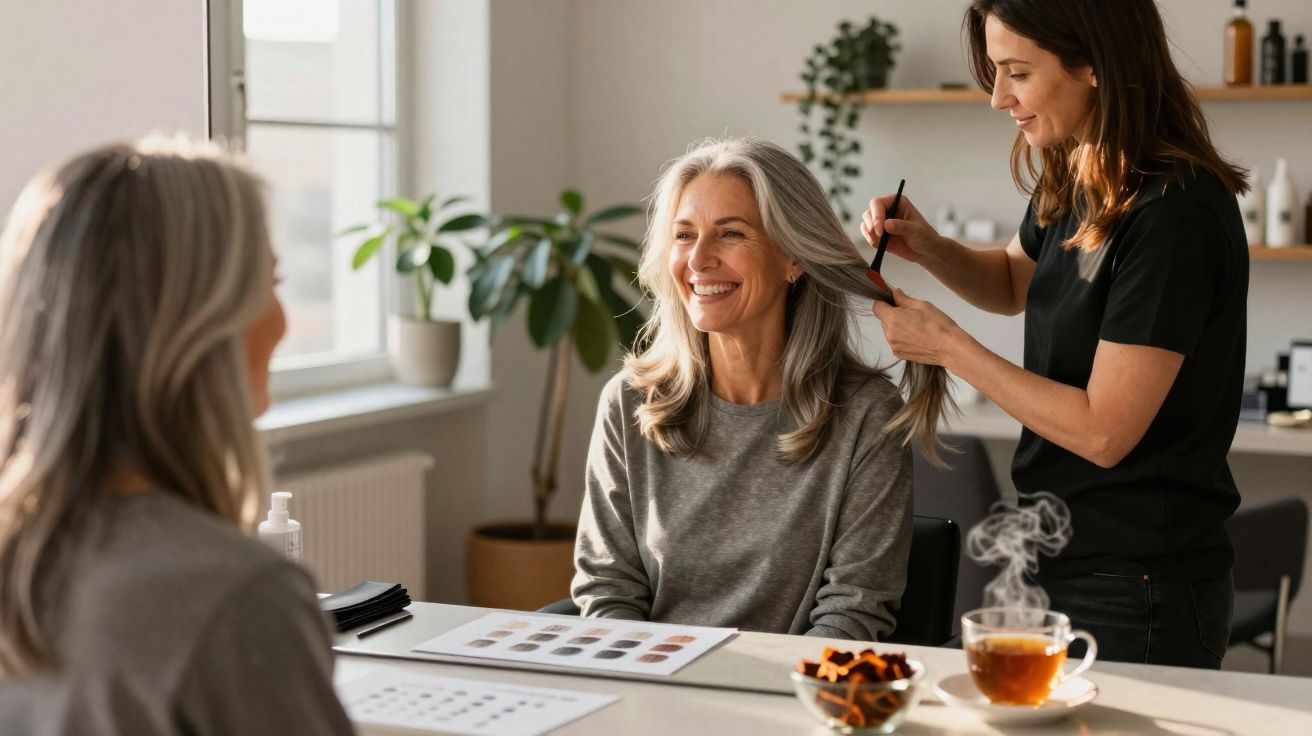
This is where one candid conversation with a professional can help more than 50 videos. Share your real constraints: your budget, how often you can get to the salon, and how you feel when you see your first greys. A good colourist builds a plan around your life-not around a trend carousel.
If you’re feeling overloaded, keep a tiny reference set on your phone:
- One photo of you at any age when your hair felt great.
- One current inspiration image that looks achievable (not heavily filtered).
- One sentence that captures what you want, such as “softer around my face” or “less yellow”.
What this “grey shame” moment really says about us
The argument over grey hair and balayage looks like beauty chat, but underneath it sits control. Who is allowed to age quietly. Who is expected to turn every birthday into a statement. Who gets applauded for “embracing” and who gets laughed at for “resisting”. The irony is that a movement claiming to reduce pressure can quickly become a new form of pressure, complete with its own rules and rankings.
Most people know the feeling of having their appearance treated like public property. Hair has always been an easy target: too long, too short, too blonde, too grey. The current backlash against balayage on greying women is simply the latest version-only louder because it’s playing out on platforms engineered for hot takes rather than nuance. It can feel deeply personal, even when what you’re experiencing is an algorithm rewarding outrage.
Perhaps the quiet rebellion is refusing to choose a side at all. It’s walking into the salon and saying, without apology: “This is how I live. This is what I can afford. This is how I want to feel.” Then letting your hair reflect that-rather than using it as proof of how enlightened you are about ageing. That isn’t a trend. It’s a relationship with yourself, growing out slowly, strand by strand.
| Key point | Detail | Why it matters to you |
|---|---|---|
| “Grey shame” is a manufactured trend | Social media and some salons push an extreme choice: all grey or fully coloured | Helps you step back from viral pressure and guilt |
| Balayage remains a legitimate option | A flexible technique for blending grey hair without denying your age | Keeps a softer, more realistic middle path open |
| Your lifestyle should lead the decision | Budget, time, and emotions matter more than trends | Supports a sustainable, calm hair routine you can actually live with |
FAQ
Is balayage “out” if you have grey hair?
Not really. Online trends move at speed, but in most salons balayage is still widely used to blend greys gently and help colour grow out with less hassle.Can I transition to grey without a drastic makeover?
Yes. You can shift gradually by adding finer highlights, reducing overall colour, and using toners to soften the line between grey roots and older balayage.Will going fully grey make me look older?
Not automatically. Cut, shine, and styling often have more impact than colour alone; a sharp shape and healthy texture can look fresher than flat, dull dye.How often should I refresh balayage with greys coming in?
Many people stretch appointments to two or three times a year, focusing on the hairline and top layers rather than doing a full head at every visit.What if I regret embracing my natural grey?
You can reintroduce colour slowly at any point. Nothing is permanent: hair grows, tones fade, and you’re allowed to change your mind.




Comments
No comments yet. Be the first to comment!
Leave a Comment