
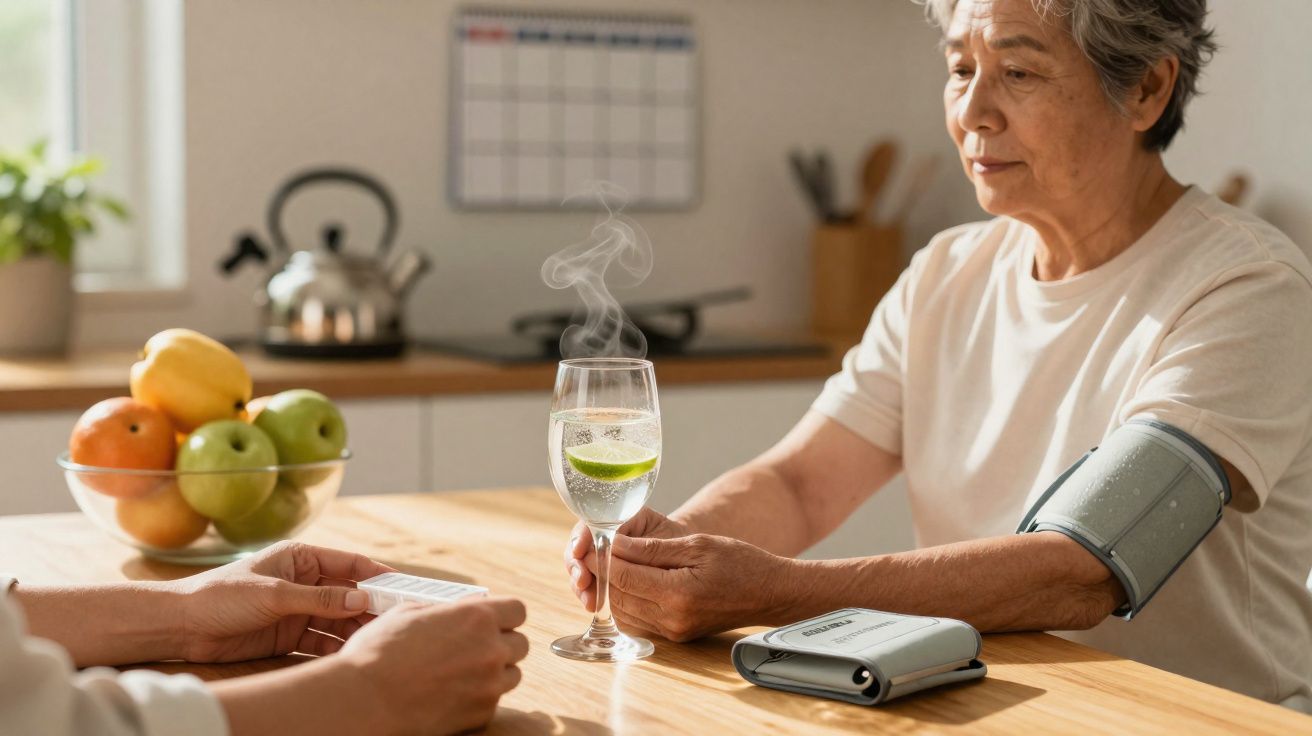
The first time I properly noticed it was over Sunday lunch in a too-small suburban kitchen. The grandchildren were darting between the table and the sitting room, toppling crayons and Lego figures, while their grandfather kept topping up his wine “just a touch”. He roared with laughter, told the same anecdote twice, and nobody challenged him. His daughter slipped the car keys from the wall hook into her handbag without a word. His wife put out pudding wearing the tight smile of someone who has been performing this routine for years.
The room was warm and heavy with roast chicken and family conversation. Even so, there was a chill underneath it all.
One glass can become the thing everything else revolves around.
Later-life drinking: when “I’ve earned it” becomes everyone else’s problem
You hear it all the time after 60: “I’ve grafted all my life, I’m entitled to my drink.”
At first glance, it sounds fair enough, even endearing - a small act of defiance against getting older, a way to keep a bit of pleasure in a body that seems to complain more each year. But spend a whole weekend with an older drinker and the atmosphere changes. You start noticing the tablets and the glasses. You begin listening for the slight thickening in their speech. You watch them rise too quickly near the stairs.
The boundary between an innocent habit and a quiet family crisis is far narrower than most people want to admit.
Ask any GP or hospital nurse about Saturday night and they will tell you about the “soft” casualties: not the dramatic motorway pile-ups, but the 72-year-old who slipped on the bathroom tiles after a few whiskies. The 68-year-old who mixed red wine with sleeping tablets and woke confused, dehydrated and furious at all the fuss. The ambulance journeys funded by taxpayers, the staff hours swallowed up, the scans ordered “just to be safe”.
None of these incidents will ever become headline news. They are just another entry in a packed emergency department, steadily pushing a strained system towards breaking point. And behind the curtain sits a weary spouse clutching a coat, trying to work out how on earth to explain it all to the grandchildren.
Alcohol affects an ageing body in a different way. There is less water in the tissues, the liver works more slowly, and more medicines are in circulation - so the same “couple of glasses” that felt manageable in your forties can now land like four. Reactions slow down. Balance becomes uncertain. Blood pressure jumps around. That cheerful night-time drink that “helps you sleep” may also clash with blood thinners, antidepressants and diabetes medication.
From the outside, it still appears to be one person and one bottle. In truth, it is a web of consequences stretching into family nerves and the healthcare budget. What feels like a private choice becomes a public cost.
Retirement can make the pattern harder to spot because the usual stop-start markers disappear. There is no commute, no early alarm and often far less structure, so a harmless-looking evening drink can quietly turn into a daily habit. By the time family members notice, the routine may already be doing real damage.
The earlier the issue is named, the easier it is to change. A conversation with a GP, pharmacist or practice nurse can uncover whether alcohol itself is the problem or whether it is interacting with grief, loneliness, poor sleep or medication.
Choosing not to drink as an act of care, not punishment
There is a very different script that hardly anyone applauds: the older person who simply decides, “I’m finished.”
Not in a dramatic, announce-it-to-everyone kind of way. Just a quiet turn.
They move the bottles to the highest shelf “for visitors” and stop opening them. They replace the evening gin with herbal tea or a decent zero-alcohol beer. They still sit at the table, still tell the stories, but their drink no longer blurs their memory or unsettles their footing.
This is not about being virtuous. It is about imagining your grandson sitting in an A&E waiting room and deciding you would rather never put him there.
Most people do not stop because they hit rock bottom. They stop because of small humiliations that sting in private. Missing a birthday call after drinking. Snapping at a child. Needing help to get up from the sofa after a few glasses.
Nobody likes to talk about the shame of being the person your grown-up children quietly monitor at family gatherings. You used to be the driver, the fixer, the one who kept everything together. Now they count your drinks in silence and take your keys away. That reversal is often the real wake-up call.
And to be fair, this is rarely neat and tidy. People pause, restart, slip back, try again. The mistake is not the wobbling - it is pretending there is no wobbling at all.
“I did not give up for myself,” a 74-year-old retired electrician told me. “I stopped the day my granddaughter asked whether Grandad was ‘ill again’ because I was tipsy at Christmas. I realised I was teaching her that this was normal. That hurt me more than any warning from a doctor.”
Set one clear boundary
No alcohol on weekdays, nothing at home, or nothing after 8 p.m. A single rule is easier to keep than a vague promise to “drink less”.Tell one person you trust
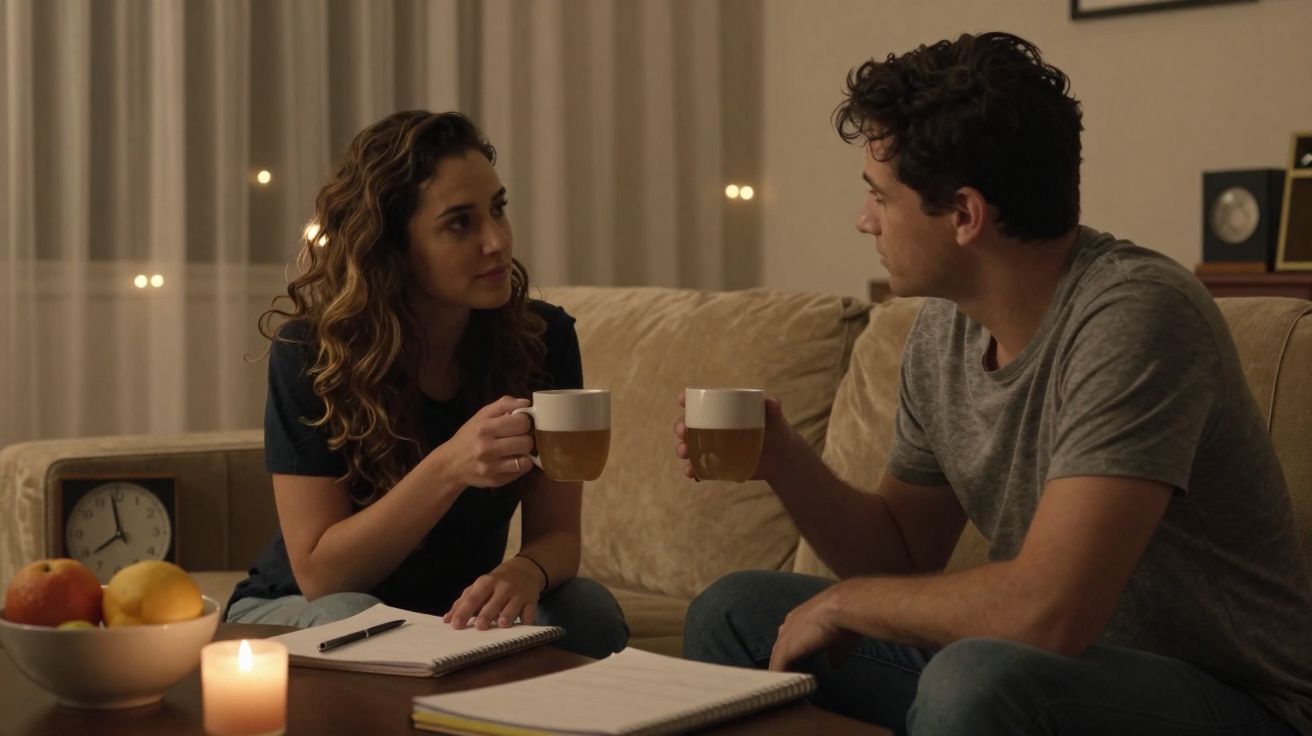
Not the entire family - just one ally who can gently nudge you and notice the small victories.Change one habit
Keep the time and the setting, but swap what is in the glass. Same chair, same television programme, different drink.Prepare one honest line
For social situations: “I had a health scare and I’m better off without it.” Most people leave it there.Notice one improvement
Sleep, mood, balance, morning energy. Seeing progress makes the change feel like an investment rather than a sacrifice.
What we owe one another as we grow older
There is a quiet understanding that starts to matter more as we age. Our children put up with our quirks, and we accept that our bodies need gentler handling. Our healthcare system supports the chronic illnesses we never chose: cancers, inherited conditions, sheer bad luck.
Alcohol in later life does not belong in that category. It is not fate. It is a choice, repeated in small measures. Every glass is a decision about who will carry the weight later: you, your family, or the nurses running down fluorescent corridors.
That does not mean older people should live like monks. It means recognising that your enjoyment sits in the middle of a crowded room you cannot see: the daughter who cuts back her hours to care for you, the neighbour who gives you lifts to appointments, the taxpayer paying for the extra bed.
When you strip away the slogans and the “I’ve earned it” bravado, the question becomes disarmingly simple: what kind of older person do you want to be in other people’s stories? The affectionate grandparent who remembers names and keeps steady on the stairs, or the frail one everyone worries about whenever the cork is pulled?
Drinking in later life is not only about your liver or your independence. It shapes the emotional climate of the whole family, and it adds pressure to a health service already working hard.
The next time you reach for a nightcap, you are not only answering your own craving. You are also answering the people who may have to lift you up when you fall.
| Key point | Detail | Value for the reader |
|---|---|---|
| Later-life drinking hits harder | Ageing bodies process alcohol more slowly, and medicines can interact with it | Shows why the same amount is riskier than it used to be |
| Families quietly carry the burden | Stress, caring duties and emergency visits all land on loved ones | Makes the hidden cost to family members visible |
| Small changes protect independence | Clear limits, new habits and honest conversations can all help | Offers realistic ways to reduce harm without feeling punished |
Frequently asked questions
Is any alcohol safe after 65?
There is no universal “safe” amount, because medication, body weight and health conditions all change the picture. Many doctors now say that less is always better, and for some people, none is the safest option.What if my parent says they are fine and I am overreacting?
Stick to specific facts: falls, missed medication, slurred phone calls, hospital visits. Talk about your concern rather than their character. You are not attacking them; you are trying to protect the relationship.Can an older person stop suddenly without problems?
People who have been heavy drinkers for a long time should speak to a doctor first, because withdrawal can be dangerous. Light to moderate drinkers can usually cut down or stop without medical risk, but getting advice is still sensible.Are zero-alcohol drinks a sensible alternative?
For many people, yes. They keep the social ritual without the intoxication. For someone with a strong dependency, however, they may trigger cravings, so professional support can help.How do I raise the issue without sounding judgemental?
Choose a calm moment, not after a drink. Use “I” statements: “I feel frightened when…” rather than “You always…”. Offer support instead of ultimatums, and expect more than one conversation.



Comments
No comments yet. Be the first to comment!
Leave a Comment