

The first moment you notice that you truly like being on your own often arrives in the most ordinary of places. It might be a café with music that is far too loud. A birthday gathering where everyone keeps talking over one another. A family meal where someone asks, “Are you seeing someone?” and every face turns towards you at once, as though you are being filmed.
You smile. You reply. You play along.
But somewhere underneath that performance, a calmer part of you is thinking, “I would rather be at home now - reading, cooking, or simply sitting with my own thoughts.” That quiet instinct may be subtle, but it can be remarkably persistent. Once you begin to trust it, your life starts to change in small, almost invisible ways.
Why solitude can feel more real than the crowd
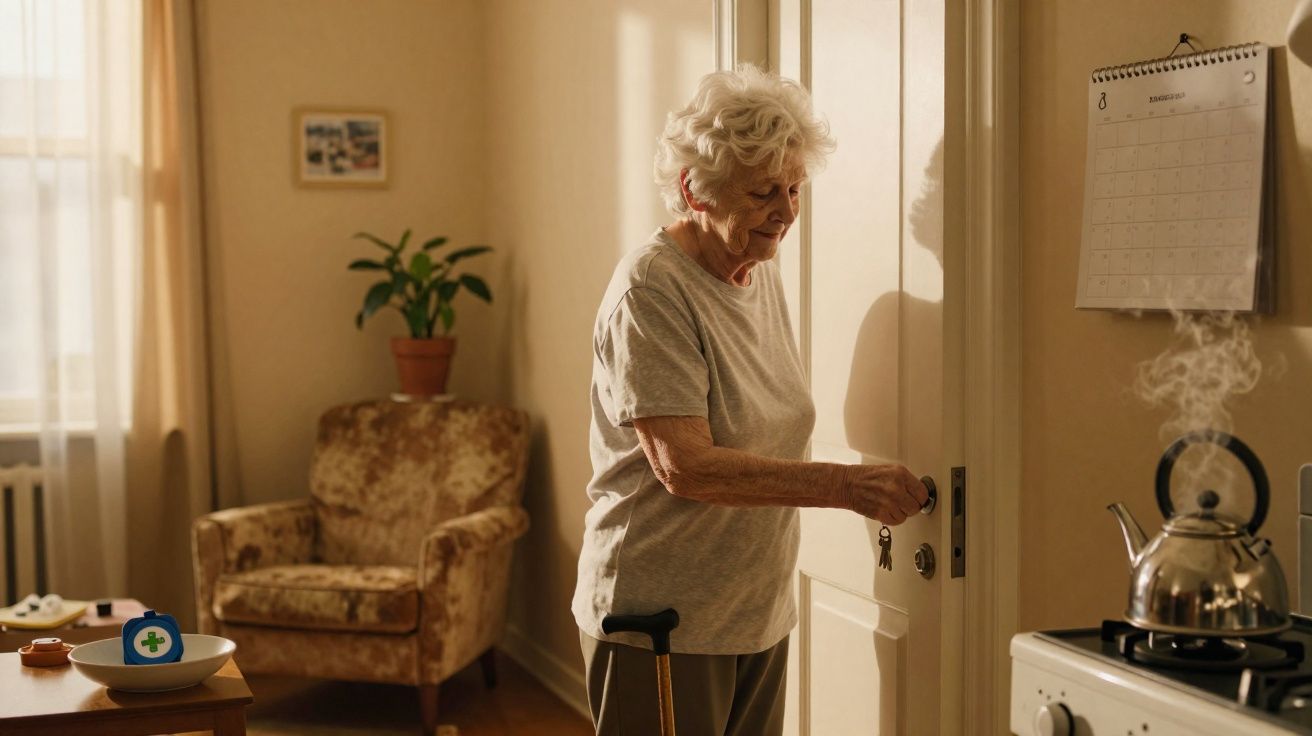
There is a very particular sense of relief that arrives when you shut your front door after a tiring social day. The keys land on the table, your shoes come off, and the volume of the outside world seems to fall away.
For some people, that is merely the pause before the next outing. For others, it is the best part of the day. Being alone does not feel empty. It feels like life has finally come into alignment with who you are. Your thoughts settle, your body loosens, and your mind stops performing for other people and starts breathing again.
Picture this. A colleague called Sam spends the whole week dreading Friday’s team drinks. Everyone else seems excited, sharing memes in the group chat, choosing outfits, and planning where they will go afterwards.
Friday arrives. Sam turns up, smiles, makes polite conversation, and laughs when the moment calls for it. By 9.30 pm, they leave early with a harmless excuse. By 10.00 pm, they are at home on the sofa, eating leftovers and watching a documentary alone.
The next day, the office chat is full of photographs. Sam scrolls through them without any fear of missing out, only a strange feeling of relief. Their best moment from the evening was not out there among the crowd. It was the quiet hour at home when nobody expected anything from them.
In a world that rewards constant availability, choosing stillness can feel almost rebellious. Notifications, group chats, invitations and social media all encourage the idea that a full life must be a busy one. Yet for some people, the most restorative moments are the ones with no audience at all.
This preference for your own company can look like shyness from the outside, but on the inside it often feels like clarity. Crowds scatter your attention in every direction. Solitude gives it back.
Psychologists sometimes describe this as an internal orientation: people whose energy grows when they follow their own thoughts, ideas and inner signals rather than endless external stimulation. Society tends to celebrate the opposite - the social butterfly, the connector, the person whose calendar is always packed.
If you truly enjoy being alone, you are not failing at that script. You are quietly writing a different one, one that values depth over noise and honesty over constant interaction.
Turning alone time into a deliberate choice, not a social defeat
The moment your own company stops feeling like a guilty secret and starts becoming a conscious habit, everything begins to shift. This is no longer about hiding, drifting, or killing time with mindless scrolling. It becomes a proper ritual with yourself.
A simple place to begin is to book a weekly “solo appointment” the same way you would arrange a coffee with a friend. Set aside an hour. Leave your phone in another room. Do not multitask. Ask yourself, “What would I do right now if nobody were watching?” Make something badly. Cook slowly. Go for a walk without headphones.
The point is to experience solitude as presence rather than absence. Presence with your thoughts, your senses, and your own pace. It may feel awkward to begin with. Then, unexpectedly, it can become something you look forward to.
A common trap is the idea that if you enjoy being alone, something must be wrong with you socially. That thought tends to appear when you are scrolling through photographs of group holidays, brunches and wine-soaked dinners. It is easy to compare your private reality with everyone else’s highlight reel and decide that you are the odd one out.
The truth is that many people who appear intensely social online are worn out in private. They are keeping up with expectations rather than following genuine enjoyment. Choosing a quiet evening does not mean you dislike people. More often, it means you are learning to respect your own limits. And frankly, nobody can live at full social volume every single day without paying for it somewhere.
The real question is not whether you go out enough. It is whether you are choosing solitude from a place of calm, or retreating from connection because you are afraid of it.
“I used to think wanting to be alone meant there was something wrong with me,” one reader said. “Then I realised I only felt wrong when I tried to live at a level of noise that was never mine.”
Notice how you feel after social time
Do you feel nourished, exhausted or numb? That answer will usually be more honest than any personality test.Treat solitude like an appointment, not an afterthought
Give alone time the same legitimacy you would give work, errands or social plans.Pay attention to the story you tell yourself
Are you thinking, “I am pathetic”, or, “I am recharging”? The meaning you attach to it shapes the experience itself.
When “not normal” turns out to be deeply healthy
Enjoying your own company more than company from others can reveal strengths that do not always get applause in a room full of people, but that still hold a life together. You may have a stronger inner compass than you realised. You may be more observant, more reflective and more honest about what drains you.
That rarely looks glamorous. Sometimes it looks like declining invitations, leaving early, or needing a whole day after a wedding before you feel like yourself again. People may joke that you are a granny, dull or antisocial.
Underneath those labels, however, there is often something much more meaningful: you are refusing to abandon yourself in the name of being “normal”. That is a form of self-respect that most of us are never taught to identify.
There is also a quiet bravery in spending time alone with your own mind instead of filling every gap with noise. Many people only meet themselves in the middle of a crisis - burnout, heartbreak, loss. You meet yourself on a Tuesday evening with a cup of tea. You notice your thoughts circling. You notice the issue you keep avoiding. And you stay.
That willingness to remain with yourself builds emotional strength. You practise calming yourself down, questioning your patterns, and tolerating discomfort without instantly covering it up with distraction. These are not showy skills, and they will never trend on social media, but they shape how you deal with conflict, love and change.
Sometimes not wanting to go out is not laziness at all. It is your nervous system whispering, “I need safety before I need spectacle.”
On a deeper level, preferring solitude can challenge the narrow idea of what a successful life is supposed to look like. You may not collect huge numbers of casual friendships, but the relationships you do have may feel steadier and more real. You may not need constant group approval, which means your choices are guided less by applause and more by alignment.
Yes, society sells a very loud version of happiness: busy weekends, crowded selfies, back-to-back plans. But there is another version, much less advertised, where happiness looks like a quiet room, a book, a pet, or a hobby that absorbs you completely, with no audience required.
That path is not for everyone. But if something in you relaxes while reading this, then perhaps you have already chosen it - quietly, confidently, and in your own way.
Why preferring solitude can be a sign of strength
When you feel more content alone than in a crowd, it may say something important about your emotional make-up. It can suggest self-awareness, stronger boundaries and a clearer sense of what genuinely supports you.
People who understand their own needs tend to make better decisions about their time. They are often less likely to drift into commitments out of obligation alone. They know when to push themselves and when to step back. That does not make them cold or distant; it makes them deliberate.
It can also improve your relationships. If you are comfortable on your own, you are less likely to cling out of fear or tolerate dynamics that leave you depleted. You can enjoy closeness without needing constant reassurance, and that usually makes connection healthier rather than weaker.
| Key point | Detail | Value for the reader |
|---|---|---|
| Solitude as a practice | Turn alone time into a planned ritual instead of leaving it to chance | Shifts being alone from something awkward into something restorative |
| Energy over expectation | Judge social plans by how they actually leave you feeling, not by how you think you should feel | Helps you shape a social life that suits your nervous system |
| Inner qualities revealed | Chosen solitude can strengthen self-respect, reflection and emotional honesty | Shows that liking your own company may reflect resilience rather than failure |
FAQ
Question 1: Does preferring my own company mean I am antisocial or broken?
Answer: Not necessarily. Plenty of people with rich inner lives, high sensitivity or strong reflective tendencies feel more at ease on their own. The issue only becomes a problem if you are suffering: if you want connection but feel blocked by fear, shame or past hurt, that is different from simply enjoying peace and space.Question 2: How can I tell whether I am choosing solitude or just avoiding people?
Answer: Pay attention to how you feel during and after time alone. If you feel calmer, clearer and more grounded, it is probably healthy solitude. If you feel trapped, numb or ashamed, it may be avoidance or underlying anxiety, which can sometimes benefit from gentle support, including professional help.Question 3: What should I say to friends who do not understand why I leave early or stay in?
Answer: You do not need a full psychological explanation. A simple honest line is enough: “I really enjoy seeing you, but I get tired quickly in groups, so I leave before I hit a wall.” People who care about you will usually adapt. Others may never fully understand, and that is fine.Question 4: Can I love solitude and still want a relationship or close friendships?
Answer: Absolutely. Valuing your own company often strengthens relationships, because you are less likely to cling from fear or accept draining behaviour. You can deeply value connection and still need plenty of personal space. Those things are not opposites.Question 5: Is there a correct amount of alone time I should aim for?
Answer: There is no universal rule. Some people need an hour a day, while others need entire weekends. Your own body and mind are better guides than any formula: if you are constantly exhausted or resentful after social plans, you probably need more solitude. If you feel flat or invisible, you may need more safe connection.




Comments
No comments yet. Be the first to comment!
Leave a Comment