
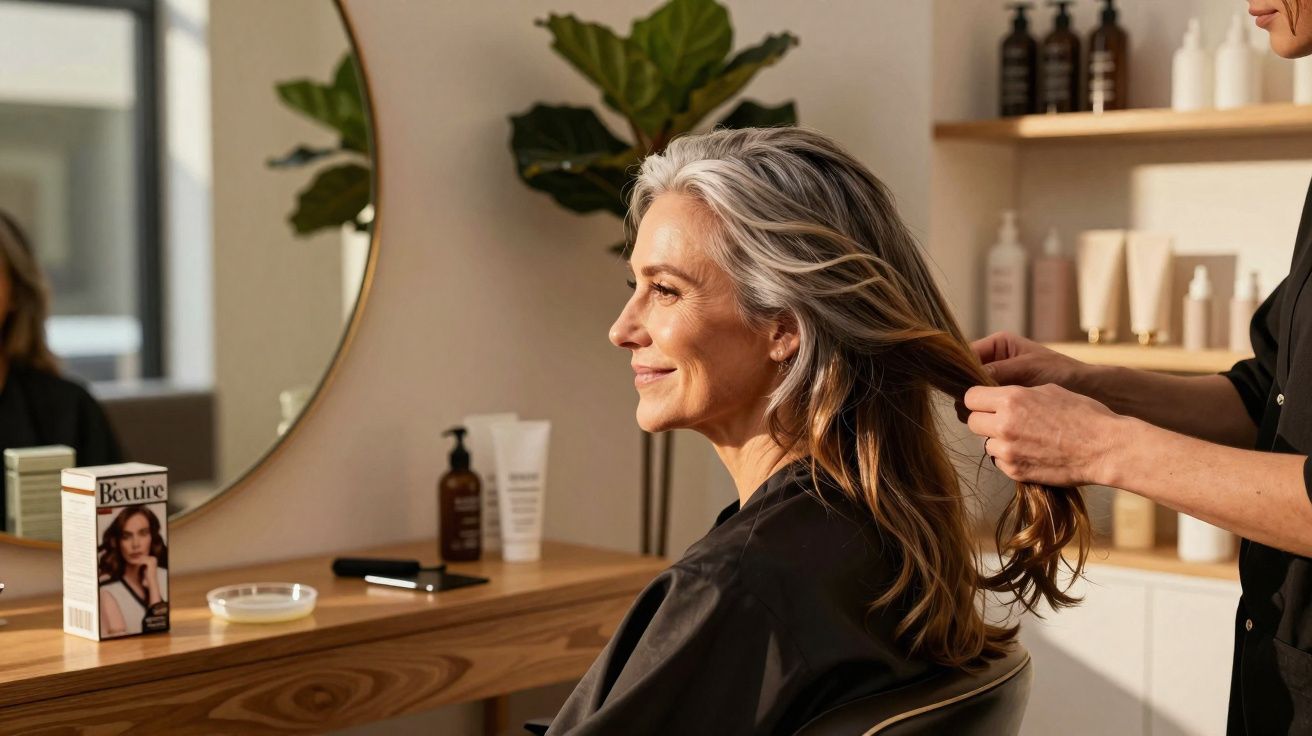
“I think… I’m finished with colour.” Around her, foils rustle, bowls tap against each other, and bleach sharpens the air. On the next chair, a woman in her fifties scrolls through glossy brunettes on Instagram and quietly lifts a hand to the silver at her temples. Nobody says it, but everyone understands. The stylist freezes for a second, brush suspended, as though she has just heard a tiny revolution spoken out loud. Outside, teenagers with electric-blue streaks laugh as they pass the window. Inside, grown women are talking about something more radical than pink hair.
Not brighter. Softer. Not younger. Kinder. A different approach to ageing is beginning to show itself, a centimetre of regrowth at a time. And it is not the future the beauty industry had in mind.
The move from disguising age to softening it
Step into a busy salon on a Saturday and a subtle pattern becomes obvious. The colour bar is still busy, but more clients are asking for “something easier”, “more natural”, or “a way to grow this out”. They are no longer chasing frozen foreheads or jet-black roots. They want movement around the face, luminosity in the skin, and hair that falls freely rather than sitting like a helmet. The new goal is not ageless perfection. It is an age-softening look that allows the years to show, just without the harshness.
This is where trends such as grey blending, warm multi-tonal highlights and soft framing cuts come in. Women who once booked relentless six-week colour appointments are now spacing them out, or stopping altogether, and focusing instead on texture, shine and face shape. Searches for “embrace grey hair” and “grey blending” have climbed sharply over the past three years, while countless TikTok videos show dramatic before-and-after transformations from flat, severe colour to multi-dimensional hair that catches the light. The comments tell their own story: “You look softer.” “You look rested.” “You don’t look younger, you just look more like yourself.”
Something deeper sits underneath this change. Years of high-maintenance, over-processed colour have left many people drained, financially and emotionally. Permanent colour means constant root anxiety, diary reminders, and the quiet dread of seeing yourself under bright strip lighting. As conversation around pro-ageing grows louder, that stress is beginning to look out of date. Instead of battling every grey strand, more people are asking a simpler question: what if my hair worked with my face as it is now? Age-softening is not about giving up. It is about replacing a fight against time with a truce that looks unexpectedly fresh.
Another reason the look is gaining ground is that it suits real life. Softly blended colour tends to grow out more gracefully, which means fewer emergency appointments and less pressure to keep everything immaculate at all times. It also works well with the current appetite for low-maintenance beauty: styles that look polished without demanding an hour in front of the mirror. That practical ease is a big part of the appeal.
What age-softening actually means in everyday hair
Age-softening is not one haircut or one miracle product. It is a collection of small choices that make features appear gentler, lighter and less sharply outlined. Colour moves away from solid blocks and into blended shades that resemble the way hair naturally lightens in sunlight. Cuts lose their rigid edges and become airier: soft layers, curtain fringes, and shapes that shift as you move. The aim is not to erase the lines in your face. It is to stop your hair from throwing a harsh spotlight on them.
Imagine a woman at 55 with a solid, inky-black colour. Her roots show within three weeks, her skin looks drained, and every tiny crease stands out against the severe contrast. Now picture the same woman with mushroom-brown tones, silver woven through the top, and a long, shaggy fringe skimming her brows. Same face. Same age. Yet the softer tones and movement around her eyes calm everything down. Her jaw looks less severe, her cheeks a little brighter. Strangers do not think, “She changed her hair colour.” They think, “She looks rested. Has she been away?”
Dermatologists and colourists often say the same thing quietly: strong contrast can age the face more than the years themselves do. Jet-black colour against pale or olive skin, flat blonde with no depth, or very long, pin-straight hair with no shape can all sharpen every line. A softer approach - warmer neutrals, carefully placed highlights around the face, and a shape that lifts the cheekbones rather than pulling them down - creates what stylists call a visual filter. You are not younger. Your features simply sit in a kinder frame, like stepping out of cold office lighting and into late afternoon sunshine.
How to step away from colour without feeling as if you have given up
The fear behind stopping permanent colour is rarely just about shade. More often, it is the worry that other people will think you have stopped caring. So the first sensible move is usually not to go cold turkey overnight, but to change the plan. Ask your stylist about grey blending or lowlights instead of full root coverage. This means threading slightly darker or warmer strands through your natural base, so incoming grey merges in rather than forming a hard line. Think “soft fade” rather than “sudden reveal”.
The cut becomes your greatest ally here. A well-placed fringe, a few face-framing layers, or a collarbone-length shape can pull attention towards your eyes and away from the parting, where regrowth appears first. Simple adjustments - a blow-dry that lifts the crown, a loose bend created with a large-barrel tong, or a side part rather than a severe centre line - can already soften the way age reads on the face. You are not surrendering to grey; you are shaping the way it appears.
Let’s be honest: nobody does this perfectly every day. The real appeal lies not in elaborate styling rituals, but in choosing colour and cut that still look good when you have done very little. That may mean embracing your natural wave, brightening only the front sections, or replacing harsh, cool blondes with oatmeal, honey or sand tones that flatter most skin tones. You keep your options open. If, one day, you want to go brighter again, you can. You are simply no longer stuck in a monthly battle with your roots.
A good care routine matters too. Softer, lighter shades - whether natural or coloured - can look dull quickly if they are over-washed or dried out. A gentle cleanser, a nourishing mask once a week, and a light finishing oil on the ends can keep the style looking deliberate rather than neglected. This is especially true if you heat-style regularly or spend a lot of time outdoors, because sun and hot tools can flatten the shine that makes age-softening so effective.
Hairdressers who see this shift up close talk about it as a form of emotional release.
“They sit down apologising for their grey,” a London colourist told me, “and leave saying, ‘I don’t know why I waited so long. I actually recognise myself again.’”
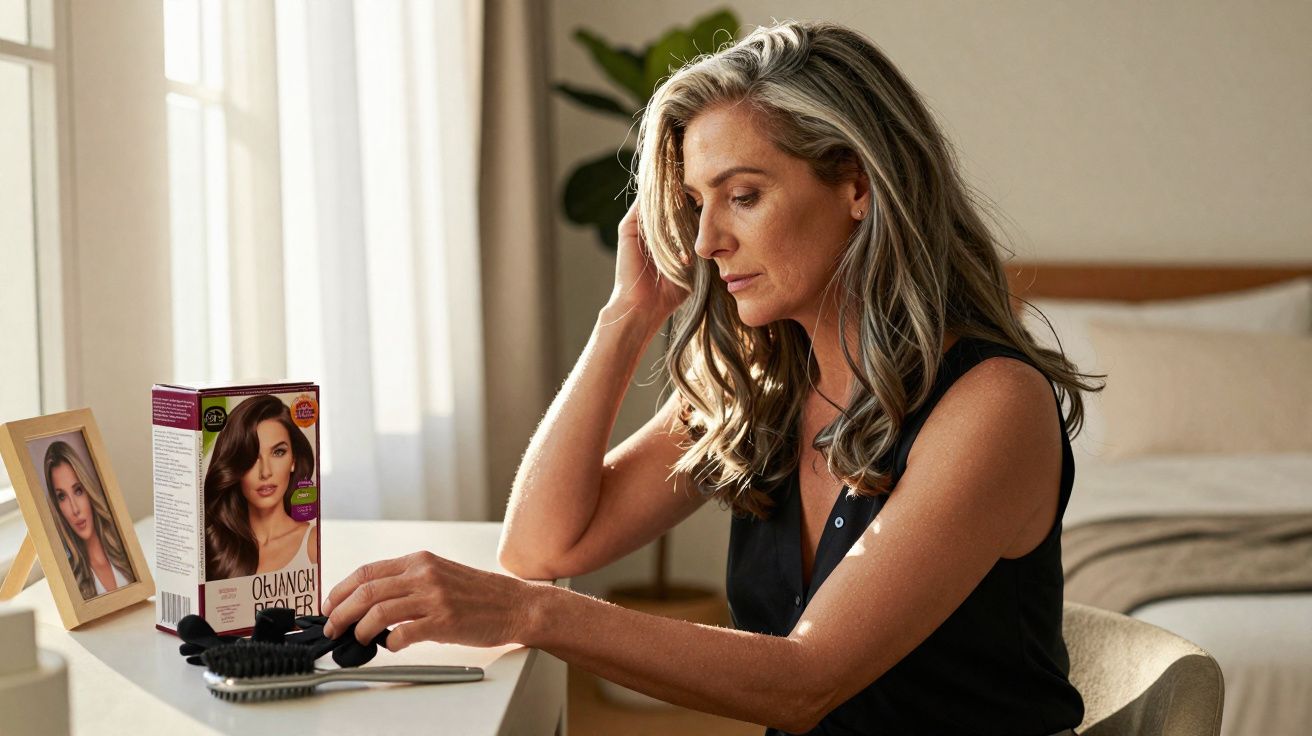
That recognition matters. Practically speaking, fewer colour appointments mean less money spent, less scalp irritation, and fewer Sunday evenings spent worrying over a box of colour in the bathroom.
At a deeper level, the ritual itself changes. Instead of booking colour to fix what is “wrong”, people are booking reshaping cuts, glosses and treatments to make what they already have look its best. The salon becomes less like a confessional and more like a tune-up. For anyone who has ever stared at obvious regrowth in a lift mirror and felt a sudden jolt of embarrassment, that is no small change.
The emotional side: what happens when you stop fighting every strand
There is a reason this trend strikes such a nerve. Hair has always carried our stories: rebellion, grief, break-ups, new jobs, health worries. When people choose to stop colouring, especially after decades, it is rarely just a style experiment. It is a small public statement that they are done apologising for their age. That can feel freeing one day and raw the next. On a crowded train, you might catch your reflection and think, “Who is that?” Then an old friend says, “You look just like you did at university,” and something inside loosens.
The cultural timing is no accident. We are seeing more silver-haired presenters on television, more actresses refusing pressure to stay eternally brunette, and more influencers documenting grow-out periods without a filter. At the same time, the wellness boom has pushed scalp health, hormonal changes and stress into beauty conversations. The message is seeping in: broken, over-processed hair does not make you look younger. It just looks tired. Age-softening fits more comfortably into a life already juggling careers, children, ageing parents and the occasional wish to simply stop thinking about roots for a while.
On a very human level, fatigue plays a part too. Most people know the feeling of a hastily booked colour appointment becoming the final task in an overcrowded week. Swapping that cycle for a gentler, more forgiving routine is less about a slogan and more about reclaiming time, money and mental space. The most striking thing people report after the change is not compliments, though those come. It is relief. A quiet sense of having stepped out of a race they never agreed to run.
The age-softening hair trend, in practical terms
| Key point | Details | Why it matters |
|---|---|---|
| Gradual move away from permanent colour | Shift from full coverage to grey blending and gentler tonal work | Lowers upkeep, reduces root stress and cuts long-term costs |
| Strategic cut and movement | Fringes, layers and lengths tailored to the shape of the face | Softens features without trying to erase age |
| Focus on shine and hair health | Scalp care, nourishing masks and lightweight finishing products | Keeps hair looking fresh and lively, even when left natural or grey |
| Flexible grow-out period | Give the transition time to settle before making a final decision | Makes the change feel deliberate rather than rushed |
FAQs
Will going grey or softening my colour make me look older?
Not necessarily. Harsh, flat colour often draws attention to lines more than natural or softly blended shades do. The right tone and cut can actually make your features appear gentler.How long does it take to move away from permanent colour?
It can take anywhere from three months to two years, depending on your starting colour, length and how dramatic a change you want. Many people use grey blending or highlights during the transition.Can I still colour my hair and follow the age-softening trend?
Yes. Age-softening is about placement and framing, not a complete ban on colour. Warmer, multi-dimensional tones usually work best.What if I hate the grow-out stage?
Shorter cuts, softer fringes, headbands and semi-permanent glosses can make the in-between stage feel more intentional and less like you are simply waiting it out.Will I regret showing my natural colour?
Most people say they feel unexpectedly relieved once the process is finished. If you do not like it, you can always return to a soft, blended colour - your options stay open.
So when you see more people with silver streaks, warm blended browns, softened blondes and airy cuts, that is what you are looking at. Not neglect. Not a lack of pride. A new version of beauty that can hold a few lines, some stories and a busy life - and still catch the light in a flattering way. The age-softening trend does not tell you to adore every sign of time, or to throw your colour box away tomorrow morning. It simply asks a slightly unsettling question: what if you stopped fighting quite so hard, and still looked like someone you were proud to be?
Comments
No comments yet. Be the first to comment!
Leave a Comment