
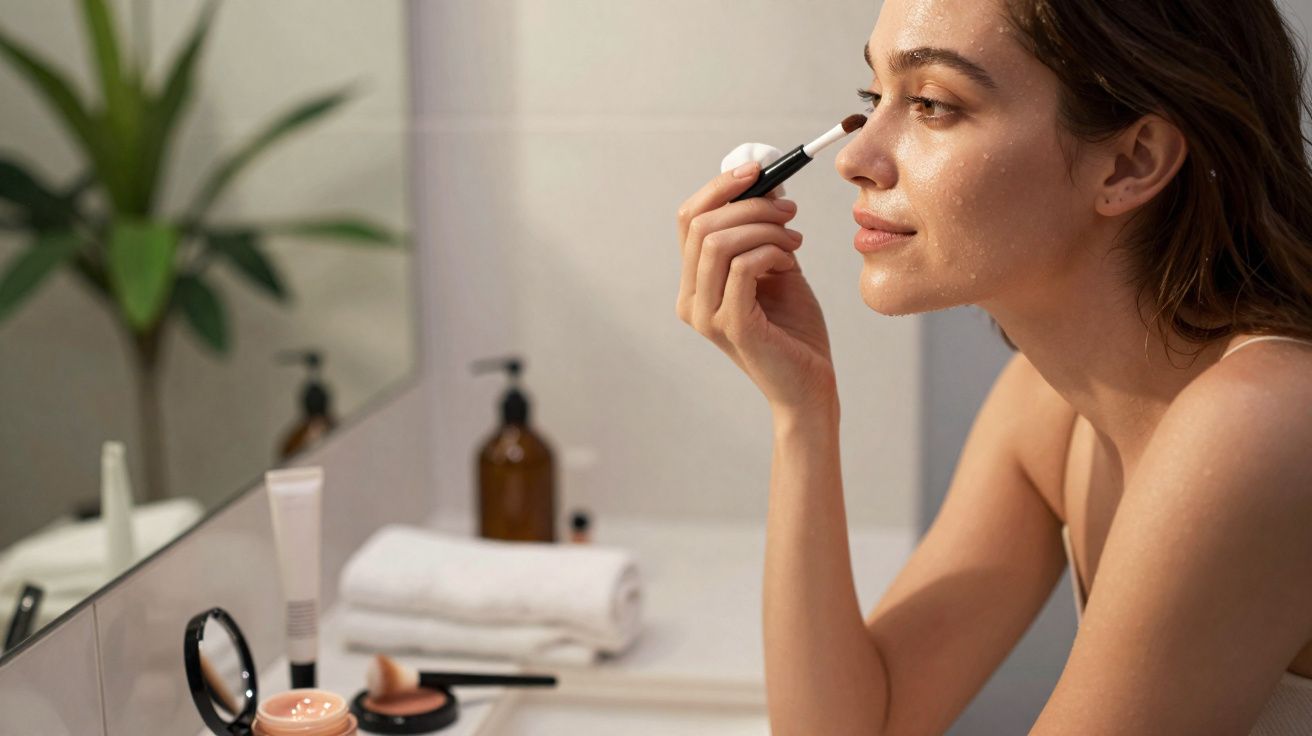
A sharp wing, inky black, lashes curled just enough. Two hours later, under the lift’s unforgiving fluorescent glare, the look had rewritten itself: a grey veil across the lid, mascara stamped beneath the eyes, and a faint oily shine where the concealer had been immaculate. The skin still looked great - healthy, plump, dewy, well moisturised. The eye makeup looked as though it had made it through a minor squall.
More and more of us are putting skincare first and makeup second: serums, rich eye creams, facial oils - then eyeliner, eyeshadow and mascara on top. And that’s often the moment things start to shift. Literally.
The awkward truth is this: the better moisturised your skin is, the more your eye makeup wants to wander - and it isn’t in your head.
Hydrated skin and eye makeup: why it starts to slip
Watch someone get ready for an evening out and the pattern is familiar. A generous eye cream is pressed around the orbital area, a glow-boosting serum goes on, and sometimes a drop of face oil is added for that “glass skin” sheen. The skin absorbs it, looks fresh and supple, and suddenly everything feels calm and comfortable. Then come the final steps: eyeliner, a soft shimmer on the lid, mascara. For a brief window, it’s all campaign-perfect.
Then real life gets involved: heat on the Tube, a little perspiration, constant blinking, maybe a quick rub at the corner of an eye without thinking. And the pigment that was meant to stay tight to the lash line has crept into the crease. The same moisturising layer that felt so nourishing has become a tiny slide for waxes and colour. Hydrated skin is brilliant for your barrier - but for makeup, it can be slightly… risky.
One makeup artist jokes about “the moisturiser mafia”: it runs the operation under the surface whether your eyeliner approves or not. Creams and oils naturally leave a barrier over the skin. That’s excellent for hydration, but less helpful for products designed to set, dry down and stay put. The eye area is warm, always moving when you talk or smile, and full of tiny folds that can catch product. When that delicate zone is extra dewy, formulas don’t cling - they hover. The more slip you have on the skin, the fewer chances eyeliner or eyeshadow has to anchor. That’s why a beautifully moisturised under-eye can still send mascara smudging downwards by lunchtime.
Imagine your eyelid as a small dance floor. When it’s softly satin, makeup can glide and grip in a controlled way. When it’s coated in rich creams or balms, each particle of pigment is simply waiting for warmth and gravity to push it elsewhere. Eye creams are often loaded with emollients (such as squalane, shea butter and oils) plus humectants (such as glycerin and hyaluronic acid) that draw in and hold water. The payoff is plumper skin with a light film on top - and that film can mingle with the waxes and oils in eyeliner, eyeshadow and mascara. Rather than drying down and locking in place, the layers can emulsify together, meaning your look gradually “melts” as the day goes on.
How to stop eye makeup sliding on moisturised skin
A small change makes a disproportionate difference: separation. Do your skincare first, pause, then do your makeup. Moisturise your face and eye area, then give it 10–15 minutes. Let the creams sink in and allow the surface shine to settle. If you’re short on time, even 3 minutes while the kettle boils is still better than applying makeup immediately.
Before you reach for eyeliner, gently press a clean tissue over your eyelids and under-eyes. Don’t rub - just blot. You’re not stripping hydration from the skin; you’re lifting the excess residue sitting on top. Next, apply a very thin layer of eye primer or long-wear concealer over the lids. Tap it in lightly, then wait a few seconds. You’re creating a grippy, velvety “in-between” layer that respects your skincare but tells your makeup: stay here.
For the lower lash line, think moderation. A soft, creamy pencil dragged along a dewy lower lid is almost guaranteed to smudge. Instead, try tightlining the upper waterline, or use a thin angled brush to press a touch of eyeshadow into the outer third of the eye. You still get definition, but you keep product away from the most oily, tear-prone area. That small gap often buys you hours of extra wear.
Another option, especially on long days, is to choose a base product that sets itself. A long-wear cream eyeshadow can act as a “base coat”: apply a thin layer, let it set, then add powder eyeshadow only where you want intensity. If you like a finishing spray, choose one designed to set makeup rather than add glow - misting a dewy spray over already moisturised skin can reintroduce slip around the eyes.
If your eyes water easily (contact lenses, hay fever, cold wind, or just naturally watery eyes), you’re dealing with both moisture and movement. On those days, prioritise waterproof formulas where it matters most: waterproof gel liners, liquid liners that fully dry down, and tubing mascara can be more forgiving than classic mascara. Also consider keeping heavy product away from the inner corners, where tears tend to collect first.
The mindset shift: it’s rarely “your face”
Many people carry a quiet embarrassment about “messy” under-eyes - as if creasing concealer or travelling mascara means they’ve done something wrong. Reality check: your skin is warm and alive, it moves constantly, and you blink thousands of times a day. Of course product migrates.
Rather than blaming your face, look at your stacking. A rich eye cream, a glow primer, a creamy concealer, then a soft kohl pencil? That combination is built for movement. Swap one layer at a time. Perhaps use a gel-based eye cream in the morning instead of a balm. Perhaps choose tubing mascara over a traditional formula. Perhaps powder only the sides of the nose and the inner corners, not the entire eye area. Small adjustments usually outperform dramatic overhauls.
Let’s be honest: almost nobody times their skincare-to-makeup window perfectly every day. Life is busy. You’re applying under-eye cream while replying to a message, then putting on mascara as the kettle clicks off. Lean on “real life” tactics: keep cotton buds in your bag, pick formulas that don’t punish you for a little humidity, and accept that a soft blur can look natural and lived-in. Smudge-proof doesn’t need to mean stiff or mask-like.
“Hydration photographs beautifully, but it can make makeup less predictable,” says a London-based makeup artist. “The answer isn’t less moisture - it’s knowing where to break the slip so the product can lock in.”
A helpful way to frame it: manage the shine, don’t erase it. A light dusting of translucent powder placed only through the crease can change everything. Tap it on - don’t sweep - and stop before you flatten the glow across the whole lid. If powder feels heavy, rely on that long-wear cream shadow base instead, then layer powder eyeshadow only where you want more depth.
Finally, factor in your day. A hot office, a sweaty commute, an air-conditioned room that dries the air - these conditions all change how moisturiser and makeup behave together. A quick reality check can guide your choices: richer cream for a calm, indoor day; lighter gel textures when you know sun, heat or long hours are ahead. You’re not only doing makeup - you’re planning for weather, light and time.
- Use lighter, gel-based eye cream in the morning and save rich balms for night.
- Let skincare settle before makeup, then gently blot lids and under-eyes.
- Prime lids with a thin layer of eye primer, long-wear concealer, or a long-wear cream eyeshadow.
- Keep heavy pencils away from the lower lash line when skin is very dewy; try tightlining instead.
- Carry cotton buds and a small amount of concealer for quick clean-ups rather than chasing perfection.
The upside of a little smudge (and what it says about you)
There’s an irony worth noticing. The routines that give you springy, youthful-looking skin - consistent moisturising, gentle eye creams, protecting the skin barrier - are often the same ones that make crisp eyeliner harder to keep pristine. And yet, when you look back at photos, the looks that age best are rarely ultra-matte and frozen. They’re the faces with a bit of glow, a hint of movement, and some life.
We’ve all had that 5 p.m. mirror moment: “How long has that smudge been there?” It stings for a second, then you tidy it up, tap with a fingertip, maybe laugh at yourself. Those little imperfections are honest evidence that you’ve been living - blinking, talking, moving through a day.
The goal isn’t bulletproof perfection; it’s learning the small, practical gestures that help your products work with well moisturised skin rather than against it. Once you understand that slip comes from the interaction between oils, creams and pigments, you can adjust texture by texture: lighter eye cream here, a primer there, tubing mascara instead of classic, a whisper of translucent powder in exactly the right place.
As skincare continues to dominate routines, this tension between glow and grip will only become more common. Sharing what actually works - not a 12-step fantasy - is how people refine their routines. You may find that swapping notes about smudgy eyeliner with a friend leads to a trick you’d never have tried. Or you may decide that a softly lived-in line suits you more than a razor-sharp wing ever did.
| Key point | Detail | Why it matters to you |
|---|---|---|
| Hydration vs hold | Moisturisers and oils create a slippery film that encourages pigments to move | Explains why eye makeup can smudge even when products are long-wear |
| Prep and pause | Let skincare absorb, blot lightly, then prime the lids | A small routine tweak that can significantly improve longevity |
| Texture choices | Switch to lighter eye creams and smarter formulas around the eyes | Practical options without giving up skincare benefits |
FAQs
Why does my eyeliner smudge more when I use eye cream?
Eye cream often contains oils and emollients that leave a thin film on the skin. When eyeliner sits on that film, it may not fully set and can mix with the cream as the skin warms up, making it travel more easily.Should I stop moisturising around my eyes to keep makeup in place?
No. The eye area is delicate and needs hydration. Use a lighter, gel-based formula in the morning, let it absorb, blot any excess, then apply an eye primer or long-wear base before makeup.What type of eyeliner lasts best on well moisturised skin?
Waterproof gel liners, liquid liners that dry down completely, and long-wear pencils generally grip better. Tightlining the upper waterline also reduces contact with the most moisturised, mobile areas.How can I stop mascara smudging under my eyes?
Use less rich cream directly under the lower lash line, choose a tubing mascara, and avoid heavily coating the lower lashes. A tiny amount of translucent powder where lashes touch the skin can help too.How do I fix smudges during the day without wrecking my makeup?
Use a dry cotton bud to lift the smudge first, then tap on a small amount of concealer or powder. Keeping movements small and light helps preserve the rest of your makeup.




Comments
No comments yet. Be the first to comment!
Leave a Comment