
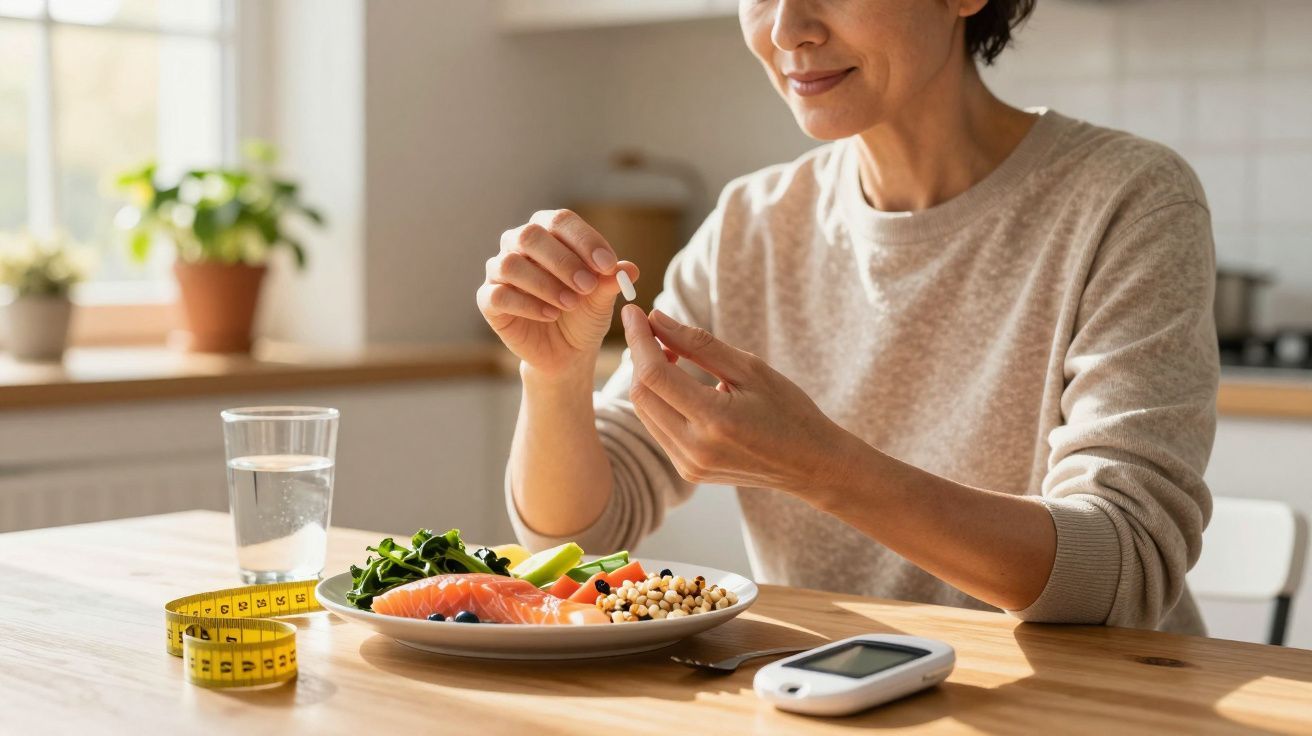
A large, newly reported clinical trial of more than 1,600 participants suggests that orforglipron, a GLP-1 drug taken as a pill, can deliver weight-loss results that are broadly comparable to injectable semaglutide in people living with type 2 diabetes.
Led by obesity-medicine specialist Deborah Horn at the University of Texas, the international study ran for 72 weeks across 136 sites in 10 countries. On the highest dose, participants recorded an average 9.6% reduction in body weight.
That level of change is in the same range as the roughly 10–15% body-mass reduction often reported in people with diabetes using injectable semaglutide over a similar timeframe.
“Overall,” the researchers write, “the findings indicate that orforglipron could address the unmet need for oral therapy by achieving outcomes similar to those of injectable GLP-1 receptor agonists, potentially shifting treatment paradigms.”
How GLP-1 medicines work in type 2 diabetes and obesity
GLP-1 drugs harness the body’s own appetite- and glucose-regulating responses after eating. When food reaches the gut, it releases a hormone called glucagon-like peptide-1 (GLP-1), which binds to receptors in several organs. Activating these receptors typically leads to reduced appetite, increased insulin production by the pancreas, reduced glucagon release, and slower digestion-helping blood sugar rise more gradually.
Medicines in this class act as synthetic mimics, stimulating the same pathways to support blood-sugar control in type 2 diabetes and, more recently, clinically meaningful weight loss.
Many current options, however, must be taken by injection because peptide-based drugs can be broken down rapidly by stomach acid, making standard oral dosing impractical.
Orforglipron: a GLP-1 pill option that avoids peptide breakdown
Orforglipron differs because it is not a peptide, yet it still activates the same GLP-1 receptor. It is absorbed through the digestive tract in a manner more typical of conventional tablets.
Early signals have been encouraging. In a previous clinical trial of 3,127 people with obesity without diabetes, participants achieved an average 12.4% reduction in body weight.
Trial design: placebo control, double-blinding, and daily dosing
The newer trial focused specifically on type 2 diabetes. It enrolled 1,613 adults diagnosed with the condition who were categorised as overweight or obese. The average participant was 57 years old and weighed 101 kg (about 16 stone).
Participants were assigned to one of four groups:
- Placebo (a control pill with no active drug)
- Orforglipron 6 mg
- Orforglipron 12 mg
- Orforglipron 36 mg
For 72 weeks, each participant took their allocated tablet once daily and followed a dietary plan that reduced intake by 500 calories per day compared with baseline.
The study used double-blinding, meaning neither the participants nor the researchers knew who was taking which pill while outcomes were being assessed-an approach intended to limit bias in the interpretation of results.
Results: weight loss rose with dose, with a standout high-dose effect
The findings showed a clear dose-response pattern:
- 36 mg: average 9.6% body-weight loss (about 9.6 kg)
- 12 mg: average 7.0% body-weight loss
- 6 mg: average 5.1% body-weight loss
- Placebo: average 2.5% body-weight loss
Notably, 26% of participants receiving 36 mg lost more than 15% of their body weight.
Beyond weight: blood sugar and other markers improved, with familiar side effects
Improvements were also seen in metabolic health. Blood sugar markers improved significantly across all orforglipron doses when compared with placebo, and measures linked to the heart, inflammation, and blood pressure also moved in a favourable direction.
The side-effect profile resembled that of injectable GLP-1 drugs, with nausea, diarrhoea, vomiting, and constipation reported-effects consistent with how GLP-1 receptor activation slows gastric emptying and influences appetite.
How it compares with tirzepatide, and why a pill could still matter
The pill did not match the magnitude reported for a once-weekly 15 mg injection of the GLP-1 drug tirzepatide, which in an earlier clinical trial produced an average 14.7% weight loss in participants with diabetes. Even so, the convenience, comfort, and practicality of an oral option could make a modest reduction in effectiveness an acceptable compromise for some people.
“We know it is harder for individuals with diabetes to lose weight. It is exciting to have an oral medication that provides double-digit weight loss, which on average was 23 pounds,” Horn says.
“Once FDA approved, orforglipron is scheduled to be available in 2026 at a significantly decreased cost compared to current injectables. This could position it to be the ‘metformin’ of obesity and become widely covered by insurance plans, opening the door to treatment for all.”
Practical considerations: adherence, access, and the role of lifestyle support
If orforglipron proves effective and safe in wider use, a daily tablet could improve adherence for people who are uneasy about injections or who struggle with cold-chain storage and sharps disposal. Easier administration may also help clinicians scale treatment in primary care settings, where injectable training and supply constraints can be barriers.
At the same time, the trial combined medication with a structured calorie reduction, highlighting that outcomes in routine practice will still depend on sustained dietary and behavioural support. Regular review of weight, blood sugar, and tolerability will remain important, particularly when gastrointestinal side effects affect eating patterns and hydration.
What still needs clarification
While the results are strong, longer-term evidence will be needed to understand durability beyond 72 weeks, how weight changes after stopping therapy, and whether benefits translate consistently across different age groups, diabetes durations, and concurrent medications. Future work will also need to define how best to position orforglipron alongside established therapies, including how it might be sequenced with or combined with other glucose-lowering drugs.
The study was funded by Eli Lilly and published in The Lancet.






Comments
No comments yet. Be the first to comment!
Leave a Comment