
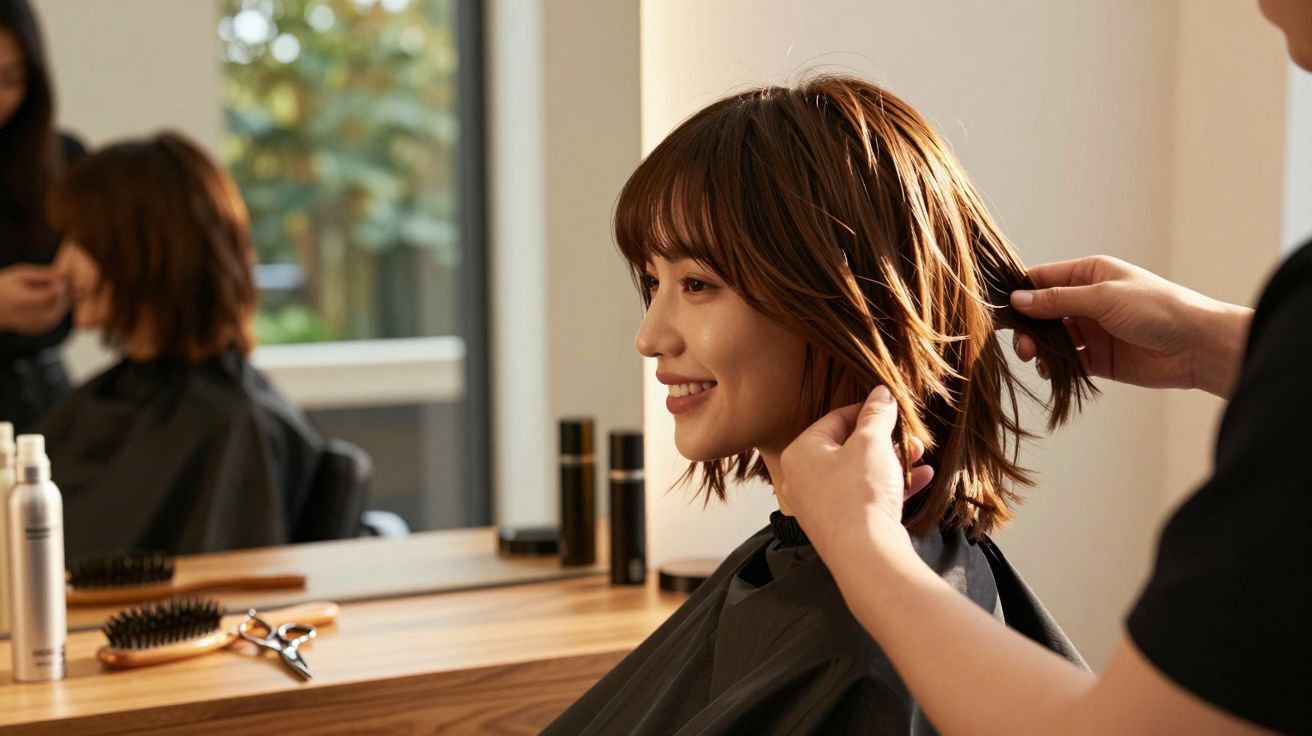
A new kind of fringe is quietly taking over from the neat, photo-ready bangs that dominated the past decade - and stylists couldn’t be happier about it.
After years in which precise curtain bangs and sharp, straight-across fringes filled every feed, a more relaxed, intentionally imperfect finish is gaining ground. Enter the shattered fringe: one of the most requested salon tweaks for 2026, delivering softness without losing that modern edge.
What the shattered fringe actually is
A shattered fringe is the complete opposite of a dense, solid “sheet” of hair sitting across your forehead. Rather than forming one heavy line, it’s cut into lighter, separated sections so it looks airy, mobile and textured.
A shattered fringe is built around softness: wispy, uneven ends that frame your face instead of hiding it.
Think of it as the rebellious relative of the classic fringe. Hairdressers rely on point cutting and texturising to take out weight and prevent any blunt, horizontal finish. The payoff is a fringe that looks effortlessly lived-in right from the first day.
Typically, it’s cut a touch shorter in the centre and then subtly lengthens towards the temples. Instead of perching on top of the haircut, it blends into it. Small changes in length - just a few millimetres - stop your eye from reading it as one strict line.
How it differs from curtain bangs and a blunt fringe
- Blunt fringe: dense and straight, creating a bold, statement line across the forehead.
- Curtain bangs: parted down the middle and swept away from the face on both sides.
- Shattered fringe: lightweight, irregular and slightly choppy, with no fixed parting and a deliberately “broken” outline.
Where a blunt cut feels graphic and polished, the shattered fringe looks more current and casual. It reads less like a freshly carved haircut and more like the best version of how your hair naturally falls when you tousle it with your hands.
Why everyone wants a shattered fringe in 2026
Hair trends in 2026 are moving away from ultra-controlled perfection. Mid-length cuts are returning, pixies are being softened with floaty layers, and hair colour is leaning towards glow and dimension rather than harsh, high-contrast statements.
The shattered fringe slips neatly into 2026’s softer, lived-in mood: styled, but never overdone.
It also pairs brilliantly with the current love of “airy” cuts and textured colour work. Gentle highlights and lowlights can sit between the separated pieces, creating facial depth without committing to a dramatic, all-over colour change.
Shattered fringe: who it suits best (face shape, lifestyle and hair texture)
One reason stylists keep recommending the shattered fringe is its flexibility: it suits a wide variety of face shapes and day-to-day routines.
| Face shape | Why it works | Stylist tip |
|---|---|---|
| Round | Breaks up width and pulls focus towards the eyes and cheekbones. | Leave a few slightly longer, angled pieces near the temples. |
| Heart-shaped | Softens a wider forehead and balances a narrower chin. | A handful of shattered strands grazing the brows can look especially flattering. |
| Long | Reduces the impression of length without a severe horizontal line. | A slightly fuller centre section tends to work well. |
| Square | Softens strong angles at the jaw and forehead. | Choose longer, feathered sides that melt into face-framing layers. |
Hair texture matters as well. Straight to gently wavy hair usually shows the “broken-up” effect best, because the pieces naturally separate and the texture stays visible.
With naturally curly hair, it can be more complicated. When curls are cut shorter, they often spring up more than expected, which can turn a soft, piecey fringe into something noticeably shorter or uneven. Many curl specialists prefer to recreate the vibe using longer, face-framing layers rather than a true fringe on tighter curl patterns.
How to ask your hairdresser for a shattered fringe
Because “shattered fringe” is still a newer term outside more trend-led salons, it’s wise not to rely on the name alone.
Take a reference photo and ask for a light, piecey fringe with soft, irregular ends - and no hard line across the forehead.
Phrases that make your brief crystal-clear:
- “I want it wispy and broken up - not one solid line.”
- “Can you remove bulk and point-cut the ends so it stays airy?”
- “I’d like to see some forehead through it.”
- “I want it to grow out softly, not as a strip.”
Be upfront about how much styling you’ll realistically do. If you rarely blow-dry, your stylist can keep it slightly longer and more blended so it behaves better when left mostly natural.
Daily styling: low effort, high impact
A major selling point of the shattered fringe is how well it handles imperfection - in fact, it often looks best when you don’t overwork it.
Most stylists recommend a simple three-step approach:
- Dry the fringe first: even if you let the rest air-dry, use a hairdryer on the fringe for 30–60 seconds so it sets in the right direction.
- Use your fingers instead of a round brush: rake through while drying to keep the pieces separated; a brush can make it look too smooth and overly “done”.
- Add a touch of texture: a small amount of styling cream, mousse or a dry texture spray helps define the shattered sections.
You’re aiming for “controlled mess”: strands that fall in different directions, while still shaping your features on purpose.
Because the ends are already uneven, minor kinks and cowlicks usually disappear into the look far more easily than they would with a sharp blunt fringe. In humid weather it often reads as intentionally tousled rather than simply frizzy - particularly if you finish with a lightweight anti-frizz serum.
One extra practical tip: if you use heavy skincare or SPF on the forehead, give the fringe a quick blast of dry shampoo at the roots (even on clean hair). It helps stop the pieces from clumping together and keeps that airy separation.
Maintenance and the grow-out period
Most fringes need trimming every four to six weeks. A shattered fringe is generally more forgiving, because as it grows it blends into soft, face-framing layers rather than turning into an obvious bar across the forehead.
Many salons offer fringe trims as a quick, lower-cost service. Ask your stylist to preserve the irregular, feathered finish. Avoid cutting straight across at home - that instantly removes the entire point of the shattered shape.
If you decide it’s not for you, it typically grows into blended layers over a couple of months, making it a good option for anyone nervous about committing to a full fringe.
Pairing the shattered fringe with colour and cuts
The shattered fringe fits neatly with several of 2026’s biggest shifts in hair. Mid-length bobs, shag-inspired shapes and airy pixies all accommodate this softer fringe easily.
On mid-length hair, it can connect to longer, cheekbone-grazing sections to create a subtle halo around the face. On shorter crops, it adds movement and a softer feel without needing extra length through the back or sides.
For colour, dimensional methods such as soft balayage, glossing and ultra-fine highlights emphasise the broken texture. Lighter strands scattered through the fringe catch the light differently from deeper pieces, making the cut look even more detailed.
If you’re planning a colour refresh anyway, timing it with your fringe appointment can make the change feel cohesive. A fresh gloss or subtle dimension stops the fringe from feeling like a random add-on and makes the whole look appear deliberately redesigned.
Risks, adjustments and who should think twice
A few practical considerations are worth weighing up before you book in. If you have very oily skin or you’re prone to forehead breakouts, any fringe can keep sebum and product residue close to the skin. Washing - or at least rinsing - the fringe more frequently than the rest of your hair can make a noticeable difference.
If your job requires hair to be kept off your face for most of the day, consider whether you’re happy to pin or clip it back regularly. The shattered fringe is light enough to push aside, but shorter versions can still fall forwards as you move.
If you have tight curls or a strong cowlick along the hairline, insist on a proper consultation. A skilled stylist can often mimic the shattered effect with longer layers or a “fake fringe” that sits around the cheekbones rather than across the brows.
Practical scenarios: trying the trend without regret
If you’re cautious about commitment, you can ease into the shattered fringe in stages. Start with longer, shattered face-framing pieces that sit somewhere between cheekbone and jaw. If you love the shape, the centre can be shortened into a true fringe at your next appointment.
Another low-regret route is to introduce it alongside a colour or gloss service. Adding shine and dimension at the same time helps the fringe feel like part of a full update - not an isolated change that surprises you in the mirror.
And if you’re coming back from years of curtain bangs or a straight-across fringe, the shattered fringe offers a middle ground: you still get the idea of a fringe, but with a softer impact. It’s different enough to feel fresh, while still looking like you.






Comments
No comments yet. Be the first to comment!
Leave a Comment