
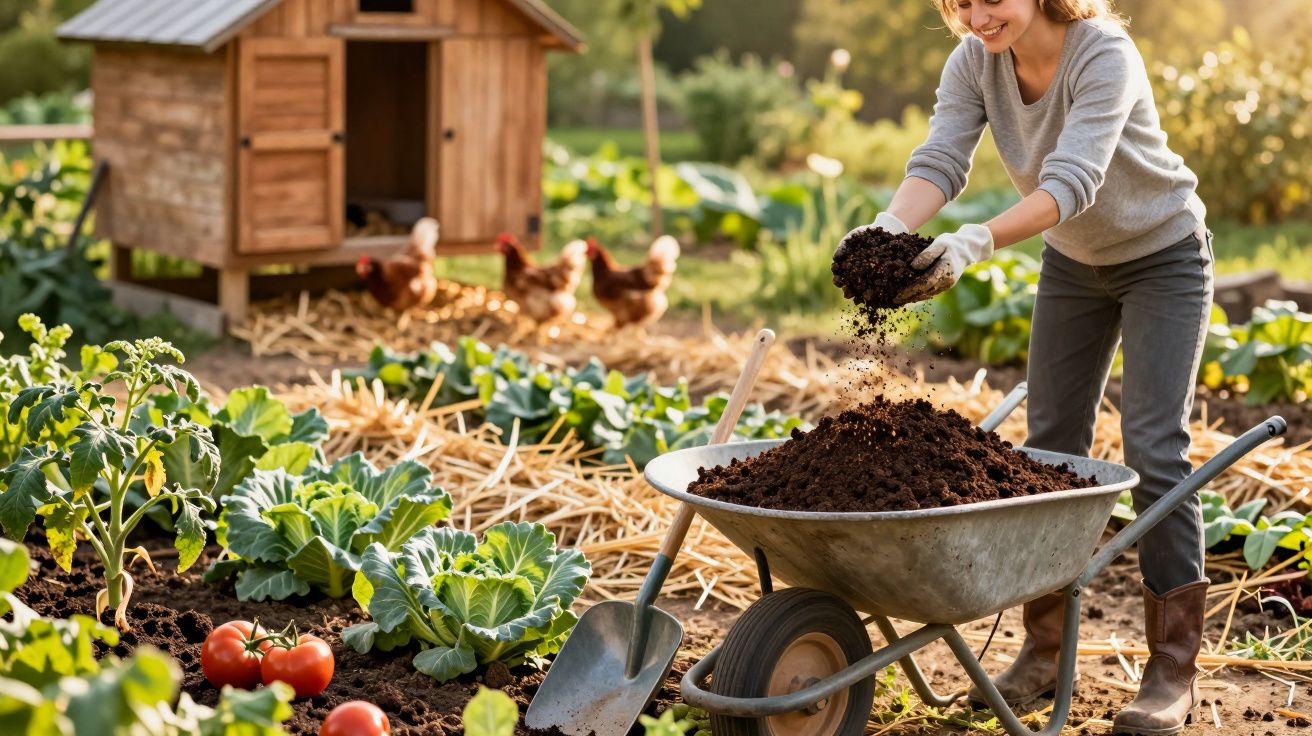
Keeping chickens means you have more than a steady supply of eggs. In the run and in the coop bedding, another resource builds up-one that can make flowerbeds, fruit trees and vegetable plots surge with growth when handled properly. Chicken manure is exceptionally powerful, but it can also be risky if it goes straight onto the soil. Compost it the right way, and it turns into “black gold” that often outperforms many shop-bought products.
Why chicken manure is such an unbeatable fertiliser
Chicken manure: a true nutrient booster from the coop
Chicken droppings are among the most potent natural fertilisers for the home garden. They typically contain particularly high levels of:
- Nitrogen - for strong leaf growth and deep green colour
- Phosphorus - for flower formation and robust roots
- Potassium - for sturdy plants, resilient cells and improved keeping quality
Compared with traditional cattle or horse manure, chicken manure is more concentrated. Small amounts can be enough to get young plants moving and to support heavy feeders. If you’ve been buying pricey organic fertilisers from the garden centre, a chicken coop can replace much of that spending.
Chicken manure isn’t waste-it’s a highly concentrated natural fertiliser, almost like a biological turbocharger for the soil.
“Hidden riches”: bedding plus droppings as perfect raw material
The most valuable material is often the mix of chicken droppings with used bedding. Straw, hay, wood shavings or fallen leaves add carbon, which balances the nitrogen-rich manure. This “brown” and “green” combination is exactly what microorganisms need to build stable, fertile compost.
While shops push bags of soil activators, horn meal and specialist feeds, soiled bedding can be equal-or better-just without the packaging and price tag. If you muck out regularly, you continuously create fresh starting material for a particularly nutrient-rich compost heap.
Why fresh chicken manure can scorch plants
Straight from the coop onto the bed? A bad plan
As tempting as it sounds, tipping fresh chicken manure next to tomatoes or lettuce is a reliable route to disappointment. The high nitrogen level and ammonia content can burn roots, dehydrate them and, in the worst case, wipe out a bed.
Typical results of applying it fresh include:
- scorched leaves and brown edges
- young plants collapsing within a few days
- strong smells and more flies
Fresh chicken manure behaves like concentrated liquid feed with no dilution-far too harsh for most crops.
Six months of patience: how it matures into humus
Time is the key. Chicken manure needs to rot down thoroughly before it goes anywhere near your beds. At least six months is a sensible minimum; nine months is perfectly fine.
A practical way to mature it in the garden:
- Collect soiled bedding and droppings from the coop.
- Build a heap at the edge of the garden-pile it loosely rather than compacting it.
- Choose a partly shaded spot so the heap doesn’t dry out completely.
- Keep it slightly moist, but protect it from constant rain (for example, with a board or a sheet that still allows airflow).
Inside the heap, bacteria, fungi and soil organisms gradually transform the “hot” components. The end result should be a crumbly, dark-brown humus that barely smells of the coop and feels much like finished compost.
Getting the dose right: only a thin layer on the soil
Less is more - the ideal application rate
Once your chicken compost is mature, application is all about restraint. A layer of roughly 2–3 cm spread over the surface is plenty. More doesn’t improve results and can even upset the soil’s balance.
A simple routine for the bed:
- Remove old plant debris and lightly loosen the surface.
- Scatter the finished chicken compost evenly.
- Don’t dig it in deeply-just rake it in lightly at the top.
A thin layer acts like a long-lasting buffet for soil life, which gradually carries nutrients downwards.
Where chicken manure fertiliser performs best (heavy feeders)
Vegetables that demand lots of nutrients respond particularly well. Reliable candidates include:
- tomatoes, peppers, chillies
- pumpkin, courgette, cucumber
- brassicas such as savoy cabbage, red cabbage and broccoli
Fruit also benefits. Around apple, pear or cherry trees, apply the mature compost over the root zone-but not right against the trunk. Instead, spread it beneath the canopy (over the tree’s soil circle). Soft fruit such as blackcurrants or raspberries also take chicken humus well, provided the dose remains moderate.
The decisive step: a mulch layer over the chicken compost
Locking in moisture and energising soil life
Leaving mature chicken compost exposed wastes much of its potential. Sun and wind dry the top quickly, and nutrients can be washed out. A mulch layer changes the whole system.
Good mulch materials include:
- slightly dried lawn clippings
- shredded autumn leaves
- straw or chopped stems from last season
This cover holds moisture, reduces erosion and creates ideal working conditions for worms. They pull the chicken compost down into the soil, mix it through, and improve pore structure and water retention.
Chicken compost and mulch work together like a bioreactor in the bed-quiet, slow and extremely effective.
Steady release instead of a nutrient shock
Heavy rain or watering dissolves small amounts of minerals from the mulch and compost and moves them gradually towards the root zone. Plants don’t get hit with a sudden “nutrient wallop”; they receive a consistent feed over weeks and months.
At the same time, mulch suppresses germinating weeds and protects the soil from overheating in summer. In dry years, it can noticeably extend the time between watering because moisture stays where roots can use it.
From coop to “black gold” in four steps
A practical year-round schedule for chicken compost
With a bit of planning, you can have fertiliser ready exactly when the garden needs it. A typical cycle looks like this:
| Step | Time of year | Action |
|---|---|---|
| 1 | Autumn/Winter | Muck out the coop, collect soiled bedding, start a compost heap |
| 2 | Winter/Spring | Leave the heap to mature, keep it moist, protect from prolonged rain |
| 3 | Early spring | Check maturity, confirm a crumbly texture, spread compost on beds |
| 4 | Spring/Summer | Cover with mulch and monitor plants as they grow |
If you muck out continuously, you can also run several smaller heaps at different maturity stages, which makes home-produced fertiliser available for much more of the year.
What gardeners should know about risks and fine details
Hygiene, odour and common mistakes
As with any animal manure, hygiene matters. Fresh chicken droppings can carry pathogens. Wear gloves, clean tools after handling the material, and avoid placing the heap right next to a patio, children’s play area or sandpit.
If the heap gets too wet, it can turn anaerobic, leading to rot and strong smells. Aim for the feel of a wrung-out sponge-moist but not dripping. If it smells foul, mix in dry structural material such as straw or shredded prunings and turn the heap to reintroduce air.
Crops that are less suited to chicken manure fertiliser
Some plants dislike rich feeding. Many herbs-especially Mediterranean types such as rosemary, thyme and lavender-perform better on leaner soils. For these areas, use only a very thin dressing at most, and often none is needed.
Root crops like carrots, parsnips and salsify can react badly to overfed ground: they may fork and grow unevenly. If you want straight, tidy roots, hold back on chicken compost there, or apply only small amounts well in advance of sowing.
Long-term benefits for soil, your budget and the climate
Buy less and keep nutrients cycling within your own garden
Keeping chickens makes it possible to build a near-complete nutrient loop: feed goes into the bird, manure goes onto the heap, humus goes onto the bed, and vegetables return to the kitchen. That can dramatically reduce-sometimes eliminate-reliance on bought-in fertilisers, cutting both costs and plastic packaging.
Just as importantly, the soil stays alive. Earthworms, springtails and microorganisms get regular food, and soil structure improves over time. Where you once had heavy, compacted ground, you gradually develop loose, crumbly layers that take in water and air far more effectively.
A further advantage worth considering is nutrient management: because chicken manure is so concentrated, careful composting and mulching help reduce nutrient run-off after storms-particularly useful on sloping plots or on allotments close to drains and watercourses. Keeping the heap covered (while still ventilated) also helps retain nitrogen that would otherwise be lost to the air.
For many gardeners, chicken manure changes from an annoying coop by-product into the backbone of a productive, resilient garden. Once you’ve seen the results, the next compost heap is often planned in your head before the next muck-out-and every hard-working hen feels like it’s fertilising the garden as well as laying eggs.




Comments
No comments yet. Be the first to comment!
Leave a Comment