
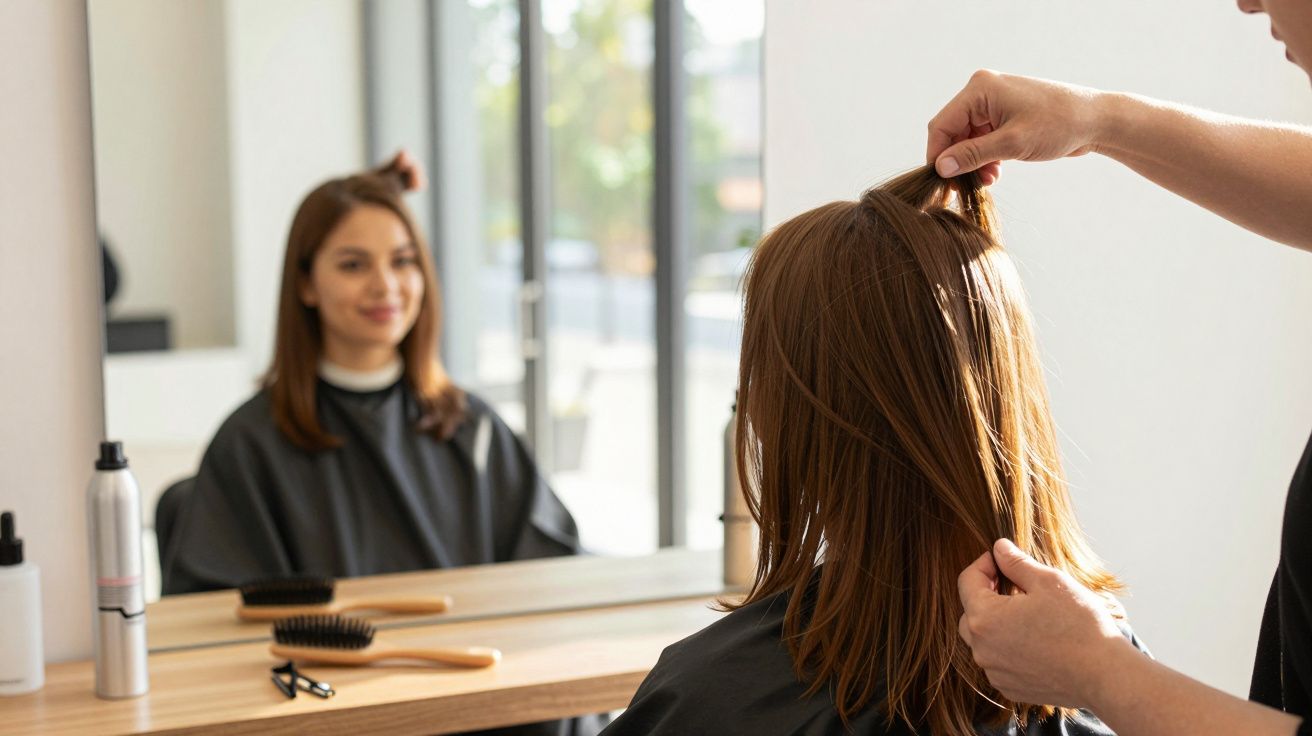
Hairdressers are now relying on an almost invisible trick that makes fine hair look noticeably fuller in spring.
As the weather shifts into the warmer months, fine hair gets tested every year. Higher humidity, the first hot days, no more hats - and suddenly everything hangs limp. Rather than adding yet another styling product to the bathroom shelf, professionals take a different approach: they build support inside the haircut, right at the roots. A specific cutting method can create far more lift without sacrificing length.
Why fine hair collapses so quickly at this time of year
Having fine hair doesn’t automatically mean you have less hair. More often, each strand is simply thinner, so it can’t hold itself up as well. In spring, several things combine to make that weakness more obvious:
- Early warmth: the scalp sweats sooner, and the roots drop flat.
- Humidity: you may get a touch of frizz, yet the roots still sit close to the head.
- Care mistakes: masks and oils that are too rich weigh down the mid-lengths and ends.
- The wrong cut: long, unstructured hair pulls everything downward.
Many people try to fix this with volumising mousse, dry shampoo or hairspray. It can work in the short term, but over time residue builds up on the scalp - and the hair can end up looking even heavier.
The most sustainable way to create fullness in fine hair isn’t in a bottle - it’s in the hairdresser’s scissors.
That’s why, in spring, hair specialists increasingly choose haircuts that add internal support without making the outside shape look dramatically shorter. One technique stands out.
The best cuts for more fullness - and what to avoid
If your hair is fine, you need structure above all else. A very long, blunt, shapeless cut can make the lengths fall like a heavy curtain. Professionals therefore tend to recommend clearly defined shapes.
Haircuts that give fine hair more substance
- Short bob: a well-cut, slightly shorter bob instantly looks fuller because it removes heavy length.
- Shoulder-length cut with gentle, minimal layering: soft layers placed mainly towards the lower section add movement without thinning out the ends.
- Pixie or bixie: short, textured cuts can look surprisingly voluminous even on a fine base.
The key is that the overall silhouette supports the impression of density. The outline should look clean and deliberate - not wispy, shredded or overly feathered.
Mistakes that make thin hair look even flatter
- Very long hair with no layering: the weight of the length presses the roots down.
- Over-thinned layers: frayed ends can make hair appear sparser.
- Heavy products applied up to the roots: silicones and oils can sit like a film over the scalp and root area.
To feel a real difference, many hairdressers now use a technique that isn’t always named in the salon - but its results are easy to spot.
Invisible lift for fine hair: internal layering at the roots (the “internal layering cut”)
Behind the current professional recommendation is a method often referred to as an internal layering cut. In simple terms, the hairdresser works inside the hairstyle, close to the scalp, using tiny hidden sections.
Mini sections within the haircut act like invisible supports, lifting the outer layers - a bit like discreet padding under a dress that gently raises the fabric.
How the technique works in practice
- The hairdresser separates the top layer and reveals the inner sections underneath.
- Very close to the scalp, small strands are trimmed slightly shorter.
- These shorter “support” strands push the hair above them upwards.
- From the outside, the cut looks full and compact, with no visible steps or obvious layers.
Especially with a short bob or a well-shaped shoulder-length cut, this internal structure can boost volume significantly. The hair doesn’t look “done”; it simply appears naturally fuller.
Why fine hair often needs more support with age
Medical experts note that individual hairs can become thinner over time, particularly due to hormonal changes. After the menopause, perceived hair density often drops by a noticeable amount. At that point, any mechanical support that helps the style hold up is welcome.
If you introduce a well-planned cut with internal support early enough, it can offset part of that effect. And just before summer - when sweating and sun can weigh the roots down even more - a salon appointment like this can make a real difference.
Colour, care and styling: how to keep the new volume for longer
Even the best haircut won’t perform if your colour choices and home routine work against it. With a few targeted tweaks, fine hair can look denser - without spending half an hour in the bathroom every day.
How hair colour can create the illusion of more fullness
A flat, single-tone colour - especially very dark or extremely light - can make fine hair look limp. Colour specialists often recommend depth and subtle variation instead:
- Fine, multi-dimensional highlights that gently emphasise selected areas.
- Glossing treatments in a shade only slightly different from your natural tone.
- Soft brightening around the face to add freshness and movement.
This creates the visual effect of texture and structure. The amount of hair doesn’t change, but it can look noticeably thicker.
The right at-home routine: light, but consistent
Fine hair is easily over-conditioned. With the best intentions, people often weigh it down without realising. A streamlined routine tends to deliver better results:
- Deep-clean the scalp once a week to remove styling residue and environmental build-up.
- Apply conditioner only through the lengths, never directly at the roots.
- Reverse the order: apply conditioner (or a lightweight treatment) to mid-lengths and ends first, then shampoo the scalp. This helps lift leftover residue more effectively.
- Blow-dry with a plan: dry upside down first until about 80% dry, then finish upright to shape and smooth.
One client who had used heavy, silicone-rich masks for years reported noticeably more natural lift after switching to a lighter routine and choosing an internally structured cut - without needing extra mousse.
Two extra habits that help fine hair hold lift in spring
If you want the cut to do more of the work for you, small daily choices can make the roots behave better:
- Watch heat and tension at the roots: heavy straightening at the scalp or tight ponytails can flatten fine hair quickly. Use moderate heat and keep styles looser where possible.
- Refresh volume without build-up: instead of piling on more dry shampoo, try a quick scalp cleanse after workouts and a light root blow-dry. This often restores lift more cleanly than layering products.
How to ask your hairdresser for the technique
Many experienced salon hairdressers know this approach but describe it in different ways. If you’re unsure, it’s better to explain what you want rather than searching for the perfect technical term:
- Say you have fine hair, but want to keep as much length as possible.
- Explain that your roots collapse quickly, even when you use volumising products.
- Ask for a cut where small internal layers/support hairs are created to lift the roots without thinning the ends.
A good hairdresser will then explain which version they recommend, demonstrate on one or two sections how they work, and make sure the outer line of the haircut stays compact and clean.
Risks, limits and sensible add-ons
As with any technique, internal structure can be overdone. If too many inner strands are cut very short, the hair can start to look messy after a few weeks. That’s why it pays to see a professional with real experience of fine hair.
Lifestyle factors also matter: stress, diet and medication can all affect hair quality and perceived density. A haircut technique doesn’t solve those underlying causes - it simply disguises them to an extent. If you notice sudden heavy shedding or visible bald patches, it’s sensible to seek medical advice before relying on a haircut alone.
Used correctly, though, internal volume building can take real pressure out of daily life: less dry shampoo, less hairspray, and less frustration in front of the mirror. A well-timed spring appointment can set you up for lighter, fuller-looking hair all the way through summer.




Comments
No comments yet. Be the first to comment!
Leave a Comment