
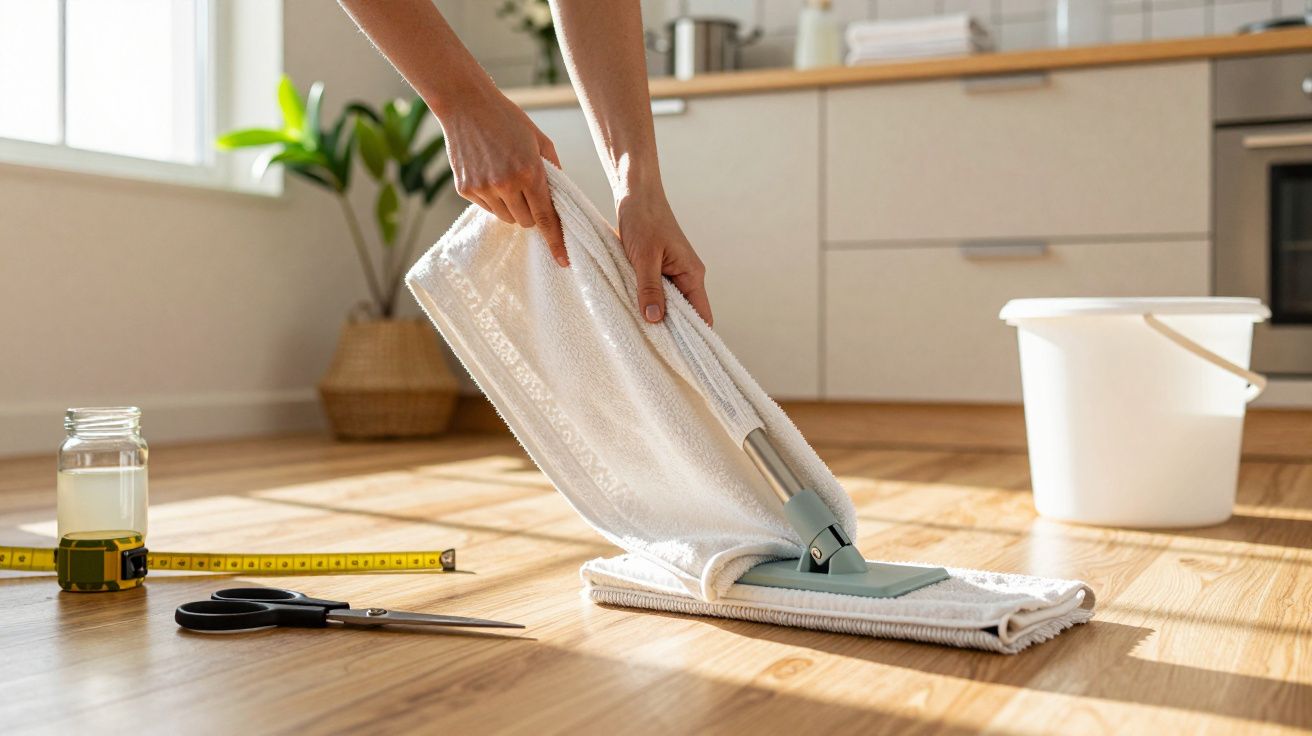
Using a flat mop often goes hand-in-hand with grabbing disposable hygiene wipes from a tub. It’s undeniably convenient - but it becomes expensive over time and adds a steady stream of rubbish. In many homes, the simplest, cheapest alternative is already sitting in the airing cupboard: an old terry bath towel.
Why an old terry bath towel makes a brilliant flat-mop cleaning sleeve
A worn-out towel doesn’t need to end up in general waste or a textile bank. Thick terry cloth is ideal for turning into a reusable mop sleeve for most standard flat mops. One towel can replace dozens - even hundreds - of disposable pads, with very little effort.
A cotton terry towel can perform like professional floor-cleaning kit - except you’ve already paid for it.
The reason is the weave. Terry cloth is made from lots of small cotton loops. Those tiny loops act like hooks that trap dust, hair and crumbs, while cotton also absorbs water well. That combination makes it suitable for both dry dusting and lightly damp mopping.
Many disposable pads are largely synthetic. They may pick up dust through static, but they tend to repel water rather than absorb it. So when you’re faced with proper wet spills or sticky marks, you often still need a separate mop. A thick terry cloth piece can handle both jobs: dry for dust and debris, and damp for everyday wipe-downs.
A further benefit that often gets overlooked: disposable synthetic pads can shed microfibres. Switching to a cotton terry towel sleeve reduces the amount of plastic-based fibre waste associated with routine cleaning.
What disposable pads really cost vs a towel you already own
If you mop twice a week and use two disposable pads per clean, you can easily get through 200+ pads in a year. At around 30–40p each, that’s roughly £60–£80 annually spent on throwaway material alone (approximately €60–€80).
A large bath towel measuring about 70 × 140 cm can be cut into several sleeves or lots of smaller cloths. They can go in the washing machine at 60 °C with your usual household laundry and withstand many wash cycles. The “investment” is essentially zero, because the towel was already headed for retirement.
- roughly 200 disposable pads per year with regular use
- annual spend: about £60–£80 on pads alone
- 1 large bath towel can make around 15–20 cleaning cloths/sleeves
- washable at 60 °C, with dozens of wash cycles possible
If you stick with the swap, the savings are ongoing and the reduction in general waste is noticeable. Households with children or pets - where floors often need doing more frequently - tend to feel the difference fastest, both in the wallet and in the bin.
How to make a reusable terry towel sleeve for your flat mop (no sewing required)
You don’t need a sewing kit for this. A sharp pair of scissors is enough. The goal is a snug, rectangular sleeve that wraps around the flat mop head and tucks into the same clamps or grippers that normally hold a disposable pad.
Step 1: Mark out the size
Place the flat mop head in the centre of the towel. Draw a rectangle around the mop plate, adding an extra 5–7 cm on every side. This allowance is what you’ll fold up and clamp in place.
If you plan to make several sleeves, measure carefully with a tape measure or ruler so each one fits the mop head consistently.
Step 2: Cut the rectangle
Cut out the marked rectangle neatly. A cleaner edge sits flatter and is less likely to fray, although tiny uneven bits won’t matter much in practice because the edges are hidden under the mop plate once fitted.
Step 3: Add corner notches for a better fit
At each corner of the rectangle, cut a small notch around 2 cm long. These notches help the thick terry cloth fold and tuck more easily into the mop head’s holders, reducing bunching and slippage.
Step 4: Fit and tension the fabric
Lay the mop plate in the middle of your cut piece. Fold the edges up and secure them into the clamps or elastic grippers where you would normally slot in a disposable pad. The corner notches allow the cloth to wrap evenly around the plate.
It holds firmly, comes off in seconds, and the sleeve simply goes straight into the laundry basket.
If the first sleeve feels slightly loose, just trim the rectangle about 1 cm smaller next time. After one or two attempts, you’ll quickly land on the perfect size for your particular flat mop.
Using your terry towel flat-mop sleeve day to day
Your homemade sleeve works either dry or damp, depending on the mess.
Dry: like a dust magnet
When dry, terry cloth behaves much like a static dusting cloth. The loops catch household dust, hair and crumbs reliably. For hallways, living areas and bedrooms, one dry pass is often enough.
If you’ve got lots of pet hair around baskets or feeding bowls, a dry run first is especially useful. Picking up the loose hair upfront makes the damp clean afterwards far easier.
Damp: a practical wipe-down for everyday grime
Dampen the sleeve lightly and wring it out well. On tiles, vinyl or laminate, it can be a little wetter. On real wood parquet, keep it only slightly damp to avoid stressing the timber.
For kitchens, entrances and bathrooms, a simple two-stage approach works well:
- Mop dry first to remove crumbs and hair.
- Follow with a freshly dampened sleeve.
That way, debris doesn’t smear or stick to the floor, and the finish looks noticeably cleaner.
A simple wash routine - plus a DIY cleaning mix for pre-soaked sleeves
After cleaning, toss the sleeves in with your household laundry. Washing at 60 °C is usually sufficient to get them hygienically clean. Skip fabric conditioner: it can coat fibres and reduce absorbency.
If you like having everything ready to grab, you can store several sleeves in a jar, pre-soaked in a homemade cleaning mix. One option is:
- 1 part white vinegar
- 2 parts distilled water
- a few drops of lemon essential oil
Let the sleeves absorb the solution, then wring one out before mopping. After use, put it straight into the laundry basket. The vinegar helps with limescale and light grease, while the essential oil leaves a fresh scent. If you have delicate surfaces, test the solution on an inconspicuous spot first.
To keep hygiene straightforward, it’s also worth colour-coding: for example, one set of towel sleeves for the bathroom and another for the kitchen. Even if they’re all washable at 60 °C, separating uses can help avoid cross-contamination.
Floor types and hygiene: what to watch out for
If you have sealed parquet or premium design flooring, check the manufacturer’s care guidance. Some brands advise against acidic cleaners. In that case, leave out the vinegar and use a mild neutral floor-cleaner concentrate instead.
For households with allergy sufferers, the reusable sleeve offers another advantage: it can be washed hot and, in many cases, tumble-dried. That can reduce dust mites and pollen residue far more effectively than a disposable wipe that’s used briefly and then binned.
More ways to reuse old towels around the house
Once you start repurposing old towels, you’ll find plenty of other uses. Smaller offcuts can become:
- washing-up cloths for the kitchen
- wipe-down cloths for the bathroom
- small mats for wet shoes in the hallway
- polishing cloths for garden furniture or a bicycle
That means fewer textiles go straight into the bin. In fact, thick terry towels that have gone a bit stiff - and aren’t pleasant for drying off anymore - often make some of the most durable cleaning cloths.
With a small stack of these sleeves ready to go, you can avoid pricey “specialist” systems and still clean thoroughly. Before long, the switch feels completely normal - except the repeat spending on disposable pads quietly disappears.





Comments
No comments yet. Be the first to comment!
Leave a Comment