
Cold toes under the table. A draught sneaking beneath the door. That deep, stubborn ache that thick socks can’t shift. You’re after proper heat, not a vague sense of “cosy”. You want it quickly, and you don’t want to spend a fortune on a gadget you’ll use twice. The fix is in the kitchen, not the chemist. The real game-changer sits between the spice jar and the vinegar bottle. It costs pennies, smells faintly like supper, and it genuinely works.
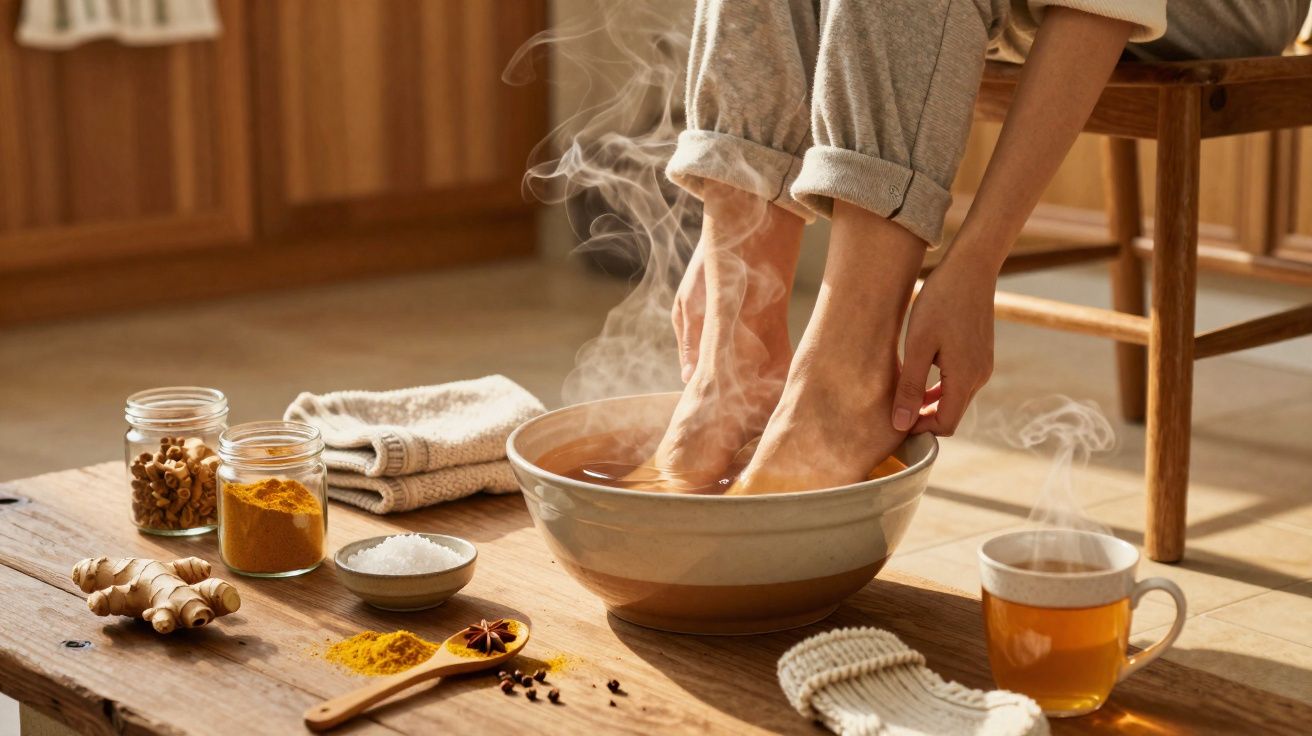
I used to bring the cold home in my boots - that pin-prick chill that survives the commute and practically mocks the radiator. One night, I put the kettle on without thinking, grabbed a mixing bowl (the sort you’d use for baking), and set it on the floor. As the steam rose, ginger slices drifted in slow circles and the salt dissolved into silence.
“Are you… cooking your feet?” someone called from the doorway.
I just shrugged, eased my toes in, and felt warmth arrive - not only on the skin, but right down into the bones. It’s the sort of relief that sticks with you. And yes, the secret really was sitting next to the spice jar.
What really warms cold feet (ginger, mustard powder and salt)
Warm water on its own can be a slow starter when your feet feel like blocks of ice. Yes, heat moves into the skin, but your tiny blood vessels often need a gentle prompt to open up as well. That’s where simple kitchen ingredients do their quiet work. They don’t merely “sit” in the water - they help wake things up. Think of ginger’s mild tingle or mustard’s comforting hum. They’re not miracles; they’re triggers.
Most of us know that moment when you peel off socks and your toes look pale and feel numb, as if they’ve forgotten they belong to you. One evening, a neighbour told me her grandmother swore by mustard foot baths after long, freezing days at the market. I added a teaspoon to a bowl of warm water, half-expecting it to be a wind-up. Ten minutes later, I could wiggle warmth back into each toe. No drama - just steady, spreading comfort.
Here’s what’s going on. Heat encourages blood vessels to open. Salt changes how the water feels and can help it hold warmth while easing that tight, post-cold stiffness. Ginger contains compounds that create a gentle warming sensation. Mustard powder gives circulation a nudge you can genuinely feel. A splash of apple cider vinegar can help restore the skin’s pH and tackle lingering boot odours. This is teamwork: temperature plus straightforward pantry chemistry - relief you can pour into a bowl.
Kitchen foot soaks that actually work for cold feet
The core method is reassuringly simple. Fill a bowl or basin with warm water - comfortably hot, never scalding - to ankle depth. Stir in 2 tablespoons of table salt, 1 teaspoon of mustard powder, and 4–6 slices of fresh ginger (or 1 teaspoon of ground ginger). Mix with a spoon, sit somewhere comfortable, and soak for 12–15 minutes. Dry your feet thoroughly, pull on thick socks straight away, and have a gentle walk around for a minute to help “lock in” the warmth.
Swaps make it easy to keep going. No mustard? Use a cinnamon stick and a strip of orange peel for a softer, calmer warmth. No fresh ginger? Ground ginger does the job. If odour is your main issue, try 1–2 tablespoons of apple cider vinegar in warm water on its own. If you’re more bothered by rough heels, a baking soda soak - 1 tablespoon per litre - can feel silky.
Don’t combine vinegar and bicarbonate of soda in the same bowl. The fizz is entertaining, but they neutralise each other. And if we’re being honest, hardly anyone keeps up a full routine every single day.
Common mistakes to avoid
- “As hot as you can stand” isn’t better - it’s redness followed by regret.
- Skip cayenne or chilli flakes if your skin is at all sensitive; they can irritate quickly.
- Keep the soak under 20 minutes to avoid wrinkly skin and that unpleasant post-soak chill.
- If you have diabetes, neuropathy or circulation problems, keep the water lukewarm and test the temperature with your elbow rather than your foot.
- Dry carefully between your toes, then finish with socks.
“The mustard-and-ginger mix was the first thing that properly thawed my feet after a late shift. It was like my toes remembered who they were.” - Mara, 34
- Heat sweet spot: 38–40°C for most people
- Fast mix: 2 tbsp salt + 1 tsp mustard + ginger slices
- Vinegar solo soak for odour; baking soda solo soak for softness
- Time target: 12–15 minutes, then thick socks immediately
- Skip if skin is broken or irritated; patch-test spices if you’re unsure
The ritual that warms more than your toes
There’s a reason a foot soak often feels more effective than a hot shower. It’s small, contained and focused. You can sense warmth arriving one toe at a time - and the rest of your body seems to exhale with it. Your kitchen turns into a tiny spa: brighter lights, no booking needed. I’ve watched people roll their eyes at the idea, then fall quiet as the steam curls around their ankles. It’s oddly grounding.
Make it part of winter rather than another task. Keep a bowl under the sink and a jar labelled “foot salt”. Add citrus peel left over from tea, or the ends of ginger from cooking. While the kettle boils, put a towel in the tumble dryer for two minutes so you’ve got something warm waiting. You can do the whole thing in the time it takes to scroll your phone - and it lasts longer than the scroll ever will.
One more thing we rarely say out loud: warmth can be shared. Pass the trick on to a flatmate or partner who won’t stop complaining about icy feet in bed. Put two bowls side by side and chat while your toes thaw. The ingredients are everyday. The feeling isn’t. This is how small, almost-free habits quietly rescue a long winter evening.
Extra ways to keep feet warm between soaks
A soak works best when you also change the conditions that made your feet cold in the first place. If your floors are chilly, add slippers with a proper sole rather than thin fabric ones. If you work at a desk, try lifting your feet off the cold floor with a small footrest, or place a folded blanket under your legs so heat doesn’t drain away as quickly.
It also helps to think about moisture: sweaty feet cool faster, especially in boots. If your feet tend to perspire, rotate footwear so shoes can dry fully, and choose socks that manage damp (wool blends often work well). Warmth is easier to keep when your feet are dry.
Keep experimenting, but keep it gentle
There isn’t one perfect soak - only the one your toes and your kitchen can agree on. Some evenings call for the bolder warmth of mustard. Other nights you might prefer something milder, like tea bags and a bit of lemon peel. If your skin gets on well with oils, rub in a drop of olive oil once your feet are dry; if it doesn’t, thick socks alone can be enough.
This is also about slowing your evening down: kettle, bowl, steam, socks. Half the warmth is in the ritual. If you miss a night and end up back on cold floors with complaints, just start again tomorrow. Winter wears you down in small ways. A warm bowl takes one small edge back.
In the end, you’re building a habit that costs almost nothing and gives you a little of yourself back at the end of a long, grey day. Sunlight warmth is lovely. Kitchen warmth feels earned. Share your favourite combination with someone still curled up and shivering - they’ll think of you every time the steam rises.
| Key point | Detail | Why it matters to you |
|---|---|---|
| Ideal water temperature | 38–40°C, test with your elbow if you’re sensitive | Warms quickly without irritation or risk |
| Best pantry boosters | Salt, ginger, mustard powder, citrus peel, tea bags | Cheap, easy-to-find ingredients that genuinely help |
| Timing and follow-up | 12–15 minutes, dry well, thick socks straight afterwards | Helps trap heat so toes stay warm longer |
FAQ
- How hot should the water be? Keep it comfortably warm, not scalding - roughly 38–40°C. If you’re uncertain, test with your elbow. If sensation is reduced, go slightly cooler to stay safe.
- Can I use cayenne or chilli powder? Some people do, but it’s easy to overdo and irritate the skin. Gentler warming options are ginger or mustard powder in small amounts. Stop immediately if you feel stinging rather than mild warmth.
- Is apple cider vinegar safe for cracked heels? If the skin is broken, vinegar can sting. Choose plain warm water or a mild baking soda soak instead, then moisturise afterwards. Save vinegar for when the skin has healed.
- How long should I soak? 12–15 minutes is the sweet spot. Longer can lead to wrinkled skin and a post-soak chill. Dry thoroughly, especially between the toes, then put socks on.
- What if I have diabetes or poor circulation? Keep the water lukewarm, test the temperature carefully, and limit the time. If you have neuropathy, wounds or any concerns, speak to a healthcare professional before trying any soak.





Comments
No comments yet. Be the first to comment!
Leave a Comment