
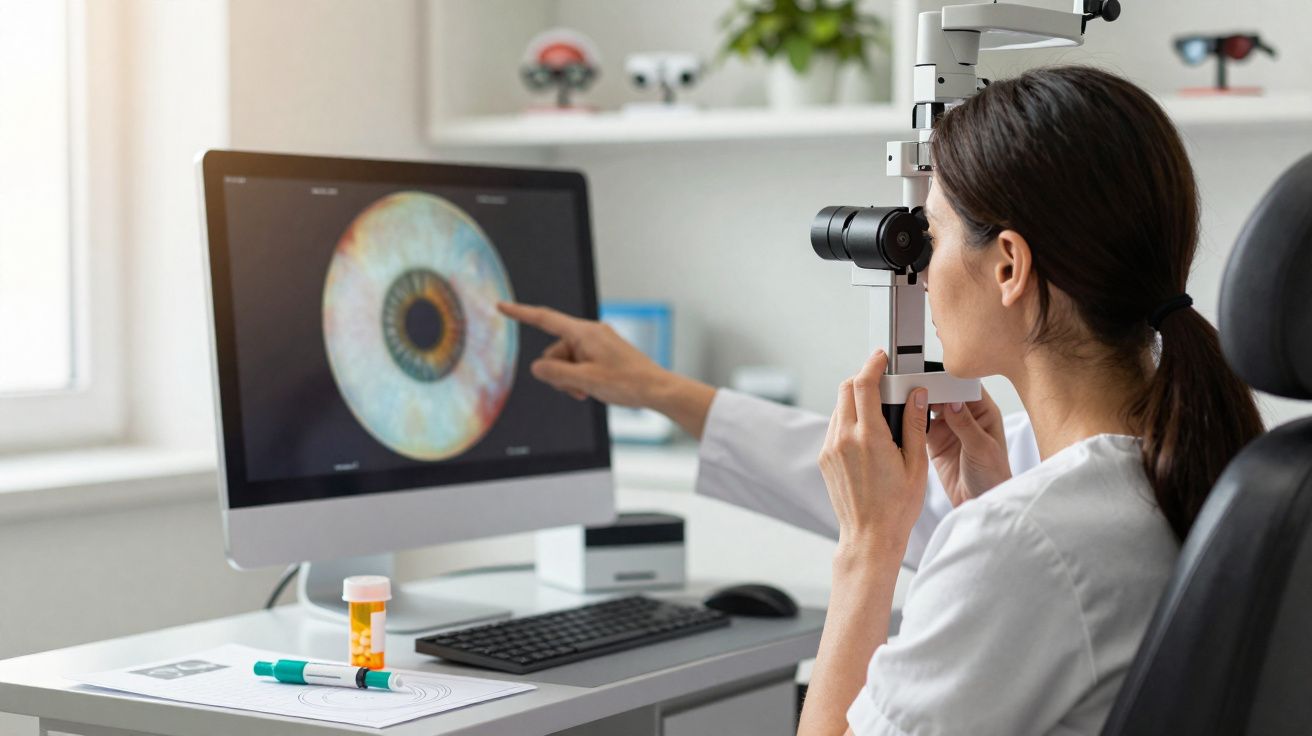
Drugs designed to manage diabetes have unexpectedly become the focal point of a worldwide weight-loss boom. Now, their possible effects on eyesight have surfaced as an urgent and slightly uncomfortable question, after two new studies strengthened concerns about a rare optic nerve event. The overall narrative still includes substantial benefits-but it now comes with a clearer reminder to proceed with care.
What the latest evidence says about semaglutide (Ozempic, Wegovy, Rybelsus) and NAION
Semaglutide-marketed as Ozempic, Wegovy and Rybelsus-is part of the GLP‑1 (glucagon‑like peptide‑1) drug class. These medicines help regulate blood glucose and typically reduce appetite, which can lead to weight loss and better cardiometabolic outcomes. However, ophthalmology researchers are flagging that the optic nerve may face a small but noteworthy risk in certain people.
One analysis from Massachusetts Eye and Ear reviewed patient records from 2017 to 2023, comparing individuals with diabetes or obesity who were prescribed semaglutide with similar patients who were not. Reported in JAMA Ophthalmology in July 2024, the study found more cases of non‑arteritic anterior ischaemic optic neuropathy (NAION) among semaglutide users. The relative risk was roughly four times higher in the diabetes group and more than seven times higher in the obesity group. Even so, the total number of cases remained low-yet the pattern was strong enough to prompt attention.
A second cohort study led by Karolinska Institutet together with the University of Melbourne also identified a small absolute risk-about 0.04% of patients included-while still noting that this was slightly higher than in matched controls. Both research teams emphasised the key complication in interpreting the results: diabetes itself increases NAION risk, making it difficult to draw a simple cause-and-effect line.
That background risk is not new. A PLOS ONE meta‑analysis from 2013 (well before weight‑loss injections dominated headlines) linked diabetes with a 64% higher risk of NAION, underscoring that baseline vulnerability already exists in some populations.
NAION is uncommon. The link with semaglutide appears small in absolute terms, but it may still matter for people who already have eye or vascular risk factors.
How NAION strikes the eye (and why it’s sometimes called an “eye stroke”)
NAION is often described as a “stroke of the eye” because it involves a sudden reduction in blood flow to the front part of the optic nerve (the optic nerve head), typically without warning. Vision may become dim or blurred in one eye, frequently noticed on waking. It is usually painless, and the resulting visual loss can be permanent.
Clinicians are particularly alert in people with risk factors that may reduce optic nerve resilience, including a “crowded” optic disc, high blood pressure, sleep apnoea, or established vascular disease.
- Common warning signs: a sudden dark patch, a curtain-like shadow in the visual field, faded colours, or fast-onset blurring in one eye.
- Higher‑risk profiles: diabetes, obesity, hypertension, sleep apnoea, a crowded optic disc, or previous NAION in the other eye.
- Immediate steps: pause further injections, seek urgent eye assessment, and tell the clinician you are using GLP‑1 treatment (including semaglutide).
If your vision becomes dim, patchy or suddenly blurred after an injection, treat it as an emergency-get your eye checked the same day.
Regulators and clinicians respond to the NAION signal
European regulators have acted to reflect the emerging safety signal. In June 2025, the European Medicines Agency added NAION as a “very rare” adverse effect for semaglutide and advised stopping treatment if sudden visual symptoms occur. This is not a prohibition; rather, it shifts the emphasis towards clearer consent discussions and more thoughtful monitoring.
For prescribers, the dilemma is familiar: GLP‑1 medicines can reduce weight, improve glucose control, and lower cardiovascular risk-benefits that, for many patients, will greatly outweigh the chance of a very rare eye event. But risk is not evenly distributed. People with sleep apnoea, poorly controlled blood pressure, or previous optic nerve problems may warrant closer follow‑up and more explicit safety planning.
Summary of the key studies
| Study | Population | Outcome measured | Key result |
|---|---|---|---|
| Massachusetts Eye and Ear (2017–2023), JAMA Ophthalmology 2024 | Diabetes and obesity cohorts, >16,000 records | NAION incidence on semaglutide vs no semaglutide | Higher relative risk: ~4× (diabetes), >7× (obesity); absolute numbers remained low |
| Karolinska Institutet & University of Melbourne | Patients on GLP‑1 therapy | Absolute NAION risk vs matched controls | About 0.04% absolute risk; slightly higher than controls |
| PLOS ONE meta‑analysis, 2013 | Mixed populations | Baseline NAION risk in diabetes | Diabetes associated with a 64% higher NAION risk |
What this means if you use Ozempic or Wegovy
There is no need to panic: for any individual, the likelihood of NAION remains low. Equally, you should not discontinue semaglutide without discussing it with your GP or specialist.
If you are starting a GLP‑1 medicine and you have additional risk factors, consider arranging an eye assessment early on. Make sure your clinician knows about sleep apnoea, blood pressure issues, or any previous optic nerve concerns. It can also be helpful to record baseline vision and optic disc appearance before dose escalation, so that any later change is easier to evaluate.
During dose increases, keep a simple log of any new symptoms-dark spots, missing areas in your visual field, or changes in colour perception-and report these quickly. Aim for steady blood pressure control, treat sleep apnoea if relevant, and stay well hydrated, particularly if nausea reduces your fluid intake. These practical measures support optic nerve perfusion.
UK-specific addition: if you experience a suspected medicine side effect, you can report it via the MHRA Yellow Card scheme. Reporting does not replace medical care, but it helps strengthen safety monitoring and may improve future guidance.
Another practical consideration: if you notice sudden one‑eye visual loss, avoid driving and arrange urgent assessment immediately. Visual changes affecting one eye can be subtle at first but still clinically important.
Why the optic nerve might be at risk on GLP‑1 therapy
Researchers are exploring several plausible mechanisms. One leading idea focuses on microcirculation at the optic nerve head, where there is limited “backup” blood supply. Rapid changes in glucose, blood pressure, hydration status, or vascular tone could, in theory, push a vulnerable optic nerve into ischaemia. Another hypothesis is anatomical: a tightly packed (crowded) optic disc may have less capacity to accommodate swelling, increasing the likelihood of a pressure–perfusion mismatch. There is also interest in how GLP‑1 receptors might affect vascular reactivity, though this remains incompletely mapped.
Longer-term work is underway. One ongoing study is following roughly 1,500 patients for five years, using retinal imaging and optic nerve mapping while tracking dose changes and metabolic shifts. The aim is to clarify who is most at risk, when risk is highest, and which precautions reduce harm.
The next step is precision: identify the small subset at risk, while allowing the wider group to continue treatment with clear-eyed monitoring.
Choosing well using real‑world numbers
When making decisions, absolute risk is crucial. An estimate of 0.04% corresponds to around four in 10,000 treated people experiencing NAION in one analysis-meaning the overwhelming majority will not. Nonetheless, because vision loss can be life-changing, clinicians increasingly tailor advice. Someone living with obesity plus hypertension and sleep apnoea might gain major cardiovascular benefit from semaglutide, but they may also merit more structured eye surveillance.
Practical pointers for semaglutide (GLP‑1) treatment and eyesight monitoring
- Arrange a baseline eye exam (including optic disc photographs) if you have vascular risk factors.
- Agree a symptom plan in advance: what to do, who to contact, and when to pause doses.
- Keep blood pressure well controlled; if your doctor suspects night-time dips, ask whether additional monitoring is appropriate.
- Aim for gradual, stable glucose changes during dose escalation; discuss the pace if you feel unwell or become dehydrated.
- Treat any one‑eye visual change as urgent, even if it seems to improve later in the day.
A few definitions can help in consultations. GLP‑1 refers to glucagon‑like peptide‑1, a gut hormone that stimulates insulin release and slows gastric emptying. Semaglutide is a GLP‑1 agonist. NAION is an ischaemic injury affecting the front portion of the optic nerve without arterial inflammation. It is not the same as diabetic retinopathy, which involves retinal blood vessels and often develops gradually.
If semaglutide is not suitable, other GLP‑1 medicines and non‑GLP‑1 weight‑management options are available, each with its own balance of benefits and harms. People who have already experienced NAION in one eye carry a higher risk in the other and will need an individualised plan. The same applies to people whose jobs depend on highly reliable vision-such as pilots, surgeons, or electricians.
The takeaway is not a judgment against weight‑loss injections. Instead, it is a call to use them with greater precision: acknowledge that the eye risk appears rare but real, agree monitoring, and respond immediately if warning signs arise. That approach preserves the well-established benefits of modern obesity care while protecting an irreplaceable sense.






Comments
No comments yet. Be the first to comment!
Leave a Comment