
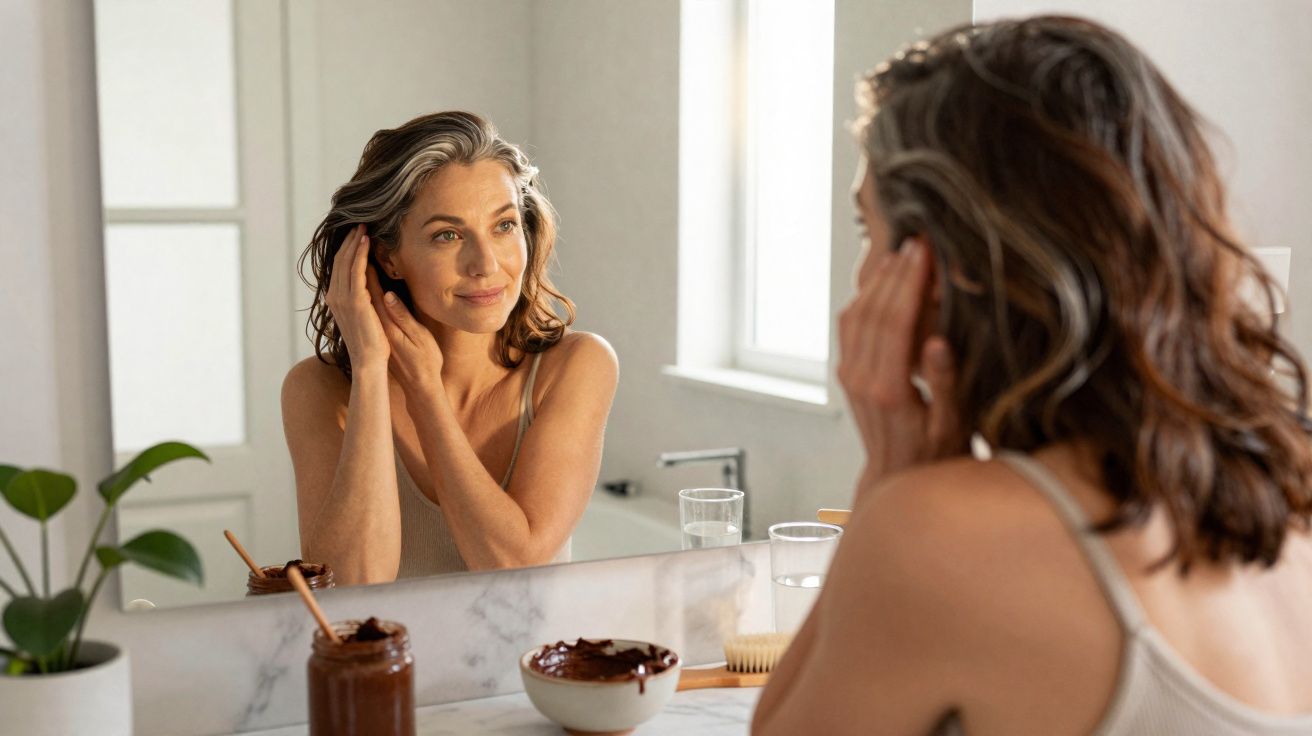
Grey hair is increasingly being worn as an intentional look rather than treated as an emergency, as a low-key shift gathers pace in salons and across social platforms.
More and more people sitting in salon chairs - and scrolling through TikTok and beauty forums - are questioning the old routine of strong dyes and constant root touch-ups. In its place, a gentler, more natural-looking approach is emerging, quietly nudging age-related beauty expectations in a new direction.
The quiet rebellion against traditional hair dye
For years, the unspoken rule was simple: the moment grey hair shows up, you book in and have it covered. The loop can run for years, with regrowth typically showing again after around three to four weeks. Many now describe that cycle as draining - not only costly, but also tiring to keep up psychologically.
Ageing hair changes in more ways than colour alone. Grey strands are often drier, coarser and more delicate, and they reflect light differently. That can make even a freshly styled cut appear less “finished”. If someone already links greys with stress or fatigue, these shifts can knock confidence.
Grey hair itself isn’t always the issue; it’s often the contrast and the change in texture around it that creates the “tired” effect people want to avoid.
Instead of battling every strand, the new emphasis is on softening the contrast, blending greys more gradually and improving the condition of the hair fibre at the same time. The aim is less “back to my twenties” and more “a sharper, healthier version of me right now”.
A new approach: tinting, not dyeing
Rather than relying on permanent box colour, this trend leans towards natural pigments and conditioning masks that deepen greys subtly instead of fully masking them. In feel and routine, it’s closer to skincare than to classic colour.
Instead of one intense session, people make a series of small tweaks: a bit of colour deposit, a bit of shine, plenty of nourishment - repeated regularly, much like using a weekly face mask. Over time, the tone looks richer and more even, while many find the scalp feels calmer.
The key change is moving from “erase every grey now” to “nudge the tone often and keep the hair fibre strong”.
Why cocoa powder is suddenly in your bathroom
One ingredient being talked about more than most is straight from the kitchen: cocoa powder. Not a sugary hot chocolate blend, but plain, unsweetened cocoa.
Used consistently, cocoa offers a combination that greying hair often benefits from:
- A natural brown pigment that can lightly stain paler strands over repeated use
- Antioxidants that may help shield hair fibres from everyday wear and tear
- Fatty components that can support softness and shine when paired with conditioner
People who stick with cocoa masks often report two noticeable shifts. First, the grey areas can move towards a softer, cooler brown - particularly around the temples and along the parting. Second, the hair frequently feels less brittle, which can make styling simpler and reduce frizz.
Grey hair cocoa masks: how the cocoa method works in practice
The version shared most widely online is uncomplicated, inexpensive and easy to tailor to different hair textures and amounts of grey.
| Step | What to do |
|---|---|
| 1 | Wash with a gentle shampoo, then towel-dry so the hair is damp. |
| 2 | Mix 1 tablespoon (about 15 ml) of unsweetened cocoa powder into a portion of silicone-free, oil-free conditioner. |
| 3 | Stir until it becomes a smooth paste with no dry pockets. |
| 4 | Apply mainly to grey or very light sections, then pull through the lengths if you want a more even veil. |
| 5 | Leave on for up to 20 minutes, then rinse thoroughly with lukewarm water. |
Because cocoa doesn’t behave like a chemical dye, the first application is usually understated. Depth tends to build with regular use - commonly once or twice a week. The change is often easiest to see on light brown to medium brown hair; very dark bases may show minimal visible shift.
Think of it as a stain rather than a full colour transformation: repeated layers slowly deepen tone without creating a harsh regrowth line.
Practical note worth adding: cocoa can mark light towels and porous bathroom grout. Using a dark towel and rinsing the shower area quickly afterwards helps keep things tidy. If your hair is very porous (for example, after bleaching), the tone may also grab faster - so start with a shorter processing time and build up gradually.
Who this trend actually suits
This softer strategy won’t replace traditional colour for everyone, but it tends to appeal to a few groups in particular.
People in the early stages of greying
When roughly 10–30% of the hair has turned grey, a solid salon shade can sometimes look flat or overly uniform. A gentle tint approach can help to:
- Blur early streaks rather than wipe them out
- Avoid a hard, single-shade “helmet” effect
- Push back the point at which permanent dye feels unavoidable
Those with sensitive scalps or damaged hair
Frequent permanent dyeing or bleaching can trigger irritation, stinging, or more breakage over time. A cocoa-based mask avoids ammonia and peroxide, so many find it kinder on the scalp. Over-processed hair can also feel softer simply because it’s being conditioned consistently.
That said, cocoa powder is still a botanical ingredient. Anyone with food allergies or very reactive skin should do a patch test (behind the ear or on the inner arm) before applying it widely.
Does it really make you look younger?
The “younger” effect is usually less about trying to look 25 and more about visual balance. When bright silvery greys strongly contrast with darker lengths, they catch the light and can draw attention to under-eye shadows or fine lines. Softening that contrast can make the whole face look calmer.
A faint brown veil over silver strands can also bring shape back to a haircut: layers can read more intentionally, fringes can seem fuller, and the hairline may look less uneven. These small changes often affect how old someone feels they look more than the raw count of grey hairs ever could.
People who go for gradual tinting often say they feel “more put together”, not necessarily “younger” - and that distinction matters.
How this compares with classic salon options
Many hairdressers now describe grey management as a spectrum, from heavy coverage to light blending - and cocoa masks sit at the gentlest end.
- Permanent dye: strong coverage; obvious regrowth; more chemical exposure; longer gaps between appointments
- Demi-permanent gloss: softer grow-out line; moderate coverage; often best done professionally
- Highlights and lowlights: blends grey visually with lighter/darker strands; higher cost; depends heavily on salon skill
- Natural tints like cocoa: minimal damage; subtle coverage; needs frequent use for a visible shift
Plenty of people combine methods: they get salon colour a few times a year for structure, then maintain tone between visits with cocoa or similar at-home treatments. For some, that hybrid approach reduces the number of appointments and limits chemical processing.
Tips to make the cocoa trend actually work
The method is simple, yet a few adjustments can make the difference between “barely anything happened” and a genuinely flattering result:
- Pick pure, unsweetened cocoa powder with no added sugar or flavouring.
- Trial a small section first (for example, the temples) to check how the tone reads on your hair.
- Tweak the mix: more cocoa for deeper tone; more conditioner for a lighter wash of colour.
- Keep expectations grounded: it’s a soft filter, not instant full-coverage colour.
- Pair it with moisturising care - a hydrating shampoo and a leave-in on the lengths can help manage dryness.
Your starting shade matters too. Very white hair may move towards a soft beige-brown, while salt-and-pepper hair often looks more evenly “smoked” rather than turned into a single flat colour.
Another helpful addition: water quality can affect how hair looks after tinting. In hard-water areas, mineral build-up can dull shine and make grey strands feel rougher. If that sounds familiar, an occasional chelating or clarifying wash (used sparingly) can improve gloss and make any subtle tint look cleaner.
Beyond cocoa: broader care for ageing hair
Grey hair reflects several biological changes at once: melanin production slows, the scalp barrier can shift, and follicles often produce less natural oil. That’s why managing texture can be just as important as adjusting colour.
People who adopt the cocoa method frequently pair it with gentler habits: reducing heat styling, using wide-tooth combs rather than harsh brushes, and switching to microfibre towels instead of rough cotton. Some also add scalp massage with lightweight oils for relaxation and circulation, which can improve the look of shine and volume over time.
Dermatologists also point out that lifestyle can shape how greying feels, even if it doesn’t reverse the colour change. Chronic stress, smoking and nutritional deficiencies may accelerate the process or make hair seem weaker. Basic checks - such as iron status, vitamin D and B12 - sometimes uncover issues that, once addressed, help hair behave better.
For anyone weighing up options, speaking with a trichologist or dermatologist can clarify when natural stains like cocoa are sensible and when stronger, medically guided treatments are worth exploring. Between full coverage and total acceptance is a wide middle ground - and this trend sits squarely in that space, giving people room to adapt to their changing reflection in their own time.



Comments
No comments yet. Be the first to comment!
Leave a Comment