
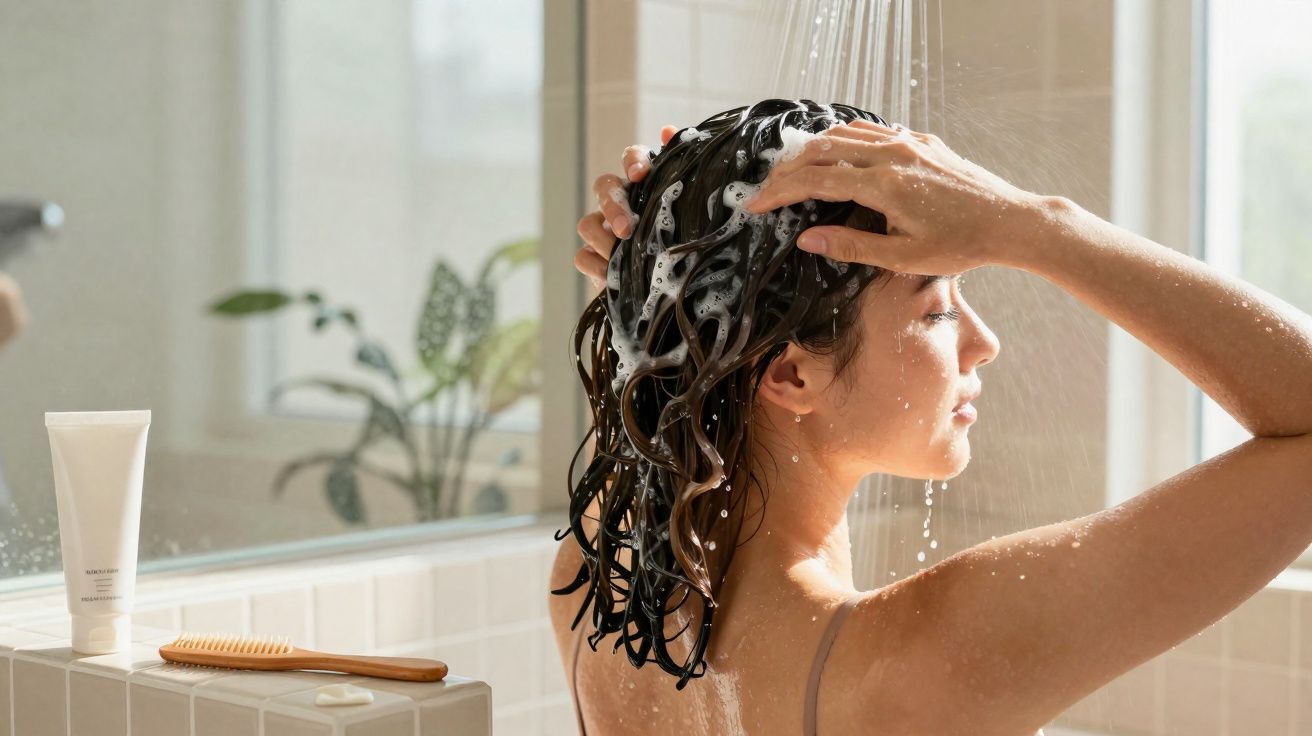
The woman in the gym shower looks irritated.
She wrings out her ponytail, gives her head a brisk shake in front of the mirror, checks her roots with her fingertips and silently mouths “Why?” at her own reflection. Her hair ought to look good. She used the pricey conditioner, worked it in properly, left it to sit, and rinsed really thoroughly. And yet, once it dries, it sits close to her head - almost plastered to her scalp - as if it has lost its nerve.
On the bus, another woman scrolls TikTok hair hacks, stopping on clips that promise “instant volume” and a “runway blowout at home”. She has the same issue: the ends feel soft, but the top looks flat and drained. She assumes she needs a new product, a new cut, maybe even a new stylist.
The truth is far more ordinary. The answer may be in how we rinse.
Why your conditioner is secretly stealing your volume
Hair often looks flat not because the conditioner is “bad”, but because of where it ends up lingering. Conditioner belongs on the lengths and ends, yet it has a habit of creeping up towards the roots. In a hot shower, with water streaming straight down, the creamy formula can slide along the scalp and cling to the hair closest to it. Those few extra grams left at the roots are often exactly what drags everything down.
It’s easy to blame humidity, hormones or a vague “bad hair day”, but the real explanation is usually more practical. Conditioner smooths the hair cuticle - brilliant for shine and softness. When that smoothing effect happens at the roots, though, hair loses its natural lift and grip. The end result is hair that looks freshly washed but behaves like day three: weighed down, and a touch oily-looking around the scalp.
Imagine a busy Tuesday morning. A 29‑year‑old marketing manager in London, racing towards a 9 a.m. meeting, washes her hair quickly between emails. She squeezes out a generous blob of conditioner and runs it through from mid‑lengths to ends - or at least that’s the plan. With a strong shower stream overhead, she leans her head back, closes her eyes for a moment, and lets the water “do its thing”.
The conditioner turns slick and slides upwards, coating her roots while she’s mentally organising the day. Two minutes later she’s convinced it’s all rinsed out. At 11 a.m., in the office loo mirror, she spots it: plenty of shine, yes - but her roots are stuck to her head, especially along the parting. She blames the London weather. She considers dry shampoo. It never occurs to her that the rinse is the culprit.
Some salon surveys indicate that as many as 70% of clients apply or rinse conditioner too close to the scalp, even when they know they’re meant to avoid it. Plenty of people love how “slippery” their hair feels under the water - then complain about a lack of volume once they sit in the chair. That mismatch between intention and reality is often where flat hair begins.
From a chemistry perspective, conditioner contains ingredients designed to coat the hair so it feels smoother and less frizzy. These conditioning agents bind to the hair shaft; they don’t simply disappear with a quick splash. When they build up near the root, they create a sleek surface that resists volume and texture. Individual strands slide past each other rather than holding any shape. The scalp can also feel film-coated, which can help natural oils spread more quickly and further down the hair.
Think of it like applying a heavy moisturiser and then trying to dust a fluffy face powder on top: the powder can’t “grab”, so everything just sits flat. Volume sprays and mousses face the same problem if conditioner residue is hugging the roots. Even an excellent blow-dry struggles against that invisible layer.
Rinsing also influences the way the cuticles lie and, just as importantly, how the hair is trained to sit as it dries. A strong downward stream can press hair against the scalp and encourage it to set that way - particularly with fine hair. Combine root-level conditioner residue, hot water and a vertical rinse, and you can inadvertently teach your hair to collapse. Not because it’s “lifeless”, but because the root area has been smoothed into submission.
In the UK, there’s another factor worth noting: water quality. In hard-water areas (common in and around London and the South East), minerals such as calcium and magnesium can make product residue more stubborn. That doesn’t mean you’re doing anything wrong - it simply raises the stakes for a thorough rinse, because buildup can feel heavier and show up faster at the roots.
The rinse routine that gives your hair its lift back
The solution isn’t glamorous, but it feels like a small backstage trick. Begin by applying conditioner from the ears down. Then twist the lengths up or clip them away from the scalp for a moment. That simple “line in the sand” helps stop the product migrating upwards.
Next, change your rinse position: tilt your head forward under the shower so your hair falls away from the scalp, and rinse from the nape down to the ends rather than letting water run straight from crown to tips.
This shift in angle does two helpful things:
- It encourages the conditioner to travel off the hair rather than drifting onto the roots.
- It gently lifts hair away from the scalp while it’s wet, giving it a better chance of drying with more root lift.
Many stylists refer to this as the gravity rinse. Use your fingertips to separate sections around the nape and behind the ears - classic hiding places for residue. After rinsing, the scalp area should feel clean rather than slippery. The lengths can still feel silky, but the roots should feel slightly more “squeaky”.
In real life, this is the step most people rush. We spend time lathering and massaging shampoo, then rinse conditioner half-heartedly while thinking about breakfast. We’ve all done the 30‑second “that’ll do” rinse. That’s where flatness sneaks in. Giving yourself even one extra minute, paying attention to the first 3 centimetres from the scalp, can change how your hair sits for the rest of the day.
Temperature matters too. Finishing with slightly cooler water at the roots helps the cuticle settle without softening the root area to the point it collapses. It doesn’t need to be an icy endurance test - simply moving from hot to lukewarm for the final rinse is enough. Let the roots breathe; keep the ends comfortable.
Here’s the part most of us would rather not admit: we usually use more conditioner than we need. Adverts show huge dollops, and we copy them without thinking. For fine to medium hair, a hazelnut- to coin-sized amount is often plenty. Thick or curly hair may need more, absolutely - but it still doesn’t need to live at the roots. If your hair looks flat yet feels greasy near the scalp by day two, that’s often a sign of over-conditioning combined with under-rinsing.
Another frequent misstep is putting conditioner on too quickly after shampoo. If shampoo hasn’t been rinsed away fully, everything starts mingling at the scalp: leftover cleanser, fresh conditioner and natural oils. The result can be a dull, heavy mix that steals both shine and lift. An extra rinse between the two steps - especially around the hairline and crown - creates a clean base that won’t fight your styling later.
To be honest, almost nobody does this perfectly every single day. Most mornings you just want to feel clean and get on with life. But changing the rinse doesn’t necessarily add loads of time; it changes what you focus on. Less “scrub everywhere”, more “keep the roots clean and the lengths cared for”. Once that becomes automatic, volume stops feeling mysterious and starts feeling repeatable.
“People assume they need a ‘volumising’ miracle product,” says a London hairstylist who works backstage during fashion week. “Half the time, I just show them how to rinse conditioner away from the roots. Suddenly their usual products work twice as well.”
A small technical adjustment can feel oddly emotional. On a rough day, flat hair seems to amplify everything: tired eyes, an unfinished to-do list, that sense that nothing quite comes together. On a better day, when the roots lift just slightly, the mirror reflects something lighter. One quiet rinse routine won’t fix your whole life - but it can remove one daily frustration. That counts.
- Apply low, rinse smart – Keep conditioner on mid‑lengths and ends, not the scalp.
- Change the angle – Tilt your head forward or to the side so product flows off, not on to, the roots.
- Cooler finish – A brief lukewarm rinse at the end can help roots stay buoyant.
One extra habit that supports all of this: be gentle with how you dry your roots. If you vigorously rub the scalp area with a towel, you can press hair flat again (and increase frizz). Pat the roots with a towel, then lift them lightly with your fingers before you blow-dry or air-dry - it helps preserve the “breathing space” you created in the shower.
Letting your hair breathe at the roots (conditioner, rinse and volume)
Once you start noticing how conditioner is rinsed, you begin seeing the pattern everywhere. Colleagues with gorgeous colour but a flattened crown. Friends with expensive cuts that never quite sit right at the top. People who tie their hair up by lunchtime because it feels heavy near the scalp. These small, repeated gestures often point back to the same issue: roots that never really get a chance to breathe.
That’s where the focus shifts from products to habits. It’s tempting to leap straight to a new spray, a new mask, another promise in a bottle. Yet some of the most noticeable changes begin in those two or three minutes under the shower head. Much like how you sleep or how you sit at a desk, the way you rinse your hair is a tiny daily routine that quietly influences how you feel in your own skin.
On a crowded commute or in a calm Sunday bathroom, that awareness can be unexpectedly grounding. You’re not “bad at hair”. Your hair isn’t “lazy”. It’s responding to what you’ve been teaching it. Tell someone who constantly complains about flat hair to try the forward-tilt rinse, and watch their expression the first time it works. That small “Hang on - this actually helps” moment is everyday magic we rarely discuss, but recognise instantly.
| Key point | Detail | Why it matters to you |
|---|---|---|
| Targeted application | Conditioner on lengths and ends, not on the scalp | Less greasy-looking roots and more natural volume |
| Rinsing angle | Head tilted forward; rinse from nape to ends | Stops product travelling back to the roots and flattening them |
| Time and temperature | Longer rinse; finish with lukewarm water | Lighter hair, better hold when styling, longer-lasting clean feel |
FAQ
Should I completely avoid conditioner on my roots?
For most hair types, yes. Roots generally get enough natural oil from the scalp. Keeping conditioner from the mid‑lengths down protects volume while still adding softness where it’s actually needed.How long should I rinse after using conditioner?
Aim for at least 60 to 90 seconds, focusing on the first few centimetres from the scalp. Your hair should feel smooth through the lengths, but your roots shouldn’t feel slippery.Does cold water really make a difference for volume?
Freezing water isn’t required, but finishing with lukewarm instead of very hot water helps the cuticle sit well without over-softening the root area.My hair is very dry; won’t extra rinsing remove all the benefits?
No. Conditioning agents bind to the hair shaft and don’t vanish instantly. Thorough rinsing mainly removes excess product and residue, not the helpful layer.Can I fix flat roots if I’ve already rinsed badly?
You can lift them with techniques like blow-drying with your head down or using a lightweight root spray, but the most dependable fix is at your next wash with a smarter rinse routine.





Comments
No comments yet. Be the first to comment!
Leave a Comment