
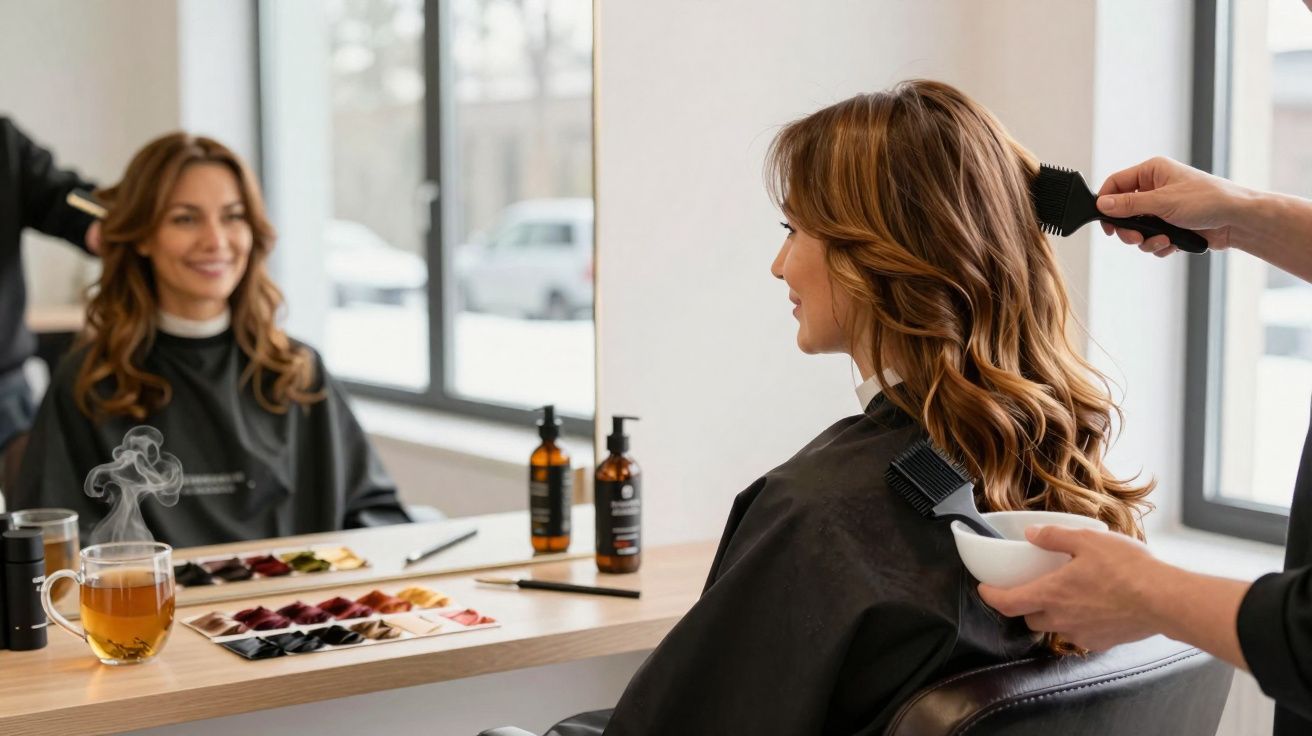
The right winter shade adds softness, warmth, realistic shine, and a calmer grow-out at the roots.
When the temperature drops, hair can read cooler, skin often looks a touch paler, and grey hairs can feel far more obvious along the parting. Across the UK, colourists are seeing a clear 2025 direction: natural-looking depth at the roots, ultra-fine lights through the lengths, and high-gloss finishes that shift under indoor lighting. The brief is simple-cover grey cleverly, brighten the face, and steer clear of punishing maintenance routines.
Winter 2025 hair colour shades (UK): what’s trending
This winter’s palette leans into softened neutrals with a quiet, “expensive” finish. These tones resist brassiness, yet still look lively under office LEDs and cosy pub lighting.
- Mushroom brown: a cool-neutral brunette with slate and taupe reflect that blur grey regrowth.
- Smoked caramel bronde: warm ribbons laid over a soft brown base to lift the complexion without tipping orange.
- Oat milk blonde: a pale beige with subtle ash notes-ideal for fine hair that needs brightness, not yellowness.
- Glossy espresso: a deep brunette with translucent shine; especially flattering with a root shadow for easier upkeep.
- Winter copper: a muted ginger sharpened with cinnamon lowlights for a polished, grown-up red.
- Salt-and-pepper blending: cool foils and lowlights that honour natural silver while refining it.
Neutral-to-cool undertones dominate winter 2025. They dial down brass, suit sallow winter skin, and soften the point where grey begins.
The shade that hides grey quickest
For most people, mushroom brown is the fastest win. Because it sits close to the lightness level of natural greys, the contrast at the roots drops quickly. Combine a root shadow with micro-babylights, and silver strands melt into the overall blend. If your colouring runs warmer, smoked caramel bronde can achieve a similar “disappear the grey” effect, just with a gentle hint of honey.
Match your shade to skin and eye tone
Chasing a trend matters less than getting harmony between your colouring and your hair. A few quick checks can steer you towards the right undertone.
- If your veins look blue or purple, go for cool neutrals: mushroom brown, oat milk blonde, cool chocolate.
- If your veins look green, pick soft warmth: smoked caramel bronde, winter copper, chestnut.
- If your veins look mixed, stay neutral: beige blonde, taupe bronde, glossy espresso finished with a beige glaze.
- Green or hazel eyes tend to stand out with caramel and copper ribbons; blue eyes often look brighter with ashy beige and pearl lights.
Techniques that make colour look younger
Root shadow and diffused highlights
A root shadow (usually one to two levels deeper than the mid-lengths) helps erase harsh lines and extends the time between appointments. Request babylights around the face and crown, then ask for gentler, wider weaves underneath. The result reads as movement and dimension rather than stripes.
Glossing and bond care
A demi-permanent gloss smooths the cuticle, cools or refines the tone, and adds slip without locking you into permanent colour. During lightening, bond care (bond builders) helps protect the hair, keeping the ends stronger and smoother-so they reflect light better and look fresher on camera.
Two-minute grey rescue
For in-between weeks, keep a tinted root spray or root powder at home. Choose something slightly ashy: that cooler cast imitates natural scalp shadow and tends to disguise silver more effectively than warm pigments.
The fastest anti-ageing move is shine. A healthy reflection lifts the face more than taking the base up a full level.
Grey coverage: permanent vs blending
Full, permanent grey coverage still makes sense if you’re over 60% grey and prefer a single, uniform result. However, many people are opting for blending-using lowlights and lighter pieces to break up regrowth while keeping depth around the face. In winter’s lower light, coverage can look more intense anyway; by switching from a block colour to a blend, you can often skip one salon visit while still feeling “done”.
| Shade | Undertone | Grey strategy | Maintenance | Best for |
|---|---|---|---|---|
| Mushroom brown | Cool-neutral | Blends greys by matching a similar brightness level | 8–12 weeks with root shadow | Olive or cool skin, fine to medium hair |
| Smoked caramel bronde | Soft warm | Camouflages salt strands with honey ribbons | 8–10 weeks | Warm skin, hazel or green eyes |
| Oat milk blonde | Beige-cool | Toners mute yellow; greys melt into beige | 6–8 weeks (toner) | Fair skin, lighter natural bases |
| Glossy espresso | Neutral deep | Strong coverage supported with a demi topcoat | 6–8 weeks (roots) | Dark bases, thick hair that benefits from polish |
| Winter copper | Muted warm | Distracts from grey through richer saturation | 4–6 weeks (toner) | Neutral to warm skin, freckles |
| Salt-and-pepper blend | Cool | Enhances silver and reduces harsh contrast | 10–14 weeks | Over 50% grey, low-fuss styling |
Cut and styling that sell the colour
Very blunt collarbone cuts and heavy layering can make the ends look sparse. Instead, ask for soft internal layers plus a neat dusting along the hemline. Switching to a side part can soften the look of grey at the hairline. For styling, a round brush or large Velcro rollers create lift at the crown-helping light travel through the highlights so the colour looks more dimensional.
Care routine for winter shine
- Wash less frequently; use a colour-safe, sulphate-free shampoo and a weekly deep-conditioning mask.
- Add a purple or blue shampoo every other week for cool shades, and once a month for warm shades.
- Apply heat protection every time you blow-dry-winter air can dehydrate the cuticle faster than summer.
- Sleep on silk or sateen; friction reduces gloss and can fade toner more quickly.
Salon or at-home: cost, time, safety
In the UK, a blended brunette with root shadow typically costs around £90–£160, depending on location. A full head of highlights often falls between £130 and £220. At home, demi-permanent glosses usually cost £10–£25 and can refresh tone for four to six weeks.
Always do a patch test 48 hours before colouring. If you’re sensitive to PPD or related dyes, reactions can happen even after years of trouble-free use. For glossing, an ammonia-free demi is often a safer choice, and it’s best to leave high-lift colour or strong bleach to a professional who can properly monitor bonds and porosity.
Patch test every time. Winter dryness can increase scalp sensitivity, and reactions are more likely when the skin barrier is compromised.
A useful salon add-on to consider in winter is a quick chelating or clarifying step before toning-especially in hard-water areas. Mineral build-up can make cool shades look dull or uneven, and it can also interfere with how a gloss grabs. It’s a small extra, but it often improves shine and helps toners fade more evenly.
Quick picks by lifestyle
- Low maintenance: mushroom brown with a root melt and sparse babylights.
- Brightening without bleach: smoked caramel ribbons over a natural base.
- Maximum gloss: espresso finished with a clear glaze or a violet-tinted glaze.
- Graceful transition to grey: salt-and-pepper blending with cool lowlights.
Extra context to go further
Think “value” (lightness/darkness), not only hue. Grey hairs are high-value (lighter) strands. When your overall colour sits closer in value-such as taupe bronde over a medium base-the eye stops locking onto the regrowth line. That one adjustment can make upkeep feel half as intense, even if your appointment schedule doesn’t change.
Before you book, try a quick at-home test: part your hair and lightly dust cool-brown eyeshadow at the roots on one side, then a warmer caramel on the other. Check it under indoor LEDs and again by a window. The side that blends more seamlessly with your skin tone is usually the undertone that will look most natural-saving both money and chair time during the winter months when diaries fill up quickly.
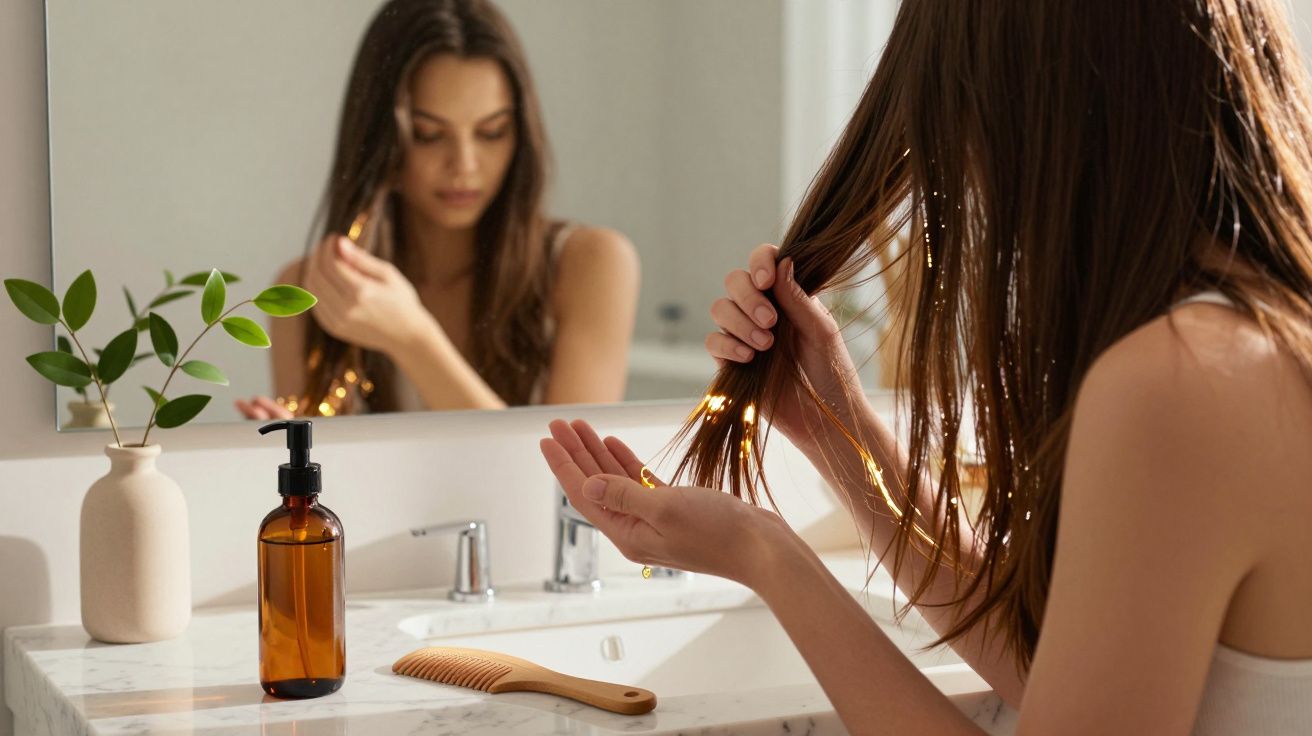
One more winter-specific detail: hats, scarves, and high collars can create friction and static, which roughens the cuticle and makes colour look flatter. A lightweight leave-in conditioner or anti-static spray through mid-lengths and ends can keep the finish sleeker-so your glossy espresso, oat milk blonde, or mushroom brown looks as shiny in week six as it did on day one.



Comments
No comments yet. Be the first to comment!
Leave a Comment