
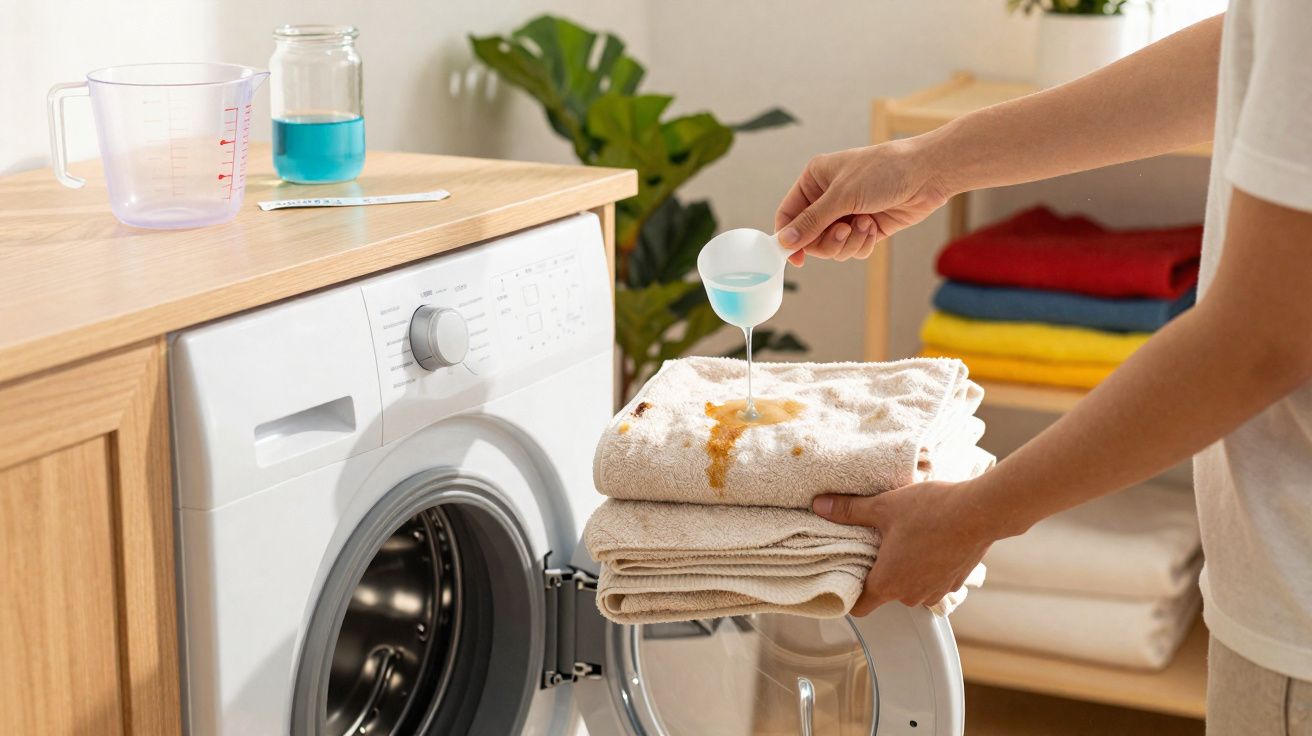
The utility room has that “just washed” fragrance - like a synthetic meadow captured in a bottle. The washing machine rumbles away, the detergent drawer is smeared with sticky blue liquid, and you tip in a little extra because this load is especially grimy. The cap floods, a ribbon of detergent runs down the side, you shrug, slide the drawer shut, hit Start and walk off feeling oddly responsible.
A few hours later, reality disagrees. The towels feel rigid rather than plush. The sports top still carries a faint sour note. And that new black jumper? Already a touch flat, with tiny white flecks tracing the seams.
So you blame the machine, the water, or the fabric quality.
But what if the culprit is the detergent?
Too much detergent is quietly ruining your clothes
Textile-care professionals repeat the same warning with weary consistency: most households use far more detergent than the wash actually needs - not a splash more, but a great deal more.
Marketing has trained us to equate bubbles, strong fragrance and bright liquid colours with cleanliness. A brimming cap feels like a thorough wash. So we pour until it looks “about right”, rather than stopping at the small measuring line inside the cap.
Then we’re puzzled when the washing feels wrong, even when it smells “fresh”.
Professional cleaners see the fallout constantly: jeans that once looked richly navy now appear washed-out; baby clothes that go dingy after only a handful of washes; towels so coated that they stop soaking up water properly.
Some commercial laundries even end up having to wash the wash when items arrive from homes and small businesses. They add an extra rinse cycle purely to strip away old detergent and fabric softener. That unseen build-up clings to fibres like a thin, tacky film. At first glance everything looks fine - but on closer inspection fabrics can feel waxy, less supple and oddly “smothered”.
The reason is straightforward. Modern washing machines use much less water than older models, and detergents are now highly concentrated. If you dose generously, the machine often can’t rinse everything out.
What remains trapped inside the fabric then acts like a magnet for dirt, body oils and odours with every wear and every wash. Eventually it shows up as greyed whites, stiff textures and that familiar sensation of laundry that’s “clean… but not quite”.
Your washing machine isn’t letting you down - it’s trying to cope with a chemical overdose.
The right detergent dose in your washing machine: how little you actually need
The first change is almost embarrassingly simple: measure properly. Not by eye - with the cap or scoop provided. Find the small lines inside the cap that indicate the recommended level for a standard load.
If your washing machine is fairly modern and you don’t live in an area with extremely hard water, go slightly below that line rather than above it. Many cleaning specialists find that ½ to ⅔ of the suggested dose is plenty for typical, lightly soiled washing.
It can feel wrong at first - as though you’re short-changing your clothes. You aren’t. You’re simply giving the rinse cycle the chance to do what it’s meant to do.
The second change is just as important: stop cramming the drum full. When the machine is packed, it becomes a tight, damp bundle of textiles where water and detergent can’t move freely. Soap ends up sitting on the surface and never properly rinsing away.
A good rule of thumb is to leave roughly a hand’s width of space at the top of the drum. That small gap often improves wash performance more than any “power detergent” ever will. Let the water circulate. Let the clothes lift, drop and tumble - not wedge together into a heavy ball.
And yes, nobody measures every single load with scientific precision. You’ll slip sometimes. The aim is simply to shift your default from “a bit extra” to “a bit less”.
A quick note on hard water (and why it changes the maths)
In many parts of the UK - particularly the South East and East of England - hard water can reduce how effectively detergent works. That doesn’t mean you should double the dose. Start with the manufacturer’s recommended amount, then adjust upward only slightly if you genuinely need to.
If you’re unsure whether your area has hard water, check your water supplier’s website. Knowing this one detail can stop you from chasing “clean” with ever larger capfuls.
Choosing the right detergent matters, too
Using less doesn’t mean using the wrong product. For everyday washing, a standard enzyme detergent is usually enough. For sportswear, a sports or enzyme formula can help break down sweat residues without resorting to excessive dosing. If you regularly see white marks on dark clothing, it may also help to ensure the detergent dissolves fully (especially in quick, cool cycles) and to avoid pouring thick liquid directly onto fabrics.
Cleaning experts can sound almost tired when they explain all this - because they’ve been saying it for years.
“Most households could halve their detergent use tomorrow and their laundry would come out just as clean, or cleaner,” says one textile-care specialist. “What they’d really notice is softer fabrics, brighter colours, and fewer odd skin reactions.”
To make that advice practical, keep this checklist near the washing machine:
- Use ½–⅔ of the recommended detergent dose for normal, lightly soiled loads.
- Run an extra rinse or a hot maintenance wash once a month to remove old residue.
- Wash towels and sportswear with no fabric softener and reduced detergent occasionally.
- Leave space in the drum so clothes can tumble freely.
- For heavily soiled loads, spot-treat stains instead of flooding the machine with soap.
Living with less foam - and genuinely cleaner clothes
Once you cut back, something surprising happens: your laundry smells less like perfume and more like… nothing. Just clean fabric. Initially that can feel underwhelming, because we’ve been taught to associate strong scent with hygiene.
Then the benefits show up. Towels begin drying faster and absorbing properly again. T-shirts stay soft instead of turning cardboard-stiff. That itchy patch at the neckline from certain jumpers can disappear after a few low-detergent washes.
Gradually, you become more aware of residue - and less impressed by foam.
This change goes beyond clothing. You’ll run fewer long rinse cycles, saving water and energy without really trying. Your detergent lasts longer. And your washing machine accumulates less build-up in seals, hoses and the detergent drawer - something appliance engineers quietly cheer.
You also stop feeling that small, nagging guilt as you pour in detergent. You’re acting with intention now. From a distance it’s just doing the laundry; up close it’s a daily habit where you choose restraint over excess, and care over autopilot. That moment in front of the machine becomes a brief act of attention - not an automatic squeeze of the bottle.
| Key point | Detail | Value for the reader |
|---|---|---|
| Use less detergent | ½–⅔ of the recommended dose is enough for most loads | Better rinsing, softer fabrics, fewer skin irritations |
| Give clothes space | Leave room in the drum so water and detergent can circulate | More effective washing without upgrading your washing machine |
| Fight residue regularly | Occasional extra rinse or hot “maintenance wash” | Longer-lasting clothes, fresher towels, healthier machine |
FAQ
Question 1: How do I know I’m using too much detergent?
Watch for stiff or waxy fabric, sour smells that return quickly, visible white marks on dark clothes, and excessive foam sitting in the door area of a front-loading washing machine.Question 2: Will using less detergent really clean sweaty gym clothes?
Yes - if you wash them promptly, use a sports or enzyme detergent, and don’t overload the drum. If odours persist, add an extra rinse rather than adding more soap.Question 3: Can excess detergent damage my washing machine?
It can. Build-up collects in the drawer, hoses and rubber seals, trapping dirt and encouraging unpleasant odours and mould over time.Question 4: Should I use more detergent for hard water?
You might need slightly more than you would with soft water, but not double. Begin with the recommended amount and adjust gradually if clothes come out dull or still dirty.Question 5: How can I “reset” laundry that already has residue?
Run a hot wash with no detergent, or choose a long cycle using a small dose plus an extra rinse. For towels and sportswear, one or two low-soap washes usually bring back softness and absorbency.




Comments
No comments yet. Be the first to comment!
Leave a Comment