
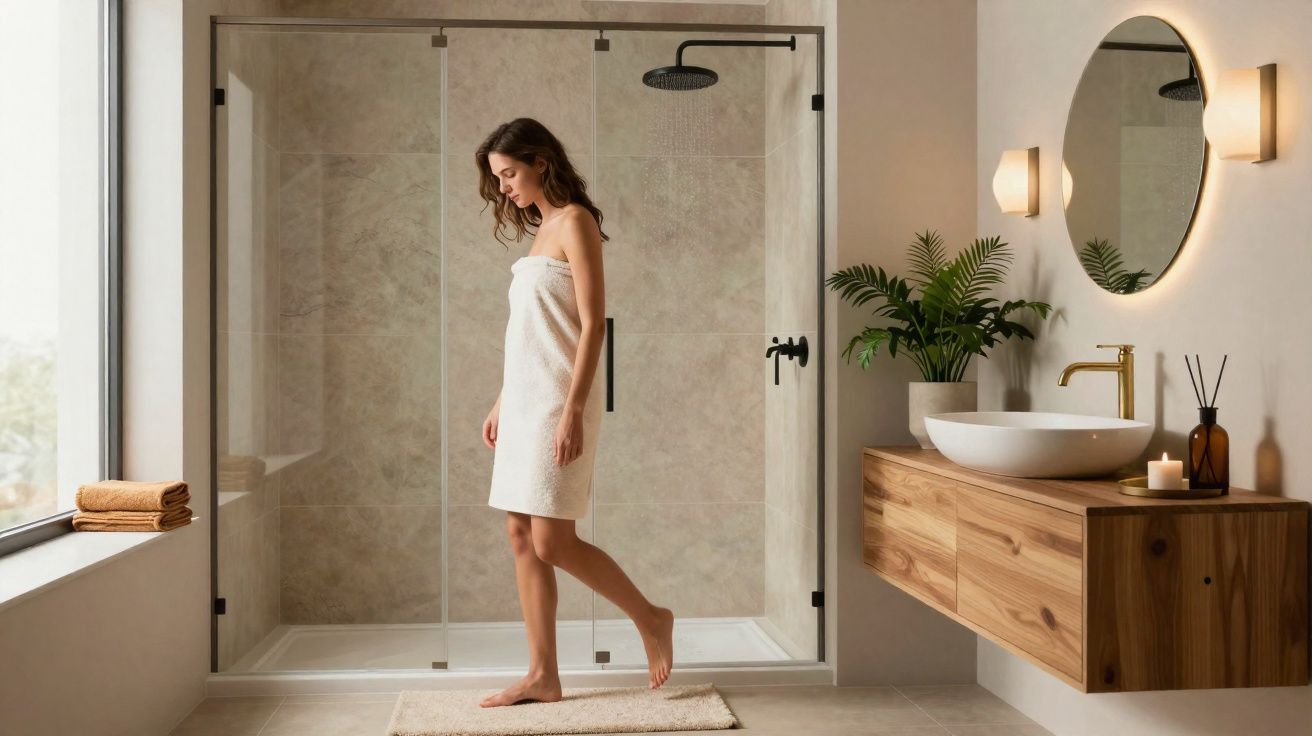
Many people know the scene all too well: a bathroom that’s practical but soulless, tiled from floor to ceiling, a harsh strip light overhead, and absolutely no spa-like feeling. You use the room, then you leave-nothing more. Yet the bathroom trends for 2026 show how even a tired, ageing bathroom can be turned into a cosy, contemporary retreat with a few targeted changes-often without weeks of dust or a months-long building site.
Why the bathroom becomes a mini wellness space in 2026
For years, the bathroom was treated as a strictly functional zone: quick shower, brush teeth, out the door. As daily life gets busier and home working becomes more common, the bathroom is increasingly valued as a place to pause and reset. Hotels and spas set the tone-just in a version that’s affordable and doesn’t require a full rip-out.
The clear direction is towards fast, clean and long-lasting solutions that build on existing tiles and plumbing rather than replacing everything.
That’s exactly where bathroom trends 2026 focus their energy: instead of demolishing, improvements come through coatings, large-format wall cladding, smarter furniture and mood-enhancing lighting. Five areas stand out-and each can make a dated 1990s bathroom look noticeably fresher.
Trend 1: Seamless surfaces instead of a “tile desert”
If you’ve had enough of old tiles, you don’t automatically need to hack them off the wall. Continuous finishes that make walls or floors look like one uninterrupted surface are becoming increasingly popular. Common options include:
- Microcement with a subtly mineral look
- Mineral resin systems with a silky matt finish
- Technical wall panels that can be bonded directly over existing tiles
The benefits are obvious: less mess, no rubble, and a much shorter turnaround. When the old grout lines disappear, many of the little dirt traps-and the mould-prone spots around the shower and bath-disappear with them.
Flooring is getting more considered too. Rather than slick, standard tiles, 2026 favours gently textured finishes. Designers are leaning towards natural stone with a fine relief or grippier porcelain tiles. The result: better safety without making the space feel clinical.
A lightly slip-resistant floor reduces the risk of falls-relevant for children, older adults, and anyone future-proofing their home.
Trend 2: Decorative panels - a new look in a matter of hours
If you want an instant visual transformation, large-format panels are becoming the go-to choice. These water-resistant sheets are usually bonded straight over the existing surface, for example:
- Marble-effect panels with bold veining
- Raw stone or slate looks
- Soft concrete-style finishes
- Warmer wood or wood-slat effects
Panels work particularly well inside the shower or behind the basin, where they create a calm, uninterrupted backdrop. Because the sheets are so large, walls feel less busy than they do with lots of small tiles. Colour-wise, the direction is towards warm, natural shades: cream, sand, greige and muted earth tones.
For renters, there’s an extra advantage: some systems can be removed without leaving marks-provided the landlord agrees. Homeowners who want a long-term upgrade tend to choose heavier-duty, permanently bonded versions.
Trend 3: Vanity units as a feature, not just storage
In 2026, the vanity area takes centre stage-more like a piece of living-room furniture than a purely practical fixture. Instead of bulky, off-the-shelf base units, demand is growing for:
- Floating vanity units that leave the wall and floor visibly open
- Airier metal frames rather than closed plinths
- Made-to-measure worktops in stone, solid-surface materials or timber
Leaving the floor clear makes the room feel bigger, cleaning becomes simpler, and the overall impression is more modern-almost hotel-like. Where space allows, double basins paired with a wide mirror are used to emphasise the room’s width.
The “standard bathroom block” is being replaced by mixed, more characterful combinations: a lighter base, a statement basin, and a large mirror with integrated lighting.
Material choices add to the effect. Marble and onyx looks bring a sense of luxury even when they’re hard-wearing reproductions. One of the standout details for 2026: warm-toned veining (gold or bronze) running through otherwise calm surfaces, matched to warmer tap finishes.
Trend 4: A level-access shower and everyday accessibility
A level-access (walk-in) shower is no longer just a style move. In 2026, it’s becoming the default because it delivers several practical wins at once:
- No high step in-more comfortable and safer
- Visually, the room feels larger and more coherent
- Cleaning is easier because there are fewer edges and joints
If you’re planning a renovation anyway, many people ditch the shower tray and choose a low-profile build-up with either a linear drain or a point drain. A built-in seat-tiled or clad in a waterproof finish-is also appearing more often, turning the shower area into a compact “mini spa”.
Small functional upgrades matter here too: a hand shower alongside an overhead shower, reachable niches for toiletries, sturdy grab rails, and potentially a wider opening. None of it is particularly glamorous, but it keeps the bathroom practical as needs change over time.
Trend 5: Statement taps, layered lighting and textiles that finish the room
Even the best wall panels won’t feel right if the taps and lighting scream “dated”. In 2026, it’s often the details that shift the entire atmosphere.
Taps with personality
Standard chrome is being challenged by more expressive finishes, such as:
- Matt black for sharp, contemporary bathrooms
- Brushed steel for a pared-back, loft-like look
- Warm brass or bronze tones for a more homely feel
Unlacquered brass is especially interesting because it’s designed to age: it develops a patina over time. That takes away the sterile “sanitary room” vibe and adds depth.
Lighting in layers, not one glaring ceiling fitting
Many older bathrooms rely on a single harsh light source. That’s unhelpful for shaving or make-up and equally unsuitable for winding down at night. The 2026 approach uses several layers:
- General lighting on the ceiling or wall for basic visibility
- Soft, glare-free mirror lighting for grooming and make-up
- Indirect LED strips or small wall lights for calmer evenings
Warm-white light makes skin tones look more natural and reduces the clinical feel. If you’re upgrading in stages, starting with an illuminated mirror can deliver a big improvement without rewiring the entire room.
Textiles and décor: minimal, but intentional
Thick, high-quality towels in rich colours, a plush bath mat instead of a flimsy one, and perhaps a single stool in wood or metal-these touches make the bathroom feel lived-in and welcoming. Many interior stylists even add a small vintage element: an old step stool, a simple wooden trestle, or a framed print above the bath.
If you’re disciplined with accessories, you get atmosphere without turning the bathroom into a dumping ground-fewer items, better quality.
Bathroom trends 2026 in practice: how to upgrade realistically
Not every bathroom can be rebuilt from scratch-budgets, layouts and building constraints set limits. A staged approach is often the most realistic route, for example:
| Level | Upgrade | Result |
|---|---|---|
| 1 | New textiles, improved lighting, new mirror | Noticeably cosier with no impact on the building fabric |
| 2 | Decorative panels in the shower/behind the basin, new taps | Visually close to a brand-new bathroom |
| 3 | Level-access shower, low-joint or seamless finishes, new vanity furniture | A full comfort upgrade with long-term “future-proofing” value |
Planning smartly also means combining jobs. If a new shower is due anyway, it’s worth considering slip-resistant flooring and integrated niche storage at the same time. If you’re replacing the vanity, it may be the perfect moment to position pipework so a floating unit becomes possible.
Two overlooked upgrades that make every trend work better
Good ventilation is the quiet hero of a modern bathroom. Seamless coatings, panels and premium finishes last longer when moisture is managed properly. If your bathroom currently relies on a small window (or none at all), consider upgrading to a humidistat-controlled extractor fan and making sure air can flow under the door. It’s not a “pretty” change, but it protects everything you’ve invested in.
It’s also worth thinking about water and energy use while you’re updating the look. Thermostatic shower controls, aerated taps and efficient LED lighting can reduce running costs without sacrificing comfort-particularly helpful if the bathroom is used throughout the day due to home working.
What not to forget when you get carried away with trends
As tempting as grout-free finishes and premium tapware are, daily life and maintenance still matter. Highly textured natural stone can look stunning, but it often needs careful sealing. Dark tap finishes tend to show limescale more quickly, so they benefit from regular wiping down. And microcement should be applied by a specialist so it stays properly waterproof and durable.
On the plus side, a well-planned modern bathroom can significantly increase a property’s appeal. When renting out or selling, buyers and tenants increasingly look for accessibility features, slip resistance and a layout that remains easy to use as people get older.
Investing in these kinds of updates pays twice: you enjoy greater comfort and a better atmosphere now-and you end up with a bathroom that won’t demand another frantic trend-led makeover in a few years.
Comments
No comments yet. Be the first to comment!
Leave a Comment