
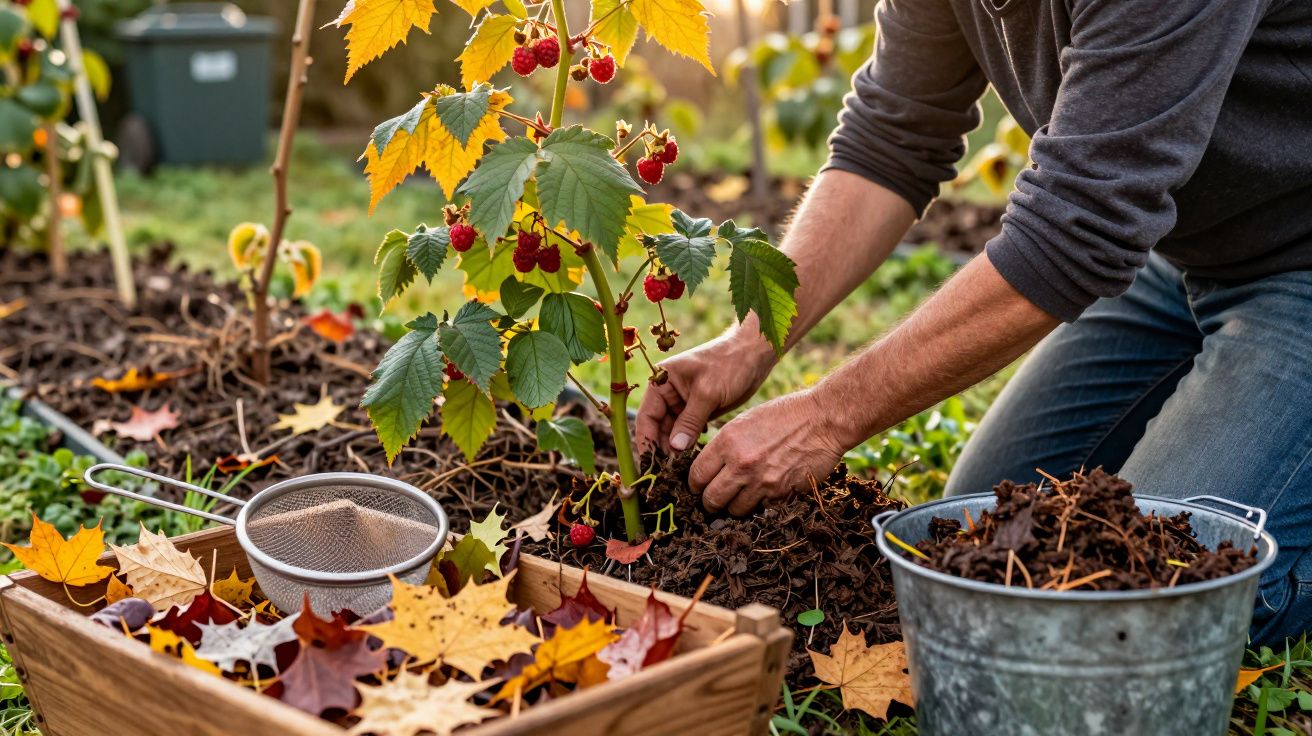
Many people reach for a rake and bin bags, without noticing the small, steady revolution taking place at ground level.
Those heaps of fallen leaves that seem like a nuisance can, for next to no cost and very little labour, become an ideal food source for raspberry canes. Used properly, they enrich the soil, insulate roots through winter, and quietly prepare the ground for a larger, sweeter crop the following summer.
Raspberries are hungry plants: what they really need from your soil
Why nutrition makes or breaks a raspberry patch
Raspberries perform like endurance athletes in the fruit garden: they surge into growth, send up fresh canes every year, and only keep that pace with a dependable supply of nutrients. They do best in soil that stays evenly moist without becoming waterlogged, and that contains plenty of organic matter worked through the top layer.
That organic matter is not an optional “extra”. It helps the ground hold on to nitrogen, phosphorus and potassium-the three key nutrients raspberries rely on for strong roots, sturdy canes and good-tasting fruit. Soil that’s rich in well-decomposed plant material also encourages fungi and bacteria that form beneficial, often invisible, relationships with raspberry roots.
Unfed raspberry canes can look acceptable in spring, only to falter in summer-producing small, dry berries and weak new shoots.
Growers who repeatedly add organic material along raspberry rows often see thicker canes, more side shoots, and fruit that keeps its shape and flavour for longer once picked.
What a good organic feed changes above and below ground
An autumn feed made from natural materials such as leaves, compost or well-rotted manure does more than “add fertiliser”. It improves soil structure: fine particles bind into small crumbs, air spaces open up, and water movement becomes more consistent and predictable.
You’ll usually notice several knock-on effects:
- canes appear sooner and gain more height before flowering
- foliage holds a deeper green during dry spells
- plants cope better with heat and irregular watering
- berries grow to a better size and colour up more evenly
It’s common to try to rescue poor growth with quick-release chemical feeds in late spring. That can produce a brief flush of green leaves, but it rarely addresses the real issue: soil that lacks organic matter. This is exactly where the quiet, patient strength of autumn leaves shines.
From nuisance to nutrition: why fallen leaves are garden “gold”
What actually happens when leaves break down
When leaves drop, trees have already withdrawn some nutrients into their woody growth for winter. Even so, plenty of minerals and a lot of carbon remain locked inside the dried leaf tissue. Once leaves lie on the ground, fungi and other soil life begin to digest them, gradually turning crisp fragments into dark, crumbly humus.
Leaf humus opens up heavy clay, adds substance to sandy ground, and works like a sponge for both water and nutrients.
As that leaf layer develops, three important changes occur around raspberry roots:
- better aeration: roots can “breathe” more easily and tend to grow downwards
- steadier moisture: soil remains damp for longer, even after sun and wind
- richer biology: worms, beetles and microbes increase, supporting plant feeding naturally
If your garden is on a slope, a covering of leaves or leaf mould also reduces the force of winter rain, so less topsoil-and less fertiliser-washes out of the raspberry bed.
Why leaves beat many shop-bought products for raspberries
Bagged fertiliser often acts fast and then disappears. Leaves behave the other way round: they feed the soil gradually for months, while also protecting it from erosion and sudden temperature swings. Because raspberries spread lots of shallow roots near the surface, that slow, buffering effect fits their growth pattern particularly well.
Leaves are also broadly kind to pH. Once decomposed, most settle around neutral to slightly acidic-close to what raspberries prefer. In hard-water areas where soil can drift towards alkaline, regular use of leaf-based material can help prevent raspberry canes from sulking in chalky conditions.
Not all leaves are equal: which ones to use, which ones to skip
Choosing the right raw material for raspberry canes
For a dependable raspberry feed, some leaves are far more useful than others. Use this quick guide:
| Leaf type | Use for raspberries? | Notes |
|---|---|---|
| Oak, lime (linden), maple, hazel | Yes | Break down at a steady pace; excellent for mulch and leaf mould |
| Healthy apple and pear leaves | Yes | Suitable for compost heaps; nutritious when combined with other waste |
| Plane, laurel, magnolia | Best avoided | Very tough and slow to rot; can form a dense, smothering mat |
| Disease-spotted leaves | No | Can spread fungal spores and harbour pests |
Leaves marked by rust, scab, heavy mildew, or obvious insect damage should be kept well away from your raspberry bed. Where rules permit, they’re best burnt; otherwise, send them via council green-waste collections that compost at higher temperatures.
How to turn autumn leaves into a potent raspberry fertiliser
Simple steps to make a leaf mulch
For raspberries, the quickest improvement comes from a straightforward leaf mulch. You don’t need a special container-just a rake and either a mower or shredder.
- gather leaves in dry weather so they don’t clump together or start to smell
- shred them with a mower to create smaller pieces that rot down faster
- spread the leaves around raspberry canes, keeping a small clear gap around each stem
- aim for a 2–3 cm layer on light soils, and slightly deeper on dry, sandy beds
In mild, wet winters, the mulch begins to break down within weeks. Worms pull fragments down and mix them into the topsoil. By spring, the layer looks neater and supports new cane growth from below.
Building leaf mould for deeper feeding
If you can be patient, leaf mould is an even better soil improver. It typically takes 12–18 months, yet requires very little attention.
- pack shredded leaves into a simple wire cage or a tough bin bag with air holes
- dampen them until they feel like a wrung-out sponge (moist, not dripping)
- keep the container in a shaded spot so it doesn’t dry out
- turn the contents once or twice a year to bring in fresh air
Finished leaf mould resembles woodland soil: dark, crumbly, almost without smell, and mild enough for young raspberry roots.
Once it’s ready, apply a 2–5 cm layer across the raspberry bed and lightly fork in the top couple of centimetres. There’s no need for deep digging-going too deep can tear the fine feeding roots that sit close to the surface.
Combining leaves with other household “waste”
Leaves on their own are carbon-heavy. To keep decomposition moving, mix in modest amounts of nitrogen-rich material. A compost heap aimed at feeding raspberries might include:
- three buckets of shredded leaves
- one bucket of grass clippings, added in thin layers
- vegetable peelings and coffee grounds (avoid meat and dairy)
- a few handfuls of small twigs to create air channels
This mix heats up more than a leaf-only pile and can become usable compost in anything from one winter to a year. In spring, a spadeful placed around each raspberry cane encourages early growth and helps canes form more flower buds.
Timing it right: when and how to feed raspberries with leaf-based fertiliser
The ideal season for leaf applications
In autumn, raspberries shift a lot of effort into root growth. That’s why late October to early December is a particularly effective window for applying leaf mulch or partially rotted leaf mould.
Put the material down after you’ve removed old, spent canes and tied in the new ones. Keep the mulch a few centimetres away from stems to reduce the chance of rotting in very wet winters. In colder areas, the leaf layer also works like insulation, reducing freeze–thaw cycles that can lift (heave) roots towards the surface.
In spring, refresh any thin or bare patches with a lighter top-up-especially where wind has scattered the mulch. This helps keep moisture levels steadier through summer as the fruit swells.
Blending leaf feeds with other natural methods
Leaf-based fertiliser fits neatly with other low-input practices many gardeners already follow:
- combine leaf mulch with a spring scattering of home compost around canes
- use rougher leaf layers as a weed barrier between raspberry rows
- water less often but more thoroughly, because mulched soil retains moisture better
A raspberry bed managed with organic mulches often needs less irrigation and far less weeding, giving you more time when harvesting is at its peak.
Gardeners who record their picking often notice increases in both total yield and berry size after two or three seasons of regular leaf additions. The improvement is gradual, building as the soil structure recovers from the surface downwards.
Two extra checks that make leaf-based feeding work even better
If you’re investing effort in leaf mulch or leaf mould, it’s worth doing a simple soil pH test every couple of years. Raspberries generally prefer slightly acidic to near-neutral conditions, and a quick test can confirm whether hard water, liming, or naturally chalky soil is pushing the bed out of its comfort zone. If pH is drifting too high, leaf mould additions can help nudge conditions back in the right direction without harsh corrections.
It also pays to keep the raspberry bed tidy before mulching. Clear away fallen fruit, remove any obviously diseased cane material, and avoid burying infected debris under fresh leaves. Good hygiene reduces the chance of problems overwintering beneath the mulch, while still allowing all the benefits of organic matter to build steadily.
Real-world payoffs: healthier canes, richer soil, calmer gardening
What long-term leaf feeding does to a raspberry bed
After a few years of returning autumn leaves to the ground, raspberry roots often reach further down, helping plants cope better with short dry spells and sudden heatwaves. Beds that used to bake into a hard crust can stay crumbly and workable, even after a week of bright, drying weather.
You may also see a shift in wildlife. Mulched rows tend to attract more ground beetles, spiders and beetle larvae-many of which feed on pests that chew young raspberry shoots. Birds often follow, hunting in the bed, and in many gardens they do so without attacking the fruit quite as fiercely as when raspberries are the only draw.
Extra angles for gardeners who want to go further
If you want to take the idea further, leaf handling can influence the whole garden system. You can separate more “acidic” leaves from more neutral ones to fine-tune the pH of different beds. You can also co-ordinate raking and mowing so grass clippings and leaves combine in a more balanced ratio, producing better compost. Some gardeners even run simple trials: one row with leaf mulch only, one with shop fertiliser, and one with both, to see what best suits their own soil and climate.
It’s sensible to remember the limits as well. A very thick layer of unshredded leaves can shelter slugs and keep the soil cooler for longer in spring-especially in cool, wet regions. In those conditions, many growers keep leaf mulch thinner close to cane bases and deeper in the paths between rows, then pull it nearer as temperatures rise.
For urban gardeners, the approach scales down easily. One bag of leaves gathered from a shared courtyard or a nearby street tree can feed a container raspberry for a full year if you convert it into a small batch of leaf mould-turning what would have been a waste stream into fresh fruit, one handful of dark, crumbly material at a time.






Comments
No comments yet. Be the first to comment!
Leave a Comment