
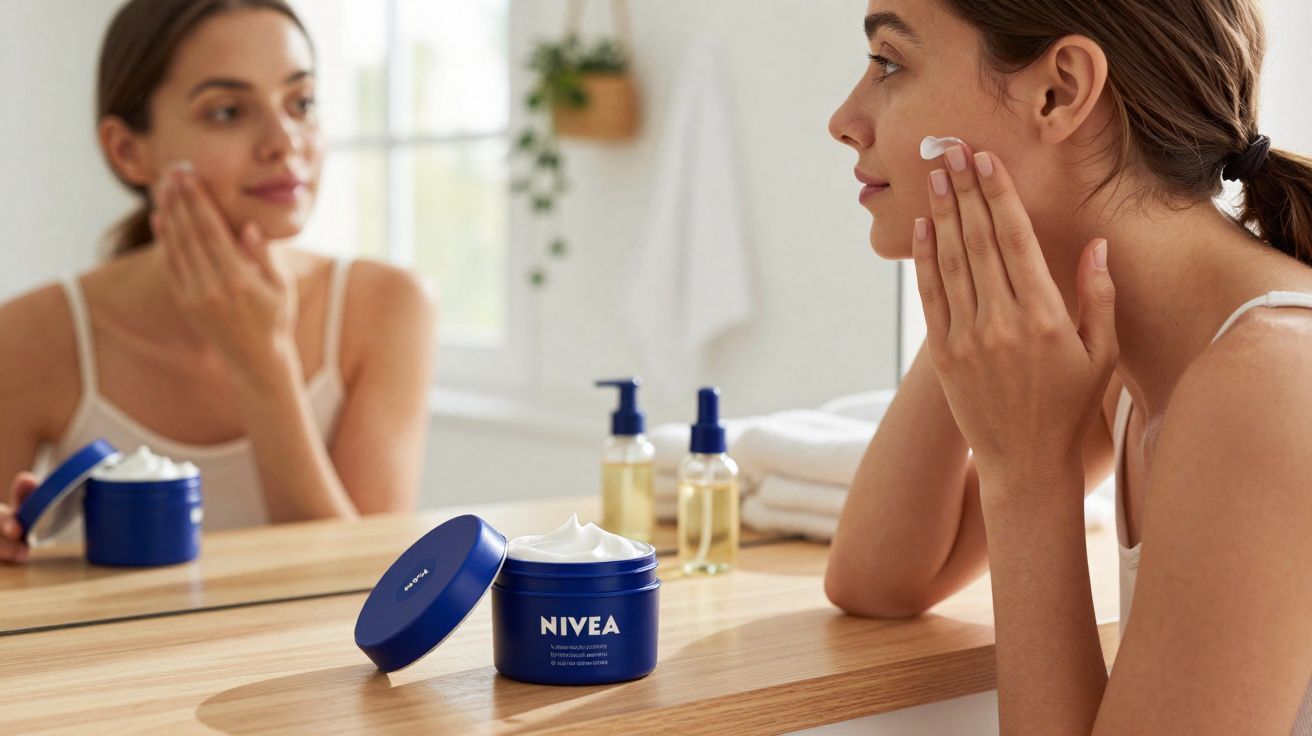
Nivea Creme (the iconic blue tin) is one of those products almost everyone recognises. In France alone, close to 4 million tubs are sold each year, and in 2023 more than 3.6 million were bought-clear proof that this long-standing classic still holds a special place in people’s routines. Popularity aside, a recurring question keeps surfacing in online debates: is Nivea blue cream actually good or bad for your skin? Dermatologists have weighed in-and their view is broadly consistent.
For over a century, the familiar metallic blue pot and its instantly recognisable scent have been passed from grandmothers to mothers to daughters, becoming a staple on bathroom shelves. Yet social media chatter (including TikTok-driven controversy) has led many to scrutinise it more closely. To offer a dependable answer, dermatologists have focused on what matters most: the formula and how skin typically responds to it.
Why dermatologists say Nivea blue cream generally does what it claims
Specialists largely agree on a central point: Nivea Creme keeps its promise as a straightforward moisturiser. It is not a “miracle” treatment, but it is a basic, effective product that most skin types tolerate well when used appropriately.
A major reason is the deliberately simple, time-tested ingredient list-largely unchanged since 1911. The formula centres around a small set of well-known components, including:
- Water
- Mineral oil
- Glycerine
- Shea butter
- Cetearyl alcohol
- Paraffin
- Lanolin
- Fragrance
Within this blend, glycerine is often seen as the key workhorse: it is widely considered neither irritating nor a common allergen, and it helps the skin feel softer and more supple. Shea butter contributes a soothing, moisture-supporting effect, which can be particularly helpful in colder months or when dry patches flare up.
Paraffin in Nivea Creme: the ingredient that sparks debate
One component frequently criticised is paraffin, a petroleum-derived ingredient that often becomes the focus of online concern. Dermatologists point out that, based on available research, paraffin is not considered a health risk when applied to the skin. The controversy tends to be louder than the evidence.
What dermatologists approve… and where they urge caution with Nivea blue cream
Dermatologists readily acknowledge the moisturising power of Nivea blue cream. It helps shield the skin from external stressors and can be particularly good at preventing dryness on rough-prone areas such as:
- Elbows
- Knees
- Heels
Clinical findings support that it provides solid hydration-especially when the goal is simply to reduce dryness and maintain comfort.
That said, experts also put clear boundaries around what it can do. The formula is not designed to deliver cutting-edge skincare benefits: you should not expect high-strength antioxidants, gentle exfoliating acids, or deeply reparative actives. Its role is primarily basic hydration and keeping the skin feeling flexible.
Nivea Creme and oily or acne-prone skin: where problems can arise
Dermatologists are more cautious if your skin is very oily or prone to blemishes. Because Nivea Creme creates a more occlusive (sealing) layer, the rich texture and occlusive ingredients may contribute to clogged pores (comedones/blackheads) and, for some people, can aggravate excess sebum production.
There are also sensitivity considerations:
- The fragrance can be irritating for people with very sensitive skin or eczema-prone skin.
- The formula includes potential allergens, so anyone with known allergies should take care.
How to use Nivea blue cream more sensibly (especially in colder weather)
One practical way to get the benefits while limiting downsides is to adjust where and how much you apply. Many people do best using it as a targeted moisturiser-on hands, elbows, knees and heels-rather than coating the entire face in a thick layer. Applying a small amount to slightly damp skin (for example, after washing) can also improve comfort and reduce the temptation to overapply.
If you are considering it for facial use, it may suit normal-to-dry skin better than oily complexions. For combination skin, some people reserve it for the driest areas only, particularly in winter.
A sensible bottom line from dermatologists on Nivea blue cream
Outside of specific cases (very oily, acne-prone, highly sensitive or allergy-prone skin), dermatologists generally consider Nivea Creme a reasonable, affordable moisturiser. At roughly £3 (around €3), it remains one of the most accessible options for everyday hydration.
Even so, it should not be treated as your only “solution” for every skin concern. If you are dealing with persistent irritation, acne, eczema flare-ups or any worrying change in your skin, dermatologists advise seeking professional guidance rather than relying on a single product.






Comments
No comments yet. Be the first to comment!
Leave a Comment