
Connected trolleys are coming to supermarkets soon
The basic shopping trolley hasn’t changed much, but the shop around it has: more self-checkouts, click-and-collect and home delivery. In that context, some retailers are trialling “connected” (smart) trolleys to make shopping faster and reduce friction in-store-without suggesting the standard trolley will vanish overnight.
In 2025, Shopic is often cited as one company pushing this forward. In France, an Intermarché has already tested the concept in Provins (Seine-et-Marne), showing how it could expand across Europe over time if the economics work.
What connected trolleys look like and how they change the shop
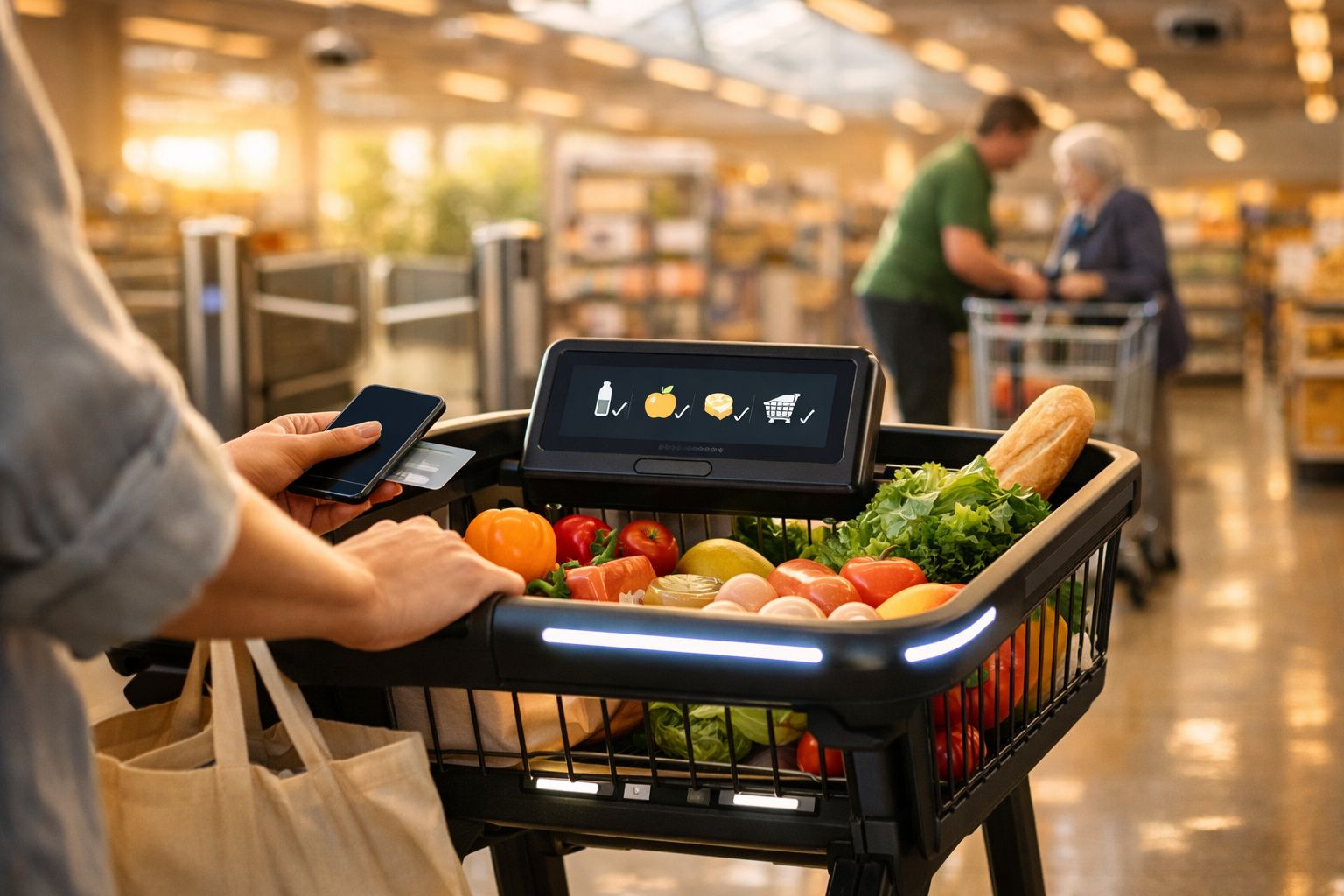
They look like normal trolleys, but add kit to identify items and guide you as you shop. Typical components include:
- a touchscreen
- a handheld scanner (similar to “scan as you shop” devices used in many UK supermarkets)
- cameras using computer vision (often paired with weight checks in the base)
In use, the trolley attempts to recognise what you put in as you drop it into the basket (from packaging, and sometimes weight). Done well, that reduces the stop-start routine of scanning each item and confirming it every time.
The screen usually shows a running total, offers applied, and prompts (for example, when a deal needs a minimum quantity). That can help with budgeting in pounds and pence and reduce surprises at the till-but only if pricing, promotions and stock data are well-synchronised. If totals or offers look “off” even once, trust drops quickly.
A practical reality: not everything is fully automatic. Loose fruit and veg, bakery items, very similar products (size/variant changes), multipacks, and items placed outside the cameras’ view often need you to confirm on-screen or scan. Common slip-ups include hanging items on hooks/handles, stacking products so labels are obscured, or putting shopping in the child seat.
Shorter queues and simpler payment with connected trolleys
The main goal is to shorten the slowest part: checkout. Instead of unloading everything only to scan again, the trolley already has the list and total. You typically pay at a dedicated terminal, or sometimes via your phone, then exit through a controlled gate.
This tends to work best when the store adapts its process around it:
- random spot checks to manage mistakes and theft without delaying everyone
- age checks for restricted items (often still requiring a staff member-think “Challenge 25” policies)
- reliable in-store Wi‑Fi/coverage plus charging and spare units (a flat battery or dead connection can force a manual rescan)
Adoption, logistics and impact on jobs
There’s a learning curve, especially for shoppers who prefer a traditional checkout. Early rollouts usually need visible help at the entrance/exit, clear signage, and an optional guided mode on the screen.
Operationally, complexity increases. Electronics need charging, cleaning (screens/handles), software updates, repairs, and rapid fault handling. Stores also need tight integration with pricing and promotions, plus a clear fallback when something won’t recognise (to avoid holding up other shoppers).
Cost is another limiter: smart trolleys are materially more expensive than standard ones, and they bring ongoing maintenance and support costs. That usually means gradual adoption-starting in higher-traffic stores or specific areas-rather than a whole-estate swap.
On jobs, tasks are more likely to shift than disappear: less time scanning at tills, more time helping customers, dealing with exceptions (age checks, misreads, refunds), loss prevention, and maintaining the equipment.
Privacy, accessibility and trust: key factors for adoption
With cameras and automated identification, transparency is essential. In the UK, retailers still need to meet UK GDPR and the Data Protection Act 2018: explaining what’s collected (for example, basket contents, device identifiers, location in-store, and potentially video), why it’s collected, how long it’s kept, and who can access it. Trust tends to be higher when you can use the trolley without creating a profile, when data collection is minimised, and when the explanation is clear in-store-not buried in small print.
Accessibility will also shape uptake. Screens need large text/high contrast, simple flows, language options, and an alternative for people who don’t want to (or can’t) use the tech. Physical design matters too: reachable controls, usable handles, and a workable experience for people with limited dexterity or vision. The goal should be more choice-not a “fast lane” that excludes anyone who prefers the traditional method.






Comments
No comments yet. Be the first to comment!
Leave a Comment