
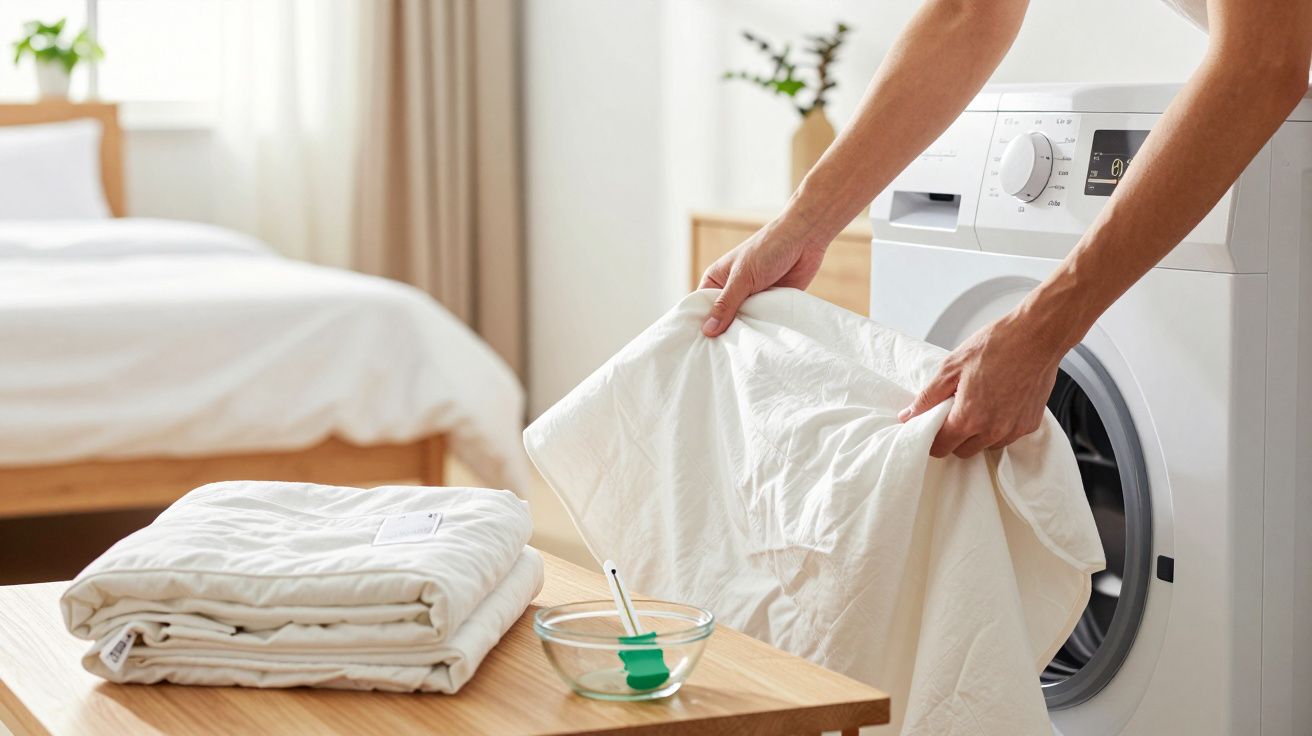
Die right washing temperature for bed linen (bedding) affects two things at once: how hygienic your sheets really are - and what you end up paying on your electricity bill.
Sliding into bed at night when everything smells freshly laundered feels comforting. Less comforting is what builds up in your bedding in the background. Over a single night, a person can lose up to 0.5 litres of sweat, plus skin flakes, natural oils, and traces of moisturiser or make-up. Those residues settle into the fabric and create ideal conditions for bacteria, fungi and house dust mites. That leads to the practical question: how hot should you wash bed linen to get it genuinely clean without putting unnecessary strain on the fabric - or your budget?
Why bed linen looks clean long after it stops being hygienic
Sheets can appear spotless for days because most of what soils them is invisible. The “dirt” returns every night, automatically.
- Sweat leaves moisture and salts in the fibres.
- Skin flakes and body oils become food for bacteria and mites.
- Make-up, body lotion and hair products add extra residue.
- Eating in bed introduces crumbs and food traces.
House dust mites thrive in warm, slightly damp bedding and mattresses and can multiply quickly. Their droppings may trigger strong allergic reactions in sensitive people - including blocked noses, irritated eyes and even asthma symptoms.
Many specialists advise washing bed linen at least every 14 days - and weekly if you sweat heavily or have allergies.
Even so, plenty of people leave sheets on for three or four weeks. That can directly affect hygiene, sleep comfort, and sometimes skin health as well - spots on the back or chest can partly be linked to unclean bedding.
Bed linen washing temperature: when 40°C is the sensible default
Most everyday wash programmes run at 40°C, and for many households this is a practical balance between cleanliness, textile care and energy use.
For a healthy household with no special risk factors and normally soiled cotton or polycotton bed linen, a reliable routine looks like this:
- Change bed linen: weekly or every two weeks
- Washing temperature: 40°C
- Detergent: biological or non-bio detergent (follow the dosing guidance)
- Programme: avoid the very shortest cycles so mechanical action has time to work
Used consistently, this combination removes the majority of bacteria, skin debris and odours while helping colours stay brighter and fibres last longer - and it keeps energy consumption reasonable.
To put the costs into perspective: a 60°C wash can use around 50% more electricity than 40°C, and 90°C can increase energy use substantially again. If you routinely choose the hottest option “just in case”, you may pay noticeably more month after month without gaining much, provided you’re washing regularly.
When 60°C is the better choice for hygiene
There are clear situations where 40°C may not be enough. In those cases, stepping up to 60°C is often worthwhile.
Typical reasons to wash bed linen at 60°C
- Infections at home: flu, stomach bugs, Covid-19, or other contagious illness involving the bed
- Persistent odours: very heavy sweating (for example during heatwaves or puberty)
- House dust mite allergy: frequent hotter washes can reduce exposure
- Baby bedding or care needs: when hygiene must be prioritised
- Stubborn stains: blood, urine, or heavily discoloured areas
At 60°C, significantly more bacteria, mites and fungal spores are deactivated. For allergy sufferers in particular, that can be the difference between sleeping comfortably and waking with itchy eyes and congestion.
For people who are ill, allergic or especially sensitive, 60°C is often the most sensible washing temperature for bed linen.
If you want to support freshness without adding fragrance, you can add a small amount of clear household vinegar to the fabric conditioner compartment. It can help neutralise odours and may support hygiene - while avoiding perfumed additives that irritate some people.
90°C for bed linen: only for rare, specific situations
Many machines still offer 90°C (sometimes called a boil wash). For most household bed linen it’s unnecessary - and, over time, potentially damaging.
When a very hot wash might make sense
- Heavily soiled white cotton bed linen in hotels, clinics, or care settings
- Individual robust items with stubborn blood or urine stains
- A periodic machine maintenance wash (for example with old towels) to reduce residue and microbes inside the drum
In everyday home use, 90°C rarely delivers a noticeable benefit for bed linen, but it can cause real downsides:
- Cotton may shrink or lose its shape
- Colours can fade, and whites can dull faster
- Fibres may weaken, shortening the lifespan of the fabric
- Electricity costs rise sharply
A helpful rule used by many textile-care professionals is: wash more often at 40°C rather than rarely at 90°C.
Consistency beats extremes: truly fresh bed linen comes more from regular washing than maximum heat.
The right temperature by material (check the care label)
Not all bedding can cope with the same heat. A quick look at the care label is worth it, even if you don’t know every symbol.
| Material | Recommended routine temperature | Occasionally possible |
|---|---|---|
| Cotton / Renforcé | 40°C | 60°C if heavily soiled |
| Jersey, percale, cotton satin | 40°C | 60°C in exceptional cases |
| Polycotton (cotton/polyester blends) | 40°C | 60°C only if the label allows |
| Linen, fine linen blends | 30–40°C on a gentle cycle | Higher only if specified by the manufacturer |
| Silk | 30°C on delicates/hand-wash | Not suitable for 60°C |
Delicate fabrics such as silk or finer satins can lose their sheen or distort when washed too hot. If you want premium bedding to last, stay one step below the maximum stated temperature and use a gentle programme when in doubt.
Balancing energy, hygiene and comfort: a practical rule you can stick to
When it comes to washing bed linen, three priorities can pull in different directions: cleanliness, electricity costs and how long the textiles last. A simple set of guidelines keeps things balanced.
- Healthy adults without allergies: change weekly or fortnightly; usually 40°C, moving to 60°C temporarily if someone is unwell
- Heavy sweaters / very active people: wash weekly; increase to 60°C when odour builds up
- Allergy or asthma sufferers: wash weekly, often at 60°C; consider mite-proof covers for mattress and pillows
- Baby bed linen: change more often; commonly 60°C; choose fragrance-free detergents where possible
A sensible baseline: 40°C as standard, increase to 60°C for illness, strong odours or allergies - keep 90°C for genuine exceptions.
Extra tips for bed linen that feels truly fresh
Temperature matters, but it isn’t the only factor. Everyday habits can improve hygiene significantly:
- Ventilate the bedroom: brief morning airing reduces humidity so mites are less comfortable
- Fold back the duvet: let the bed dry out before making it neatly
- Vacuum the mattress occasionally: use an upholstery attachment to remove dust and debris
- Shake pillows and duvets: helps release dust and improves drying
- Look after the washing machine: run an occasional hot maintenance cycle and let the door and detergent drawer air-dry
Two additional points that often make a bigger difference than people expect:
First, drying thoroughly is part of hygiene. If possible, dry bed linen completely (whether on a line, airer or in a tumble dryer) before putting it away; damp fabric encourages musty smells and can support microbial growth.
Second, try to avoid overloading the drum. When the machine is too full, the sheets cannot move freely, and the wash action is weaker - meaning you may not get the same cleanliness even at the same washing temperature.
Finally, a simple lifestyle habit helps: going to bed with clean skin and removing make-up reduces what ends up in the sheets. That’s gentler on both your bedding and your skin, and it lowers the need for very hot washes.
With these principles in place, you’ll rarely need extreme temperatures - and choosing between 40°C, 60°C and 90°C becomes a straightforward decision based on your situation and the fabric in question, rather than guesswork.




Comments
No comments yet. Be the first to comment!
Leave a Comment