
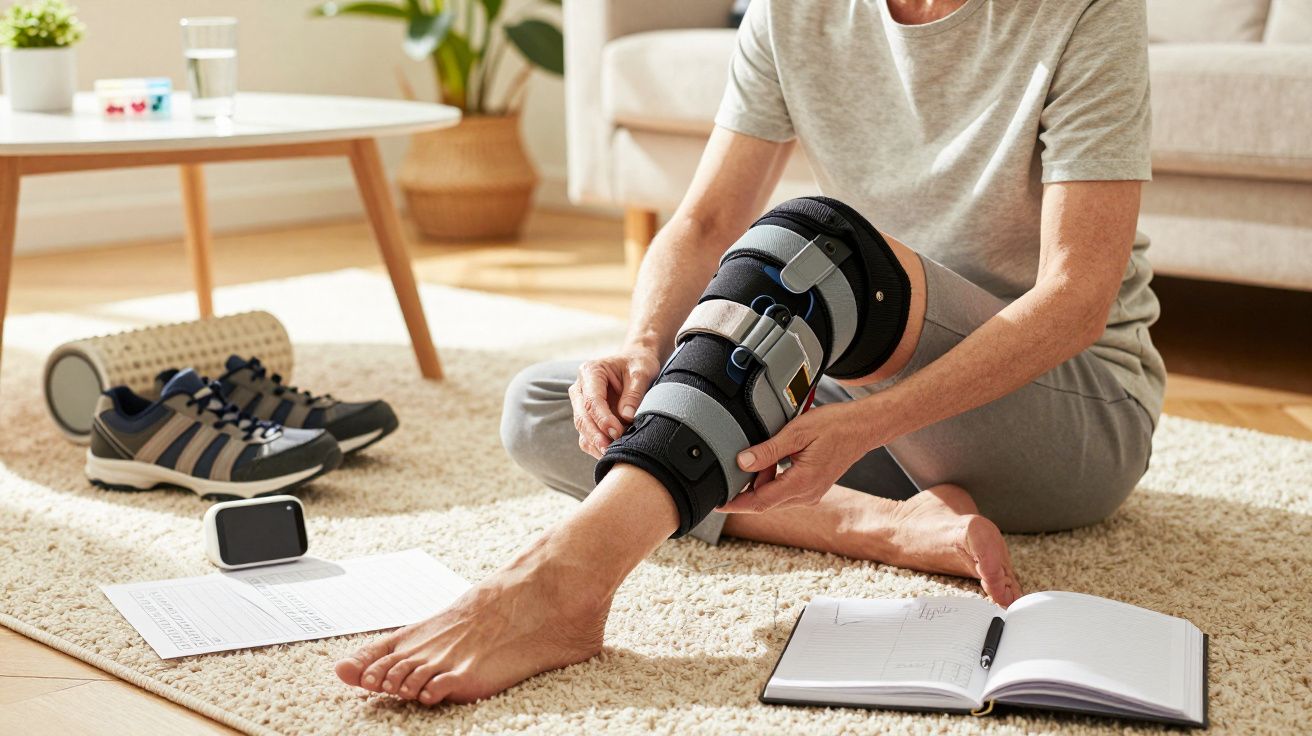
For years, GPs and specialists have delivered a familiar message to people with painful, stiff joints: keep moving.
New evidence is making that advice feel less straightforward.
Physical activity remains central to osteoarthritis care, yet large umbrella analyses indicate its average effect on pain relief and mobility is smaller-and less long-lasting-than many people have been led to expect. That does not mean exercise is ineffective; it means it is not a near-universal fix for a complicated, long-term condition.
Why exercise became the default prescription for osteoarthritis
After a diagnosis of knee osteoarthritis or hip osteoarthritis, the first suggestion is often consistent: stay active, build supportive muscle, and reduce stiffness. Exercise has been promoted for decades as low risk, inexpensive, and accessible to most people.
That popularity is understandable. Osteoarthritis is driven by progressive cartilage damage-the smooth tissue that helps joints glide by cushioning bone ends. As osteoarthritis advances, many people experience reduced muscle strength, shrinking joint range of motion, and increasing fear or uncertainty about movement. In principle, a structured activity plan can help interrupt that decline.
International guidelines have therefore tended to place exercise at the top of the treatment ladder, frequently ahead of medicines or surgery. It also aligns with broader health advice: move more, sit less, and support cardiovascular health and healthy weight.
Beyond joints, regular physical activity can improve sleep, maintain balance, and help people preserve independence. Those wider benefits have reinforced exercise as the “go-to” answer in consultations whenever osteoarthritis is discussed.
For years, exercise has been treated almost as a universal remedy for osteoarthritis-safe, affordable and assumed to be highly effective.
Big reviews find smaller benefits that often fade
An umbrella review published in RMD Open has taken a closer look at how well exercise truly performs. The authors combined evidence from five systematic reviews and 28 randomised controlled trials, including more than 13,000 people with osteoarthritis affecting the knee, hip, hand and ankle.
The headline result: exercise does ease knee pain, especially over the first few weeks to months, but the average improvement is modest. On a commonly used 0–100 pain score, the typical benefit was around 10 points-only just above what many clinicians regard as the minimum change a patient is likely to clearly notice.
When trials ran longer, or included larger numbers of participants, the apparent advantage of exercise often reduced. In several longer-term studies, the gap between people assigned to exercise and those who did not exercise became very small, sometimes almost disappearing. That pattern suggests early improvements can be difficult to sustain.
Related reads (from the same feed)
- Archaeologists, tipped off by metal detectorists, uncover an opulent Roman villa-an unprecedented find for this part of England
- Four laundry detergent brands to avoid: they may be harmful to your health, warns a consumer watchdog
- Twelve things cabin crew notice about you the instant you step on board
- About £4,300 a month plus free accommodation to spend six months on a remote Scottish island with puffins and whales
- After rabbits and squirrels, deer are found disfigured by a virus in the United States
- Nine things worth continuing to do at 70 if you want people to say one day, “I hope I’m like that when I’m older”
- Psychology explains how emotional exhaustion can show up without obvious stress
- Day turns to night: astronomers confirm the date of the longest solar eclipse of the century
For hip osteoarthritis, the results were even more muted, with many trials describing the average benefit as negligible. For hand osteoarthritis, outcomes were inconsistent, typically showing only small changes in pain and function.
Across thousands of patients, exercise generally helped, but the average effect was small and often diminished over time.
Functional outcomes-such as walking, climbing stairs, gripping, or carrying-followed much the same trajectory. Improvements were measurable but limited, and they commonly wore down as months passed. This sits uneasily beside the high expectations that can surround exercise programmes in clinics and rehabilitation centres.
Osteoarthritis exercise programmes: not all movement is the same (and the evidence has flaws)
The umbrella review also exposes major inconsistencies in the research. Trials differed substantially in the kind of exercise used (for example, gentle walking, aquatic therapy, supervised strength training, or balance work), the intensity, and the programme length. Many studies were small, short, and did not directly compare exercise with alternative treatments.
That variation makes it difficult to say which type of exercise works best, for which joints, and for how long. It also increases the chance that early, enthusiastic research overstated the real-world impact-where attendance drops, supervision is limited, and flare-ups can derail routines.
Exercise compared with other treatments: not always clearly better
One of the most notable findings is how exercise performs against other commonly used options. In direct comparisons, exercise-based programmes often delivered similar results to:
- structured patient education about pain and self-management
- manual therapies such as joint mobilisation
- standard painkillers, including non-steroidal anti-inflammatory drugs (NSAIDs)
- intra-articular injections, such as corticosteroids
In short, exercise can help, but it is not dramatically more effective than several other approaches routinely offered.
For people with more advanced osteoarthritis, some surgical interventions produced clearly stronger long-term improvements in pain and function than exercise alone. Procedures such as osteotomy (bone realignment) and total joint replacement delivered larger, more durable benefits for carefully selected patients-particularly where conservative measures had already been used.
With severe osteoarthritis, surgery can sometimes deliver improvements that exercise alone does not achieve, especially in the long term.
None of this suggests exercise should be dropped. It does, however, challenge the idea that it should be presented as a one-size-fits-all first-line solution at every stage of osteoarthritis.
Moving towards more tailored, shared decisions
A growing consensus among clinicians and researchers is that osteoarthritis care should be more personalised. Pain severity, the joint affected, the stage of disease, body weight, other health conditions, and an individual’s priorities all shape what is likely to work.
A relatively younger person with early knee osteoarthritis and few other health issues may do well with a focused strengthening and activity plan-ideally with professional guidance. By contrast, an older person with severe hip joint damage, disrupted sleep, and walking limited to only a few minutes may find that exercise alone provides too little relief.
This is where shared decision-making becomes essential. Instead of handing over a generic exercise leaflet, many rheumatology and musculoskeletal teams now discuss a range of options-benefits, drawbacks, likely outcomes, and uncertainties-then agree with the patient what to try next.
In the UK, that conversation also needs to be realistic about access. Waiting times for NHS physiotherapy can be long in some areas, and not everyone can afford private sessions. When face-to-face support is limited, clear home programmes, brief follow-ups, and community-based activities (such as leisure-centre classes or supervised gym schemes) can help bridge the gap.
It is also worth acknowledging safety and pacing. While exercise is generally safe, sudden increases in load can trigger flare-ups. People with other conditions-such as heart disease, uncontrolled high blood pressure, or severe balance problems-may need adapted plans and clinical input before progressing intensity.
What a realistic osteoarthritis plan often includes
In day-to-day care, an up-to-date osteoarthritis strategy commonly combines multiple measures:
- low-impact exercise (such as walking, cycling, water aerobics)
- targeted muscle strengthening around the affected joint
- weight management where excess weight increases joint load
- short courses of pain medicine during flare-ups
- physiotherapy or occupational therapy to adapt daily activities
- injections or surgery for selected patients when conservative options fail
Treating exercise as one tool-rather than the only tool-helps bring expectations closer to what the evidence supports.
What “modest effects” can mean in real life
Figures such as “about 10 points on a 0–100 pain scale” can feel detached from everyday experience. For some people, that could mean walking one extra bus stop, standing long enough to cook a basic meal without needing to sit down, or climbing stairs with fewer pauses. For others, the same average improvement may hide either a much bigger personal gain or almost no change.
The key is that averages across large populations do not predict what any one person will experience. Someone who is motivated, follows a well-designed progressive strengthening and mobility programme, and gets support to stick with it may do considerably better than the average trial participant. Someone juggling multiple painful joints, low mood, and poor sleep may see less benefit.
“Modest on average” does not mean “pointless for everyone”, but it does mean honest conversations about likely outcomes are overdue.
Key terms: pain, function and clinical relevance
Several terms used in osteoarthritis research strongly influence how results are understood:
| Term | What it means in practice |
|---|---|
| Pain score (0–100) | A self-reported rating where 0 means no pain and 100 means the worst pain imaginable. |
| Function | The ability to do tasks such as walking, climbing stairs, dressing, or gripping objects. |
| Clinically meaningful change | The smallest improvement a person is likely to notice and value-not merely a statistical difference. |
| Certainty of evidence | How confident researchers are that an observed effect is genuine and would likely be seen again in future studies. |
In osteoarthritis studies, a change that falls below the “clinically meaningful” threshold may still be real, but many people will not feel it has materially changed their day-to-day life.
Practical ways to make exercise more effective
Because the evidence is mixed, many clinicians are shifting from vague advice (“be more active”) to more specific, workable programmes. Approaches that often help in practice include:
- Start low, go slow: begin with very short sessions and build time or intensity gradually to reduce flare-ups and fear.
- Focus on strength: strengthening the quadriceps in knee osteoarthritis, or the gluteal muscles in hip osteoarthritis, often produces more noticeable change than walking alone.
- Combine formats: mixing home exercises with occasional supervised sessions and enjoyable options (such as swimming) can improve adherence.
- Support pain and sleep: short-term medication, pacing strategies, and sleep support can make it easier to tolerate and continue exercise.
For some people, wearable activity trackers, group classes, or simple paper diaries can reinforce habits. For others, brief check-ins with a physiotherapist every few months are more effective than complex gym routines.
Overall, exercise remains a pillar of osteoarthritis care-but it is a pillar with limitations: beneficial and relatively safe, yet not the transformative answer it has sometimes been presented as for every joint and every patient.





Comments
No comments yet. Be the first to comment!
Leave a Comment