
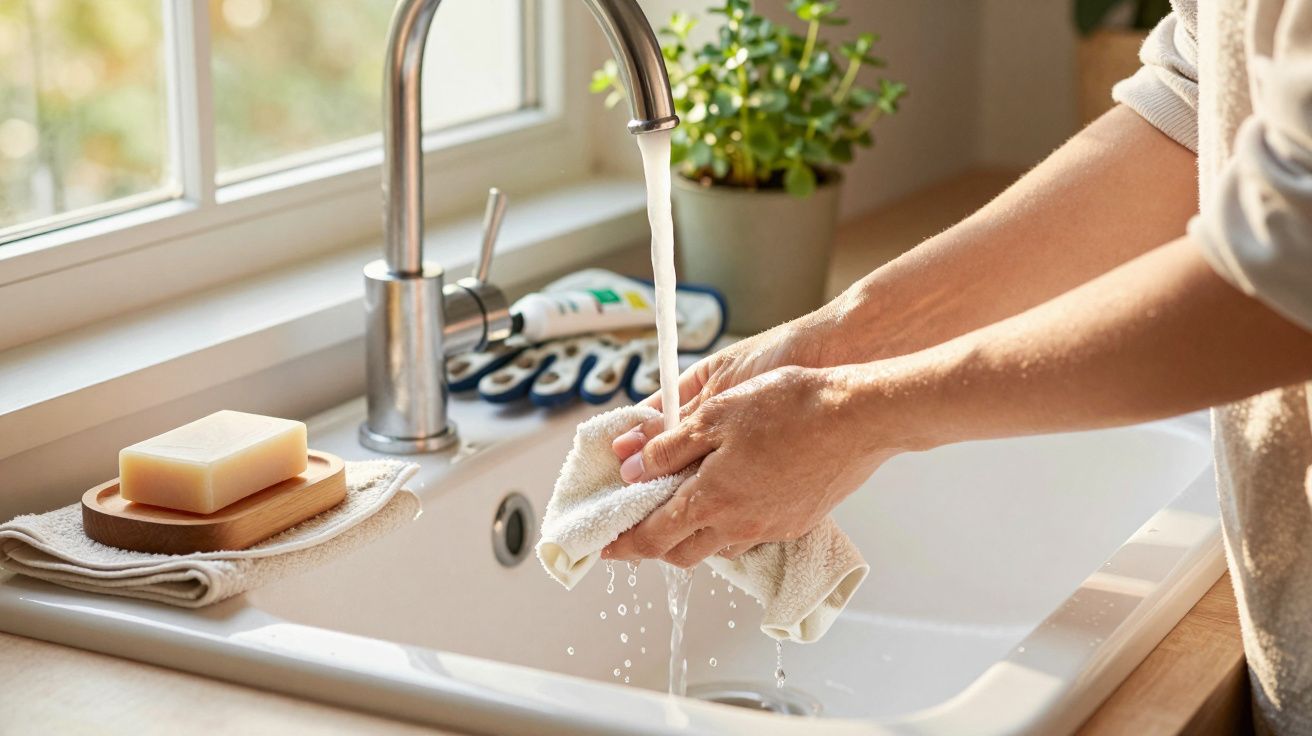
The solution is often not in the tube, but at the tap.
When your skin feels tight, it’s easy to reach automatically for the next “ultra-hydrating” hand cream. It can help in the moment, of course. But the real trigger for dry, cracked hands is usually rooted much deeper in everyday life: how we wash our hands, how we dry them, and what we put them through at work and at home. Tweak a few small details here and you’ll typically need far fewer skincare products-yet end up with softer hands.
Why more hand cream won’t fix dry hands if the basics are wrong
The pattern is familiar: your hands feel dry, so you apply a thick layer of cream. Then you wash again, dry again, feel tight again, and apply more cream again. A classic loop.
If you’re constantly reapplying hand cream, you’re often only covering up a problem created during washing-rather than solving it.
The outermost layer of skin is protected by a natural lipid (oil) film that helps prevent moisture loss and shields against irritants. If that film is stripped away with every wash, even expensive hand creams have limited impact. The oils you apply simply go down the drain at the next handwash, and your skin barely gets the chance to rebuild and stabilise itself.
The hidden main culprit: hard tap water and its downsides
Tap water seems harmless, yet in many areas it’s very hard (high in limescale). Calcium and other minerals can deposit on the skin, drawing out moisture and making that tight feeling worse.
- Hard water: more limescale, more residue, stronger drying effect
- Frequent washing: more exposure to minerals, less recovery time for the skin
- Combined with harsh soaps: the skin barrier can effectively collapse
Anyone who has to wash their hands repeatedly-health and social care staff, hospitality workers, lab teams, or parents with young children-knows the problem: even with hand cream, hands still feel rough. This is exactly where it pays to adjust the washing routine rather than simply piling on more product.
The 30–35 °C rule: choose lukewarm water instead of a hot–cold shock
Water temperature plays a big part in how much the skin’s protective layer suffers. Plenty of people still assume: “The hotter the water, the cleaner the hands.” That isn’t true.
What very hot water does to your skin
Hot water dissolves fats-just as you notice when washing up greasy pans. Unfortunately, it also dissolves the skin’s own protective oils on the surface.
Effects of water that’s too hot:
- the protective film is effectively washed away
- skin feels dull and tight immediately after drying
- redness and cracks appear more quickly
Using ice-cold water isn’t a sensible alternative. It reduces blood flow, meaning fewer nutrients reach the skin, and hands can become more sensitive-especially in cold weather.
Why lukewarm water is the best compromise for hand washing (30–35 °C)
Dermatologists often point to a range of around 30–35 °C as ideal-roughly body temperature or slightly below. It should feel comfortably lukewarm, neither hot nor cold.
Washing your hands consistently with lukewarm water protects the lipid film while still cleaning effectively.
The benefit is simple: dirt and germs are removed well without over-stressing the barrier. If you wash frequently, the improvement adds up-less tightness, fewer micro-cracks, and automatically less need for hand cream.
The right soap type: why “overfatted” options matter so much
Water on its own is rarely the full story. The real damage usually comes from the combination of water and the wrong soap. Standard liquid hand soaps and many shower gels contain strong surfactants, often sulphate-based. They clean efficiently, but they also strip protective oils and disrupt the skin’s pH.
What overfatted soaps do differently
Overfatted soaps-sometimes labelled as “superfatted” or “surgras”-include extra conditioning ingredients. Typical components include:
- plant oils such as almond oil or olive oil
- shea butter or cocoa butter
- glycerin to help bind moisture
These products cleanse more gently and leave behind a thin lipid layer that supports the skin’s natural defences rather than removing them completely. Research indicates that this kind of soap can significantly reduce the level of dryness.
Switching from ordinary liquid soap to an overfatted alternative often feels different within just a few days.
How to spot a skin-friendly soap
When shopping, a few straightforward cues help:
- wording such as “overfatted”, “replenishing”, or “for dry/sensitive skin”
- shorter ingredient lists, ideally without harsh sulphates
- solid soap bars rather than heavily perfumed, brightly coloured gels
A useful side benefit: solid soaps often come with minimal or no plastic packaging and tend to last longer. Less waste, lower cost-and your hands often cope better too.
Drying your hands: the underestimated step that can wreck your skin
Right after washing, your skin is slightly swollen with water and therefore more vulnerable. At exactly that moment, many people rub their hands vigorously with a towel. It feels “thorough”, but it causes small damage every time.
Why vigorous rubbing leaves tiny injuries
Hard rubbing creates micro-damage in the outer layer of skin, even if you can’t see it immediately. Possible results include:
- redness on the backs of the hands and over knuckles
- rough patches that seem hard to calm down
- increased itching after washing
If you already deal with sensitive skin or eczema, rough drying can noticeably worsen things.
The tap technique: gently blot instead of rubbing
Dermatologists commonly recommend blotting rather than rubbing. In practice:
- let excess water drip off briefly
- place the towel on your hands and press lightly
- blot carefully between the fingers until dry
Gentle blotting protects water-softened skin-and extends the benefits of lukewarm water and mild soap.
Clean, soft cotton towels are usually the best choice. In offices or public toilets where you’re using paper towels, the same rule applies: blot rather than scrub.
Spring, gardening, DIY: extra stress for hands
In spring, many people spend more time outdoors-gardening, sorting the balcony, or doing DIY in the garage. For hands, this can be a high-stress period.
How soil, tools, and temperature swings challenge the skin barrier
Digging in soil or handling tools means constant friction against the skin. Even if you wear gloves, protective oils can be lost. At the same time, you move from warm indoor air to cooler, sometimes damp outdoor conditions. Those shifts add extra pressure on the skin barrier.
If you then try to “get everything clean again” using very hot water and heavy scrubbing, you stack multiple triggers at once: friction, temperature shock, and harsh soap. It’s no surprise if your hands sting afterwards.
Gentle cleaning after gardening and similar tasks
After particularly dirty jobs, it helps to slow down and be deliberate:
- keep water temperature in the 30–35 °C range
- use overfatted soap and massage it in a little longer
- for stubborn grime, do two short washes rather than one aggressive scrub
- blot dry, then apply a small amount of hand cream only where needed
Stick with this routine for a few weeks and many people notice that less hand cream achieves the same-or even better-softness.
Making a simple tip into a routine you’ll actually keep
Switching from hot to lukewarm water sounds trivial, but in day-to-day life it’s a genuine habit change. At first you’ll need to consciously adjust the tap; after a few days it becomes automatic. Many people then notice their hands feel less tight in the evening, even after frequent washing.
If you also move from standard liquid soap to an overfatted option and change drying from rubbing to the tap technique, you address three of the most common causes in one go. Hand cream remains useful-but it stops being the desperate rescue after every wash.
For people with atopic eczema, contact allergies, or very reactive skin, this combination can bring real relief. It doesn’t replace medical care, but it removes a major portion of everyday stress from the skin. If symptoms remain severe despite these adjustments, it’s worth speaking to a dermatologist to check whether certain ingredients or work-related exposures are contributing.
Two extra upgrades that amplify the results
If you want to go a step further, two practical additions often make a noticeable difference:
First, consider protective gloves at the right moments. Waterproof gloves for wet tasks (washing up, cleaning) and sturdy gloves for gardening or DIY reduce repeated exposure to water, detergents, friction, and dirt. Just make sure hands are dry before putting gloves on, and avoid wearing occlusive gloves for long periods without a break.
Second, think about the water itself if you live in a hard-water area. A simple limescale-reducing filter on the tap-or a whole-house water softener-can reduce mineral residue. It won’t replace good technique, but it can lower the background irritation that keeps hands feeling tight.
Finally, there’s a cost angle too: fewer hot washes, gentler soaps, and less hand cream don’t only ease the strain on your skin-they often save money over time. That’s exactly how people end up saying in everyday conversations: “Since I changed how I wash my hands, I barely need hand cream at all.”




Comments
No comments yet. Be the first to comment!
Leave a Comment