
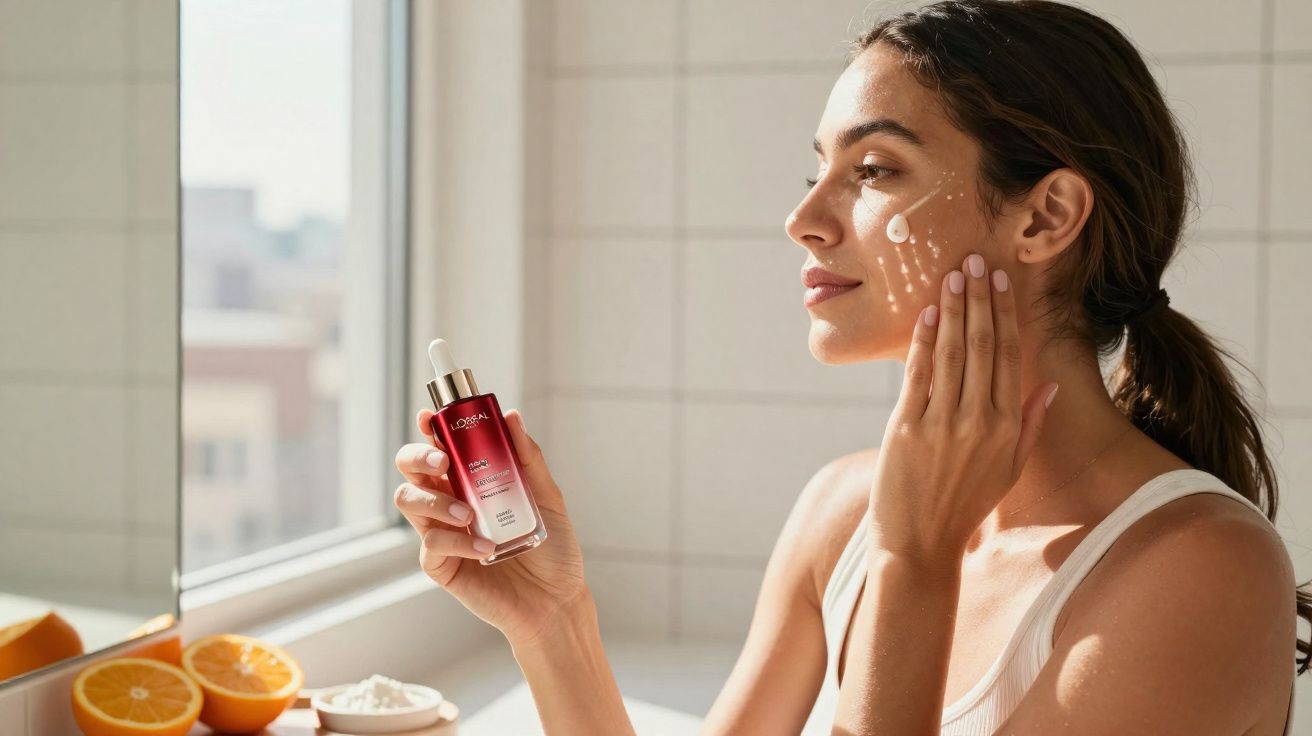
A serum that claims to soften wrinkles, fade dark spots and noticeably boost radiance - all within a week: with the Revitalift Laser Serum-Cream, L’Oréal Paris is targeting anyone who wants a clear shift in skin texture without immediately booking a dermatologist or a laser clinic. The name sounds high-tech and the promises feel almost like a beauty miracle. The real question is what, exactly, sits behind the hype.
What the new Revitalift Laser Serum-Cream is meant to do
The concept is straightforward: it focuses on three of the biggest concerns for many people from their mid-30s onwards - wrinkles, hyperpigmentation and a tired-looking complexion. According to L’Oréal, the formula is designed to tackle those areas and deliver three visible outcomes:
- a noticeably smoother skin surface
- less prominent dark spots
- more radiance and a more even-looking complexion
The brand says these changes can be noticeable after seven days of use. Naturally, a cosmetic product cannot replace a medical laser treatment - but the positioning clearly takes cues from professional procedures. The idea is dermatology-inspired care, packaged for home use.
"The brand promises a threefold effect on wrinkles, spots and radiance - within just one week of regular use."
The key active: Melasyl as a new approach to dark spots
At the heart of the formula is a lab-developed ingredient: Melasyl. L’Oréal states that 18 years of research went into this molecule-based technology. Unlike traditional brightening agents, Melasyl is presented as working earlier in the process rather than only targeting pigmentation once it is already visible.
The proposed mechanism is that Melasyl intervenes in the formation of melanin. Melanin is the pigment responsible for tanning; when the process becomes disrupted, it can appear as dark patches - for example due to sun exposure, hormonal changes or inflammation. The molecule is said to capture excess melanin precursors before they settle in the skin as visible spots.
This supports both a preventative and corrective strategy, according to the brand:
- reduced formation of new spots
- a softening of existing hyperpigmentation
- a more even, calmer-looking complexion over time
For people dealing with sun-induced marks, age spots or post-inflammatory discolouration, that positioning is likely to feel particularly relevant.
Vitamin C and Niacinamide: proven ingredients for glow and smoothness
The serum does not rely on Melasyl alone. The formula also includes two well-established skincare staples that are now hard to separate from modern facial care.
Vitamin C for radiance and protection
Vitamin C is widely favoured for boosting luminosity. It acts as an antioxidant, helping to neutralise free radicals and potentially limit damage linked to UV exposure and environmental stress. It also supports collagen production, which can contribute to firmer-feeling skin over the longer term.
"Vitamin C in the serum is intended to make the complexion look more awake and protect the skin from oxidative stress."
Niacinamide for refined pores and reduced redness
Niacinamide (also known as vitamin B3) has become a favourite among skincare fans because it can address several concerns at once: it supports the skin barrier, helps reduce redness, visibly refines the look of pores and may lessen the appearance of uneven pigmentation. Combined with Melasyl, the brand frames it as a pairing aimed at more unsettled-looking skin.
Because of this blend, the product is positioned not only for people with more noticeable wrinkles, but also for anyone struggling with an uneven tone, visible pores or sensitive-feeling skin.
Hybrid texture: a serum and cream in one
Another element that sets the Revitalift Laser Serum-Cream apart from many classic serums is the feel and format. L’Oréal describes it as a “serum-cream” hybrid: meant to combine the lightness of a serum with the comfort of a nourishing cream.
The claim is a high concentration of actives while still delivering long-lasting hydration. The manufacturer states the skin remains hydrated for up to 100 hours - a figure based on measurements under laboratory conditions.
- apply morning and evening to cleansed skin
- can be worn alone or under an additional moisturiser
- absorbs quickly without leaving a greasy film
For anyone without time for a multi-step routine, this kind of 2-in-1 product is positioned as a practical option: one step, multiple skincare goals.
Who is it for, according to the manufacturer?
L’Oréal emphasises that the product is designed for all skin types and all skin tones. That matters in the context of pigmentation, because hyperpigmentation can affect very fair through to very deep skin tones - often simply presenting differently.
As always with sensitive skin, caution is sensible. Many people tolerate active ingredients such as vitamin C and niacinamide well, but some may experience mild redness or a tight feeling at the start.
| Skin type | Potential benefit | Usage note |
|---|---|---|
| Dry skin | More hydration, smoother texture | Add a richer cream on top if needed |
| Combination skin | More balance, less shine in the T-zone, more glow | Apply a thin layer; use sparingly on an oily forehead |
| Oily skin | Lightweight feel, more refined-looking pores | The serum-cream is often enough as the only moisturiser |
| Sensitive skin | Calmer-looking skin, fewer visible spots | Patch test first and increase use gradually |
When are visible results realistic?
L’Oréal markets the idea that early effects on wrinkles and radiance may be visible after seven days. In practice, that implies twice-daily application - morning and evening - on clean skin. The brand suggests you may notice:
- skin that looks smoother and more plump
- a complexion that appears fresher and less dull
- dark spots that look slightly lighter
It is worth keeping expectations grounded: when it comes to pigmentation and wrinkles, time is a major factor. Deep wrinkles and long-standing marks do not disappear in a week. More realistic early changes are subtle improvements in surface texture, added glow and an overall more even impression.
"The seven-day statement refers to the first visible changes - not a complete ‘radical cure’ for the skin."
Can it truly replace a facial laser?
The clear answer is no. Dermatological laser treatments work with high energy, reach deeper layers of skin and can target pigmentation and wrinkles very precisely. An over-the-counter skincare product is not allowed to operate at anything like that intensity.
The “laser” comparison is better understood as a nod to the types of results people associate with laser treatments: a smoother-looking texture, fewer visible spots and more radiance. For those who do not (yet) want an invasive procedure, a product like this may feel like a gentler alternative - with the benefit of no downtime, no crusting and no appointment needed.
How to fit the serum into your routine
If you want to try it, it helps to quickly sense-check your current routine. The following order is presented as the most suitable approach:
- gentle cleanser, neither too harsh nor overly rich
- Revitalift Laser Serum-Cream on face and neck
- an additional moisturiser if needed
- during the day, always apply a high SPF sunscreen
The final point is especially important for hyperpigmentation. Without consistent sun protection, new dark spots can develop and areas that have started to brighten can darken again - an effect many people underestimate.
Risks, limits and what sensitive skin should watch for
Even though the product is designed for a broad audience, skin will not react the same way for everyone. Possible side effects include mild redness, feelings of dryness or a brief stinging sensation - particularly on skin that is already stressed or very thin.
A practical tip: before applying it all over, test the serum-cream for a few days on a small patch of skin on the neck or behind the ear. If there is no irritation, you can expand use. Anyone prone to rosacea, eczema or strong allergies should ideally speak to a GP or dermatologist in advance.
What the trend towards “laser-inspired” skincare says about the industry
The Revitalift Laser Serum-Cream reflects a wider shift: cosmetic brands are increasingly borrowing from dermatological treatments. Terms like “laser”, “peel” and “collagen booster” now appear regularly on packaging across the high-street beauty aisle.
That can become confusing quickly. What ultimately matters is not the marketing language, but the ingredients, their concentration and how your skin tolerates them. If you can roughly place what you are seeing on an ingredient list - for instance vitamin C for glow, niacinamide for barrier support and pores, and melanin-modulating molecules for spots - you are usually in a stronger position to choose well.
For many people, this new L’Oréal serum may be an appealing entry point into active-led skincare: a blend of research, familiar ingredients and a promise that sounds tempting - but one that still requires realistic expectations.




Comments
No comments yet. Be the first to comment!
Leave a Comment