
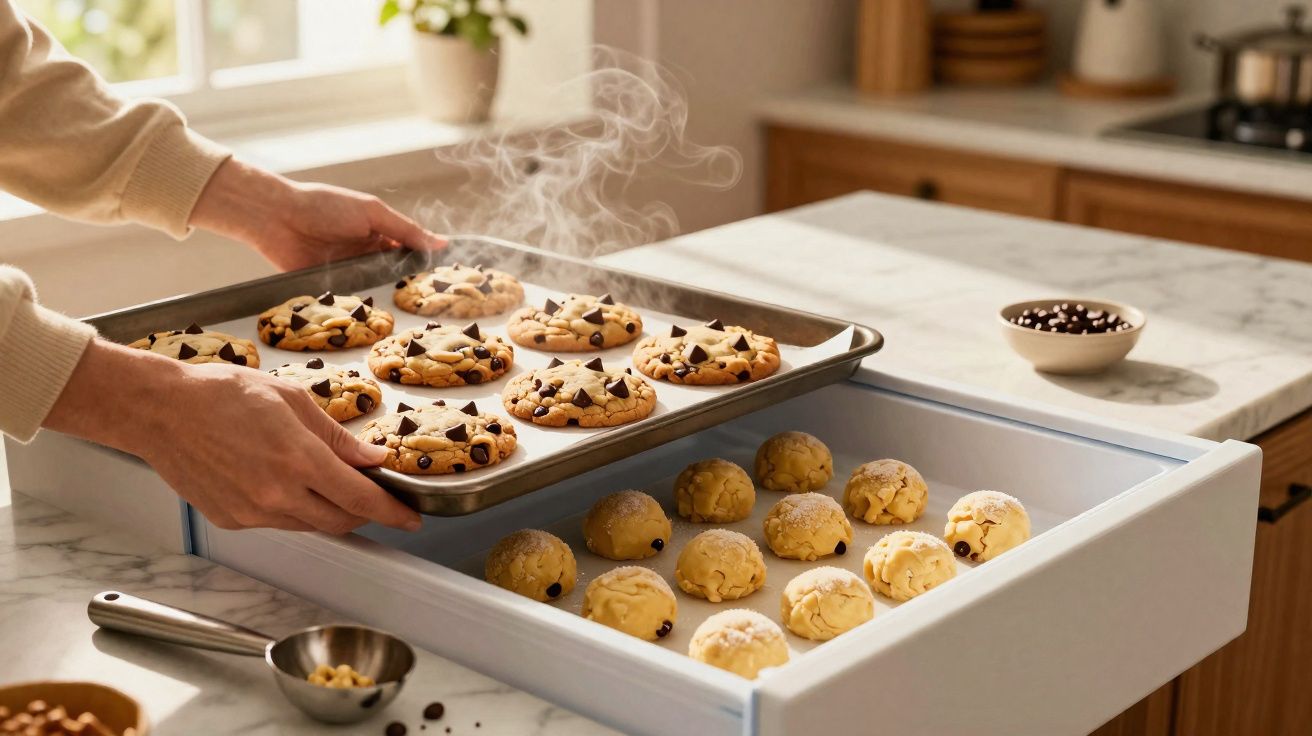
You slide the baking tray out of the oven and get that quick, familiar pang of let-down. The kitchen smells incredible, yet your cookies have collapsed into thin, crunchy puddles - all rim, no centre. Then you see another photo online of thick, bakery-style cookies and start wondering what kind of magic they’re using. Same sugar. Same butter. Same chocolate chips. Completely different outcome.
Someone mentions, breezily, “Oh, I just freeze my dough first.” As though that’s something everyone does. You smile and nod, while quietly trying to work out how a stint in the freezer turns ordinary dough into chunky, chewy, camera-ready giants.
Some baking tips sound like folklore. This one is much closer to physics.
Why frozen dough bakes into thick, bakery-style cookies
If you watch cookies through the oven door, you’re essentially watching controlled chaos. Butter begins to melt almost at once, the dough relaxes and creeps outward, and suddenly you’ve got wide, thin rounds spreading towards the edge of the tray. Starting with dough that’s cold and firm rather than soft and glossy slows the whole sequence down.
Cold fat doesn’t rush to melt. That lag keeps the dough mound upright for longer, so the cookie begins to set while it’s still tall. Less spread, more height.
A home baker in Chicago told me she’d used the same chocolate chip cookie recipe for ten years and still got wildly inconsistent batches. Same mixing bowl, same oven, same butter brand. Some evenings they were spot on; other times they came out looking like lace. One December, short on time, she portioned the dough, put the tray in the freezer - and accidentally left it there overnight.
The following day she baked the cookies straight from frozen. They came out thicker than anything she’d managed before: bronzed edges, fudgy centres, and that chewy bite you normally associate with boutique cookie shops. She assumed it was luck, tried again, and got the same result. The recipe hadn’t changed - only the dough temperature had.
Underneath the drama is a straightforward chain reaction. When dough is warm, it spreads quickly because the fat liquefies early, thinning everything out before the flour proteins and eggs can set the structure. Cold dough is firmer, so it holds up against gravity and heat for a few extra minutes. Those minutes matter.
While the outside bakes and locks in shape, the middle is still catching up, moving from raw to just-done. The result is contrast: a defined edge with a dense, moist centre. That slower, more controlled spread is what your brain registers as “chewy”.
How to freeze cookie dough for thicker, chewier results
The process is almost comically easy, which is probably why it’s often overlooked. Make your dough as you normally would, then portion it immediately into balls or mounds. Aim slightly larger than you think you need - roughly golf-ball size, or a touch bigger if you want that chunky bakery-style look.
Set a tray with parchment paper, place the dough portions on it with space between them, and freeze for at least 1–2 hours. Once the outside feels firm, move the portions into a bag or airtight container and keep them there for days or weeks. Bake straight from frozen, adding a couple of minutes to your usual baking time.
Many people ignore this step because it feels like extra faff. You’ve already got the bowl out, the oven is hot, and you want cookies now - not tomorrow. We’ve all had that moment of pushing still-warm dough into the oven because patience simply isn’t available.
Here’s the quieter reality: the freezer step gives even a fairly average recipe a kind of “pro upgrade”. It smooths over overmixing, butter that’s a little too soft, or a warm kitchen. And honestly, hardly anyone does this every single day. But when you can wait, the reward is close to guaranteed.
People who freeze cookie dough regularly talk about it as a small life hack. They’ll tell you their “emergency cookie stash” gets them through late-night cravings and unexpected visitors, while making the texture far more dependable. A pastry chef in New York summed up her rule like this:
“If the dough can go in the freezer, it goes in the freezer. The cold gives you control. Hot ovens don’t negotiate.”
If you prefer it laid out clearly, this is what freezing your dough actually changes:
- Slows the spread - Cold fat melts later, so the cookie holds its shape for longer.
- Deepens flavour - Resting the dough helps the flour hydrate and flavours blend.
- Boosts chewiness - Thicker centres stay moister and denser as they cool.
- Improves consistency - Less affected by warm hands or room-temperature swings.
- Adds flexibility - Bake two cookies or twelve, whenever it suits you.
What freezing cookie dough changes inside the dough (and inside your expectations)
Freezing doesn’t merely press pause. As the dough rests - even in the cold - the flour continues to hydrate. Starches absorb moisture from the eggs and butter, leaving less free liquid to rush outwards when the heat hits. Better-hydrated dough behaves more like a sponge and less like a slip-and-slide.
Meanwhile, sugars settle and dissolve more evenly. That’s why cookies baked from chilled or frozen dough often taste a touch fuller - almost more caramelised - even when the ingredients are exactly the same.
There’s also a mental shift that comes with freezing dough. You move from instant gratification to delayed reward, which can make the eventual bake feel strangely special. A random Tuesday can suddenly smell like a holiday kitchen. You’re not just throwing something sweet into the oven; you’re defrosting a small, deliberate choice your past self made on your behalf.
That little delay also builds a new habit loop. Once you notice the difference, it’s surprisingly hard to return to same-day dough. Without any fanfare, your “normal” changes.
Some people even describe it as a tiny act of self-respect in the middle of a hectic week: you spend an extra five minutes portioning, freezing, and saving something good for later. Cookie dough is small, but having something ready - and improved by patience - can spill over into other parts of life.
Maybe that’s why the “freeze your dough first” tip travels so quickly on social media. It isn’t only about thicker cookies. It’s the calm, faintly smug satisfaction of opening the freezer, pulling out a tray, and knowing that in ten minutes your kitchen will smell like you planned ahead.
| Key point | Detail | Value for the reader |
|---|---|---|
| Freezing slows spread | Cold fat melts later, so dough holds its shape | Thicker, bakery-style cookies instead of flat ones |
| Dough rest boosts flavor | Flour hydrates, sugars dissolve and mellow | Deeper, richer taste without changing the recipe |
| Prep once, bake often | Frozen portions keep well and bake from frozen | On-demand fresh cookies with reliable texture |
FAQ:
- Do I need to thaw frozen cookie dough before baking? Usually no. Most dough balls bake perfectly straight from frozen; just add 2–4 minutes to the baking time and watch the edges for doneness.
- How long can I keep cookie dough in the freezer? Well-wrapped dough balls keep their best texture and flavor for about 1–2 months, though they’re usually safe to eat beyond that if stored airtight.
- Does every cookie recipe benefit from freezing? Most drop cookies do, especially chocolate chip, oatmeal, peanut butter, and similar styles. Very delicate or thin cookies may not need it.
- Why are my frozen-dough cookies still spreading too much? Your butter may be too soft from the start, or there’s a high sugar-to-flour ratio. Try chilling longer, or adding 1–2 extra tablespoons of flour to the dough.
- Can I freeze a whole log of dough instead of scooping? Yes, but slice it into even pieces before baking so they cook consistently. Scooped balls freeze faster and usually bake more evenly than thick logs.






Comments
No comments yet. Be the first to comment!
Leave a Comment