
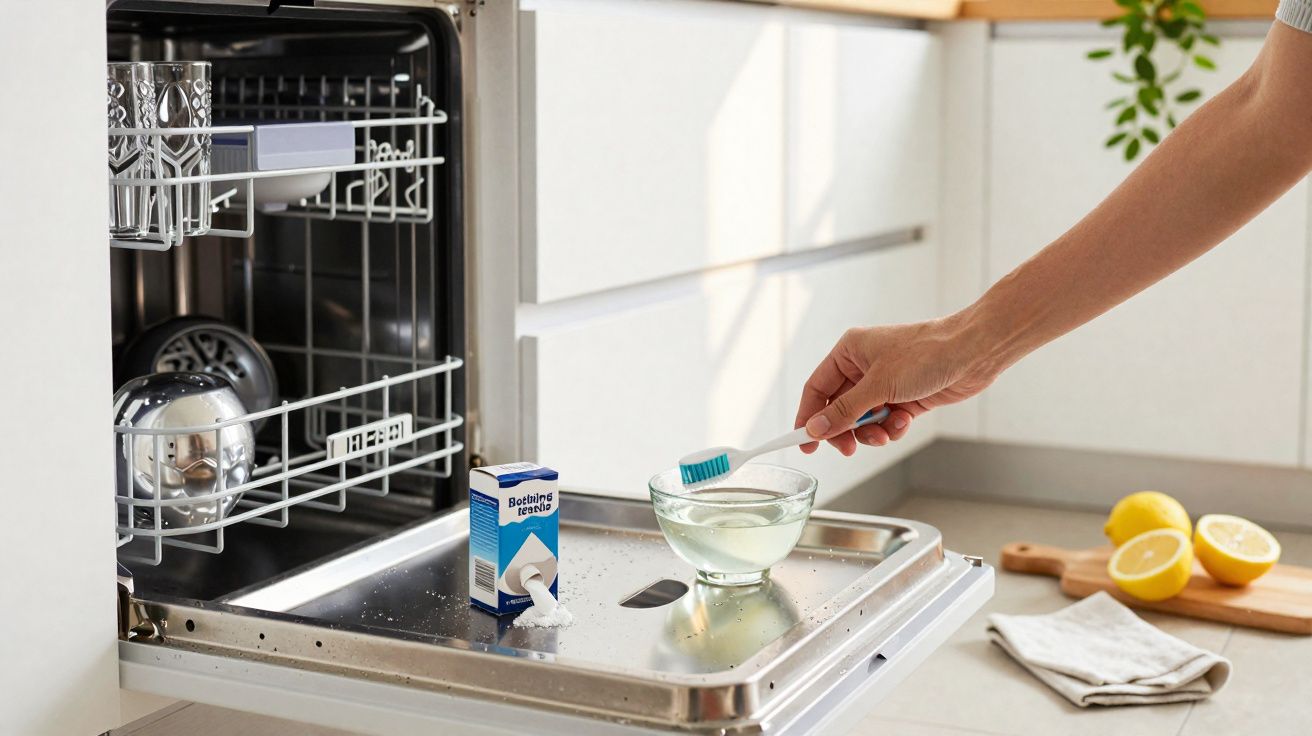
Who would have thought that the very machine meant to wash our dishes could itself become a breeding ground for microbes? Research suggests that in virtually all household dishwashers, bacteria, fungi and stubborn biofilms take hold - especially around rubber door seals and in hard-to-reach corners. With three targeted steps, however, you can significantly cut the microbial load.
When a dishwasher turns into a germ habitat
Inside a dishwasher, conditions are anything but gentle: very hot water, harsh detergents, shifting humidity, a high pH level, plus salt and sharp temperature changes. For many microorganisms that is simply too much - yet a few specialists cope surprisingly well.
It is precisely these hardy survivors that researchers have examined more closely. One 2018 study analysed 24 household machines. Every single one had biofilms on the rubber seals: slimy layers made up of bacteria, yeasts and moulds that spread across the surface like a protective shield.
"Biofilms work like a fortress: within their slimy layer, germs survive heat, detergents and short wash programmes far better."
Among the organisms found particularly often were species from the genera Pseudomonas, Escherichia and Acinetobacter - groups that also include so‑called opportunistic pathogens. On the fungal side, yeasts from the genus Candida were dominant and were detected in all the appliances studied.
Black yeasts in the dishwasher: inconspicuous, but extremely tough
The rubber seal around the door frame offers microbes an ideal foothold: a slightly rough surface, constant moisture, residues of detergent and food. This is also where so‑called black yeasts thrive. A well-known example is Exophiala dermatitidis, a fungus able to tolerate very hot, salty and alkaline environments.
Measurements indicate that up to millions of colony-forming units of such fungi can be present on a single square centimetre of seal. For healthy people, the risk usually remains low. People with severely weakened immune systems, however, should pay especially close attention to hygiene inside the machine - and should not ignore very old appliances with musty smells or visible black deposits.
Why low temperatures make the problem worse
Many households now rely almost exclusively on eco cycles at 30–45 °C to save energy. That may be kinder to your electricity bill, but it can help biofilms persist because they are not heated enough to be properly damaged.
At the same time, grease and food residues build up in filters, on internal walls and in the spray arms. These deposits feed microorganisms, allowing the slimy layer to grow and become more stable from one cycle to the next.
- Low temperatures: clean dishes only to a limited extent and do little harm to biofilms.
- Long damp phases: encourage the growth of bacteria and fungi.
- Food residues: act as an ideal nutrient source.
What happens when you open the hot door
After a wash, many people open the dishwasher straight away while it is still steaming. A burst of hot air and fine droplets then rises from the interior. Researchers refer to a possible “aerosol cloud” that could carry spores and bacteria into the kitchen air.
A 2024 paper highlights this potential spread of microorganisms, even though the specific health benefits of stricter hygiene measures still require further research. What is clear is that warm, wet surfaces - whether a sponge, washing-up brush or door seal - harbour far more germs than materials that are able to dry thoroughly in between.
"If you leave the door slightly ajar and let the machine dry out properly, you remove the basis of life for many germs."
Three targeted measures for a noticeably cleaner dishwasher
1) Clean the seals thoroughly
The rubber door seal is the key hotspot. Anything that gets trapped in creases and folds tends to accumulate here. A simple but effective routine:
- Remove visible crumbs and deposits from the seal.
- Dip an old toothbrush into a mix of hot water and clear (colourless) household vinegar.
- Scrub the seal firmly with the brush, including underneath and into the corners.
- Wipe dry with a cloth so no moisture remains sitting in the folds.
Vinegar contains acetic acid, which attacks the alkaline film left by detergent residues and weakens fungal structures. Many people also add a little black soap or a mild washing-up liquid to break down grease more effectively.
2) Clean the filter and base regularly
The base of the dishwasher - including the filter - is easily overlooked, yet it collects all the dirt from a cycle. If it is neglected, you are effectively providing microorganisms with an abundant food supply.
- Once a week, remove the filter and discard any large debris.
- Rinse the filter thoroughly under the hottest possible water, using a soft brush if needed.
- Wipe away streaks and deposits from the base of the tub.
- Finally, sprinkle a little bicarbonate of soda (bicarbonate) onto the base - it binds odours and has a mild inhibitory effect on fungal growth.
If you regularly load heavily soiled items, it makes sense to do this more often. This also reduces the likelihood of unpleasant smells coming from the appliance.
3) Spray arms and a hot empty run
The spray arms ensure water and detergent reach all areas. However, their fine nozzles can block easily with limescale, grease or small food particles. When that happens, “dead zones” form inside the machine where germs can persist undisturbed.
A sensible monthly routine:
- Remove the spray arms according to the manufacturer’s instructions.
- Rinse them through under running water.
- Carefully clear blocked nozzles with a cocktail stick or a thin wire.
- Then run an empty cycle at at least 60 °C - ideally with about six tablespoons of citric acid placed inside the machine - to descale pipes and metal parts.
The higher temperature breaks down many heat-sensitive bacteria. At the same time, citric acid dissolves limescale deposits where germs like to take hold.
How often should you do what? A quick guide
| Measure | Recommended frequency |
|---|---|
| Clean the door seal | every 1–2 weeks |
| Clean filter and base | once per week; more often with heavy use |
| Clean spray arms | once per month |
| Empty run at 60 °C or above | once per month; more often if you mainly use low-temperature cycles |
| Leave the door ajar after washing | after every cycle |
Who should pay particular attention to dishwasher hygiene?
For most healthy people, biofilm in a dishwasher is not a dramatic day-to-day danger. Even so, consistent upkeep is worthwhile if there are young children, older people or those with serious pre-existing conditions in the household.
Allergy sufferers or people with chronic lung conditions may also react more strongly to high levels of mould and spores indoors. Visible black deposits on seals or a musty smell from the machine should then be treated as a warning sign.
"If you treat your dishwasher like an appliance with a ‘maintenance schedule’, you lower the germ level - without any specialist chemicals."
How detergent, salt and rinse aid play their part
Modern tablets and powders usually clean reliably. Even so, dosing matters: too little detergent makes it easier for grease and deposits to stick, while too much can leave residues that may supply biofilms with nutrients.
Dishwasher salt keeps the built-in water softener working, helps prevent limescale layers and therefore removes hiding places for germs. If you have very hard tap water, you should not let the salt run out. Rinse aid is mainly used for shinier glasses, but it also helps water drain away, which in turn speeds up drying inside the machine.
What many people forget: behaviour after the cycle
What happens in the hours after washing is at least as important as the wash itself. If the dishwasher stays completely shut, warm, humid air becomes trapped inside - ideal conditions for microbes.
- At the end of the programme, open the door slightly so steam can escape.
- Do not leave cutlery and dishes sitting wet in the machine for days.
- Scrape off heavy food soil beforehand instead of letting whole leftovers wash through.
With these simple habits, the “microbe habitat” inside shrinks noticeably. Many people notice the change first by smell: the typical “machine odour” often disappears after a few weeks of regular care.
Dishwasher hygiene does not have to be a major project. If you keep an eye on seals, filters and spray arms, schedule an occasional hot empty run, and avoid snapping the door shut immediately after a cycle, you take away the comfort biofilms rely on - and help ensure the appliance truly delivers clean dishes.





Comments
No comments yet. Be the first to comment!
Leave a Comment