
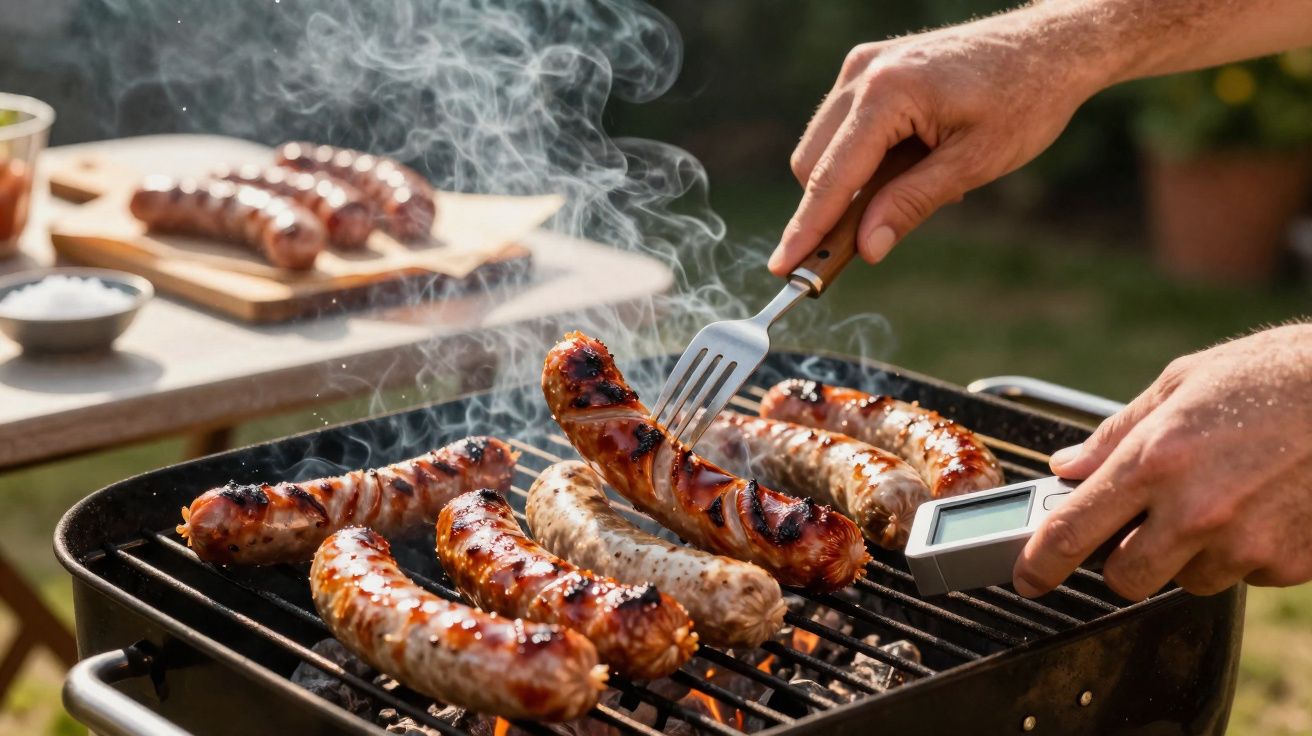
That quick jab of a fork into a raw sausage feels harmless - even reassuring.
Yet that tiny move can quietly spoil the whole meal.
Across Europe and the United States, plenty of home cooks still prick sausages “to stop them bursting” or “to drain the fat”. But today’s butchers argue it’s a habit left over from a different time. What sits behind this small routine is a tug-of-war between tradition, food science, and how sausages are actually produced now.
How a harmless family habit turned into bad cooking advice
For many households, the scene repeats itself every barbecue season: the coals are ready, friends are arriving, and sausages are laid out in neat rows. Then out comes the fork. Two or three quick stabs - or a shallow cut “just to be safe”. It rarely gets challenged, because it’s exactly what mums, dads, grandparents and neighbours always did.
But artisan butchers tell it another way. The idea that sausages should be pierced comes from older days, when casings were coarser, less uniform and more likely to split. Hygiene standards and temperature control were also less dependable, so sausages could contain air pockets or unevenly minced meat that expanded unpredictably once heated.
Modern sausage-making has changed that reality. Whether they’re produced by a small butcher or a large factory, most sausages now use casings made to handle both heat and pressure. Natural hog or sheep casings are carefully graded, while many supermarket sausages are wrapped in collagen or cellulose skins that respond consistently on the grill or in the frying pan.
"The old rule made sense when casings ripped easily and fillings were inconsistent. With modern sausage making, that precaution turns into damage."
Even so, the gesture stuck. Cooking habits often trail behind food technology by years, and the fork still tends to win out over what butchers keep saying at the counter: “Stop stabbing the sausage.”
What piercing really does: less flavour and a drier bite
The reasoning sounds sensible: release fat, prevent an explosion, make the sausage “lighter”. In practice, it usually produces the opposite of what people actually want to eat.
Inside a sausage, fat and juices aren’t just “grease”. They do several jobs at once: they carry flavour from herbs and spices, they protect the meat from harsh direct heat, and they help create the familiar snap of the casing followed by a juicy middle. Once the skin is punctured, those liquids escape, drip into the pan or onto the coals, and leave the filling less protected.
| Cooking choice | Main effect on the sausage |
|---|---|
| Piercing with a fork | Fat and juices leak out, texture turns dry, taste becomes flatter |
| Leaving casing intact | Moisture stays inside, flavour concentrates, casing protects the meat |
As moisture leaks away, the sausage tends to dry out from the outside moving inwards. The outer layer can become firm and leathery before the centre is properly cooked. And without a cushioning layer of rendered fat to distribute heat, a small hot spot in the pan can scorch exposed meat rather than gently browning the casing.
"Every drop of fat that hits the grill looks like “extra calories” disappearing, but it’s also carrying the very aromas you paid for at the butcher’s counter."
There’s also a physical knock-on effect. The casing works like a thin pressure barrier: as the filling heats and expands, that pressure helps push juices back into the meat fibres, where they can be reabsorbed. Once the skin is peppered with holes, that internal cycle breaks down - steam and fat simply vent out instead of circulating through the sausage.
So why do sausages sometimes burst on the grill?
Many people keep piercing because they’re trying to avoid that dreaded moment when a sausage splits open. But a burst casing is rarely caused by leaving the skin intact. More often, it’s the result of heat and handling mistakes working together.
Common reasons sausages split
- Heat too high: A fierce flame or a smoking-hot pan sets and toughens the outside before the centre has warmed, so pressure builds and tears the casing.
- Frozen or half-frozen sausages: The outside defrosts and cooks while the middle stays icy; steam then forms unevenly and forces its way out at the weakest point.
- Very tight or overfilled sausages: Poorly made links with almost no slack have little room to expand.
- Constant poking and squeezing: Prodding with tongs or pressing with a spatula strains the skin and makes rupture more likely.
Butchers’ view is that properly made sausages, cooked with a gentler approach, almost never “explode”. When a split does happen, it’s usually better solved by changing technique rather than making holes in every link “just in case”.
"The more you handle and stab a sausage, the less the casing can do its job as a natural shield."
How butchers say you should really cook sausages
The guidance from professionals can sound almost too straightforward - which may be exactly why it gets ignored. Still, small choices often determine whether sausages end up as a satisfying weekday dinner or a dry let-down.
Control the heat, not the sausage
Avoid blasting heat. Use a medium or medium-low setting and allow time. Sausages cook best when their fat renders gradually and the heat can travel evenly to the centre.
- Begin with a pan or grill that’s hot, but not scorching.
- Leave a little gap between sausages so they brown instead of steaming.
- Turn them often so each side colours at roughly the same speed.
- Don’t press them down “to hear the sizzle”; that noise is moisture leaving the casing.
For thicker sausages, many chefs prefer a two-stage approach: first a brief cook in gently simmering water, or in a covered pan with a splash of liquid, then a finish over higher heat to caramelise the outside. This method gets the inside safely cooked before the casing faces stronger heat.
Rest them - the way you would a steak
When sausages come off the heat, letting them sit briefly on a warm plate improves the texture. Over a few minutes, juices that were driven towards the centre during cooking redistribute through the meat. Slice too soon and that moisture ends up on the board rather than in the bite.
"Treat a good sausage like a small steak: slowish cooking and a short rest do more than any fork ever will."
Fat, health, and the myth of the “lighter” sausage
A lot of the pricking habit is rooted in worry about fat. People hope that puncturing the casing will “let the bad stuff run out” while leaving the meat behind. Nutrition professionals tend to see it differently.
With normal cooking, some fat will render out anyway and collect in the pan or drip on the grill - that’s why the surface becomes glossy and the outside crisps. Piercing can increase that loss a little, but not enough to meaningfully transform the calorie content of the meal. What does change noticeably is the flavour and the mouthfeel.
If you want a leaner result, there are better options than a fork:
- Pick sausages with a lower declared fat percentage on the label.
- Choose recipes made with poultry or game, which typically contain less fat.
- Serve a smaller portion of sausage alongside plenty of vegetables or grains.
- Reduce portion size rather than stripping away what makes the sausage enjoyable.
Food safety plays a part too. When fat and juices pour from a punctured sausage onto open flames, you get more smoke and more flare-ups, increasing the risk of charring. That burnt surface creates compounds health agencies advise limiting. Keeping the heat controlled and moderate supports both flavour and safety.
Fresh, cured, smoked: does the rule always apply to sausages?
Sausages don’t all behave identically. Fresh pork breakfast sausages, coarsely minced bratwursts, and semi-dried Mediterranean-style links respond differently in a pan. Even so, the general message from butchers is steady: keep the casing unbroken unless a particular method specifically calls for cutting.
Different types, similar logic for sausages
- Fresh sausages: Their higher moisture and fat rely on an intact skin to stay juicy.
- Smoked or pre-cooked sausages: These are already set; piercing mainly dries them out, especially when reheating.
- Heavily dried or cured sausages: Typically sliced rather than grilled, so piercing offers no advantage.
One clear exception sits outside the usual Western barbecue approach: some street-food styles deliberately slash sausages so the edges curl and the surface becomes crispier. In those recipes, the trade-off is intentional - less juiciness in exchange for a specific texture and look. It’s a deliberate choice, not a “safety step”.
What this tiny habit shows about home cooking
Arguing over a single fork prick can seem petty, but it highlights something bigger. Home cooking is full of rituals that once made sense, but no longer fit today’s ingredients and equipment. Fridges keep meat safer, ovens cook more evenly, and casings are tougher - yet the advice handed down at the table often barely shifts.
Chefs and food professionals spot similar leftovers elsewhere: rinsing raw chicken under the tap, boiling vegetables until they collapse, or adding oil to pasta water. Each habit originally came from caution, scarcity, or limited tools. Many persist simply because few people have had the chance to ask a butcher or cook, at the hob, whether the old rule still applies.
If flavour matters to you, sausages provide an easy test. Next time, cook half the links with the casings intact and pierce the rest. Put them on separate plates and notice the cut face, the sound of the first bite, and how much juice is left on the knife. That kind of quick kitchen experiment often persuades people faster than any lecture.
Meanwhile, sausage makers spend years refining mince size, fat ratios, salt levels and casing choices to create a particular result. Respecting that craft doesn’t require special kit or fancy technique - it mostly means easing off the heat, leaving the fork alone, and letting the sausage do what it was designed to do.






Comments
No comments yet. Be the first to comment!
Leave a Comment