
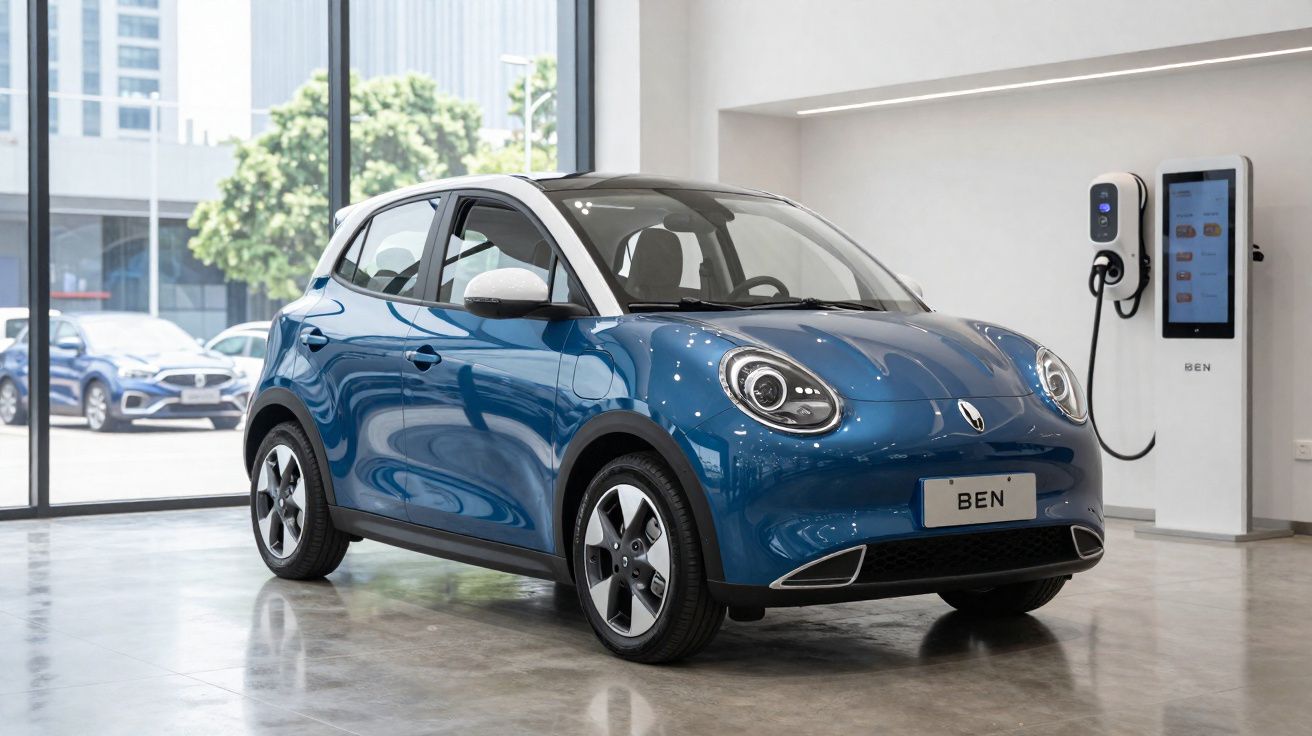
The BEN is a small electric car developed by CEiiA - the Centre for Engineering and Product Development in Matosinhos, near Porto - and, this Wednesday, it secured the long-awaited European Union (EU) type approval that allows it to be driven legally across all Member States.
With approval now in place, CEiiA will move ahead with producing an initial batch of vehicles at the BEN Garage in Matosinhos. A second stage will follow, focused on building limited-edition lots tailored to different mobility applications and services.
This phase will also be defined by continued development of both the product and the pilot production unit, which is designed to manufacture up to 200 units per year. However, large-scale production is planned for 2026, across multiple industrial hubs in Portugal and in other European countries.
The target is to reach decentralised output of 20,000 units per year by 2030, with an entry price starting from €8,000.
“With BEN, Portugal is, from now on, a European (mobility) manufacturer. We created BEN as Europe’s response to a new inclusive social model built around more affordable, smaller and sustainable e-cars. BEN is therefore aligned with the European Commission’s ‘Small and Affordable e-car’ initiative.”
Helena Silva, Board Member and CTO at CEiiA
Small, accessible - the BEN electric car
BEN is a compact electric vehicle - similar in size to a Citroën Ami - designed to be used and traded as a shared mobility service rather than as a privately owned means of transport. The project’s ambition is to meet emerging urban mobility models, with accessibility, sustainability and flexibility at the core.
One of its standout features is that it is presented as the first electric vehicle to include a counter for avoided carbon dioxide (CO₂) emissions, recording how much CO₂ is not emitted per kilometre travelled when compared with an internal combustion car.
BEN is built around two complementary platforms. The first, known as SPIRIT, is a digital layer that enables user identification, a shared digital key, service-specific configuration, and real-time monitoring of carbon emissions.
The second, called BODY, is a physical, modular platform. BEN measures 2.50 m in length and offers a flexible interior with seating for up to three people, along with cargo capacity ranging from 100 litres to 400 litres. That modularity supports multiple use cases, including passenger transport and small deliveries, and CEiiA says it is already prepared for future autonomous driving. For now, no further specifications have been released.
“It can be a resource for a residential development, where people, when buying a home, already have this mobility solution included in the package, just as they might have a shared laundry,” said Margarida Pina, CEiiA’s business unit manager, to MaisGuimarães.






Comments
No comments yet. Be the first to comment!
Leave a Comment