
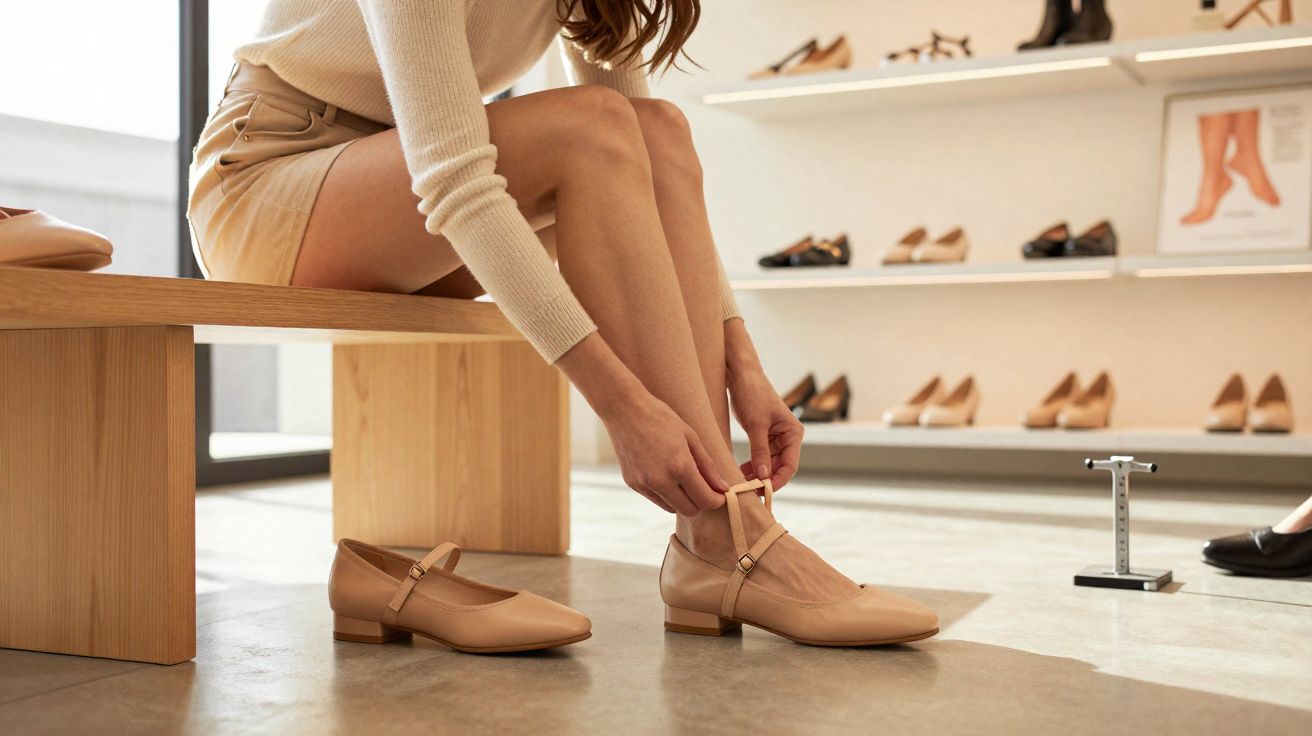
A pared-back on-trend shoe is meant to solve the problem neatly.
As soon as the weather warms up, many women automatically reach for their ballerinas. They seem comfortable, go on in seconds and work with almost anything. A podologist, however, views the craze with scepticism - and points to a different, equally simple option that supports the foot far better while looking more current.
Why classic ballerinas can overload your feet over time
From an orthopaedic perspective, traditional ballerinas are often a trade-off that your feet end up paying for. They’re flat, lightweight and usually built with very little structure. That can feel pleasant at first, but over the long haul it places a lot of demand on the foot.
Common issues include:
- Very little support: your foot “floats” inside the shoe, particularly around the heel.
- A thin sole: each step sends impact straight up into the joints and spine.
- Minimal structure: the shoe barely encloses the foot, so muscles and tendons have to compensate more.
- Toes tensing up: many people subconsciously grip with their toes to stop the shoe slipping off.
If you wear ballerinas only now and then, you’ll usually cope. If you put them on every day through spring and summer, you risk gradual niggles: tired feet, burning under the ball of the foot, forefoot pain, or even knock-on problems affecting knees and back.
"That supposedly light, unobtrusive everyday shoe can do more damage over months than the occasional day in high heels."
The smarter swap: Mary-Jane strap shoes in a ballerina look
The podologist favours a style that stays close to the ballerina aesthetic but is put together in a noticeably more supportive way: flat strap shoes with a slim strap over the instep - often described in fashion terms as a “Mary-Jane style”.
At first glance they’re understated: a rounded toe, a very low heel, and a light-on-the-foot feel. The real difference is in the detail - the small strap that links across the top of the foot.
What the strap improves so dramatically
That tiny component changes the shoe’s overall stability. Instead of relying only on the heel counter and upper, the foot gains extra support from the front as well.
As a result:
- the foot slides forwards less,
- there’s no need to clamp down with your toes,
- the heel-to-toe roll feels calmer and more controlled,
- each step feels more secure.
The podologist refers to the strap as a "small seatbelt system" for the foot - discreet, but highly effective day to day.
If you’re on your feet a lot, you’ll often notice the difference after the first long day at the office or walking around town. Feet feel less drained, pressure spots show up less often, and that sensation of slipping out of the shoe largely disappears.
More support, more style: why this model looks better too
What’s interesting is that moving away from classic ballerinas isn’t only about foot health - it’s also a style upgrade. The strap changes how the foot looks, quite visibly.
Style advantages:
- The foot line appears longer, because the eye is guided across the instep and towards the ankle.
- The strap gives the shoe definition, so it looks less “bare” and therefore more put-together.
- The silhouette feels more balanced, especially with wide-leg trousers, midi dresses or A-line skirts.
In particular, versions in suede or matt-finish leather get a surprising amount out of such a simple design. The surface reads softer, the material looks calmer, and the shoe appears more premium than a basic ballerina made from thin faux leather.
"A well-made strap shoe feels like a blend of ballerina, loafer and city shoe - flat, but smart enough for the office."
How to spot a foot-friendly pair in the shop
If you’re planning a ballerina update, it pays to shop with a more critical eye. It’s not just the brand and the look that matter - it’s the construction.
- Check the sole: it should bend, but not flop. A little resistance when you flex it is ideal.
- Look at the insole: a small footbed, or at least a lightly cushioned insole, helps reduce forefoot strain.
- Test the strap: it should hold the foot securely without digging in. Adjustable buckles or elastic inserts make this easier.
- Assess heel hold: the heel counter needs to be firm, and the back of the shoe shouldn’t gape or feel sloppy.
- Feel the materials: soft leather or a high-quality textile blend reduces rubbing and blisters.
A simple in-store test: walk on the spot in the shoes, tilt your weight side to side, then rise up onto your toes. If your foot stays stable without your toes having to “work”, that’s a good sign.
Further options for anyone who wants more than flat
Alongside flat strap shoes, podologists and stylists often suggest two more spring-friendly choices.
A gentle lift: Mary-Jane shoes with a low block heel
If you’d like to gain a few centimetres visually without punishing your joints, a low block heel is worth considering. It stays steady, shifts pressure more kindly, and can make legs and posture look more dynamic.
Benefits of this option:
- more polish for the office or dinner out,
- a secure stance,
- slight support for the arch.
Relaxed but structured: mules in a moccasin style
If you prefer an open back, moccasin mules are a good pick. Structured and secure at the front, open at the heel for easy slip-on wear - a mix of slipper comfort and city practicality. They suit shorter trips, such as commuting to the office, popping to the shops or meeting at a café.
"All of these newer styles have one thing in common: the foot is no longer placed in a random, flat slip-on, but in a clearly defined frame."
How poor shoes show up in the long run
Many people dismiss early warning signs because they don’t immediately connect them to footwear. Typical clues that a shoe - such as a classic ballerina - isn’t working for you include:
- burning under the ball of the foot after only a few hours,
- nagging pain along the inside of the foot,
- tightness in the calf or knee after an ordinary walk around town,
- frequent blisters in the same spot.
Over the years, misalignments such as a dropped transverse arch or a bunion can worsen. At that point, buying shoes becomes more complicated, and the lack of support earlier on tends to come back to bite.
Practical tips for starting spring in new shoes
If you’re switching from ballerinas to strap styles, give your feet time to adapt. Doing it gradually usually works best.
- Wear the new shoes for only 1–2 hours a day at first.
- Use thin, seam-free socks or no-show liners until the material softens.
- Apply blister plasters in advance on any sensitive areas.
- Buy shoes in the afternoon - feet are slightly wider then, so the fit is more realistic.
If you regularly walk longer distances, you can also add a thin cushioned insole. With many pairs, that makes the inside noticeably more comfortable without changing the look.
This turns a fashion trend into a genuine health win: a simple strap shoe that nods to ballerinas can reduce strain on the foot while giving everyday outfits a cleaner, more grown-up finish - which is exactly why it feels so appealing this season.



Comments
No comments yet. Be the first to comment!
Leave a Comment