
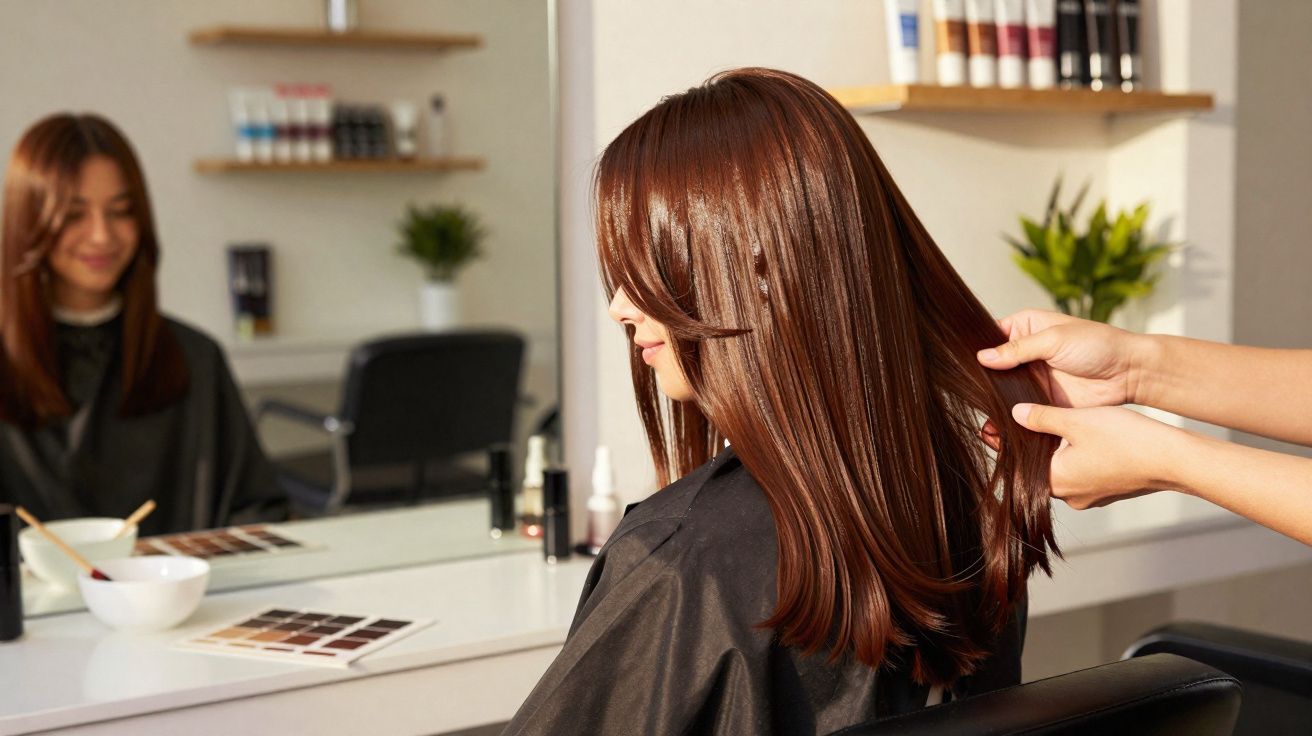
Over the past few years, anyone stepping into a hair salon could hardly avoid balayage, ombré and countless highlight techniques. Lightened ends, “sunkissed” effects and seemingly random ribbons of brightness dominated Instagram feeds and real-life hair alike. Now, a clear shift in mood is emerging: away from complicated colour play and towards one clean, uninterrupted shade that puts shine and fullness centre stage.
Mono, not mix: the comeback of single-tone hair colouration
This year’s big movement in salons is a single-tone hair colour from roots to ends. No gradient, no lighter panels in between, no face-framing highlights-just one shade, applied evenly and precisely. What used to be dismissed as a bit “boring” is suddenly reading as modern, luxurious and unexpectedly fresh.
Where balayage thrives on contrast, a single-tone colouration is all about complete uniformity. The hair looks as though it has been dipped in one seamless veil of colour that reflects evenly from every angle. That’s exactly what appeals to people who have simply grown tired of endless highlight patterns.
"The new favourite colour in the salon isn’t one specific shade-it’s the decision to choose just one single, perfectly matched colour."
Whether it’s a cool, crisp blonde, a chocolate brown, inky black or vivid copper, the exact tone matters less than the overall impression it creates. The aim is a homogeneous, glossy surface that looks premium and frames the face in a calm, polished way.
Why uniform colour is suddenly so in demand
This trend hasn’t appeared out of nowhere-it fits a broader shift in beauty: moving away from extreme transformations and towards hair that looks “healthy”. Many people want less of the “I’ve just spent three hours in the salon” vibe and more of a “my hair naturally shines like this” effect.
More mirror-like shine, less chaos in the colour transition
One major advantage is shine. When colour is even, light reflects more smoothly off the hair’s surface, creating that mirror finish people chase in photos and videos. Highlights and strong transitions can interrupt reflection, whereas a single, consistent tone tends to amplify it.
With close-up hair videos booming on social media, this kind of finish lands especially well. Individual strands look almost buffed, and the overall look appears calmer and more refined.
Hair can look thicker and more substantial
Another reason this approach is gaining traction is the sense of density it creates. Strong colour contrasts can make lengths look thinner-particularly when the ends are noticeably lighter. One rich, consistent shade often makes the hair appear fuller overall.
- No light ends that can look “wispy”
- No busy pattern that draws attention to sparse areas
- One solid block of colour that creates the illusion of more volume
Many hairdressers say clients with finer hair practically breathe a sigh of relief when they see how much stronger their hair looks with a uniform colour.
Less hassle with root maintenance
Balayage was marketed for a long time as low-maintenance, but in reality the transition only stays truly flattering if it’s refreshed regularly. Especially when natural regrowth differs sharply from the coloured sections, visible changes start to show after just a few weeks.
Single-tone colouration takes a different approach. Yes, regrowth still happens, but many shades can be chosen so they grow out more softly. If you stay close to your natural base, you can often stretch the time between appointments considerably.
"A neatly applied full colour can feel far more relaxed day to day than a complex balayage-especially when the natural base is cleverly worked in."
There’s also a practical plus: adjustments are simpler. Rather than painstakingly rebalancing blended transitions, the hairdresser can refresh the full head or focus precisely on matching the roots.
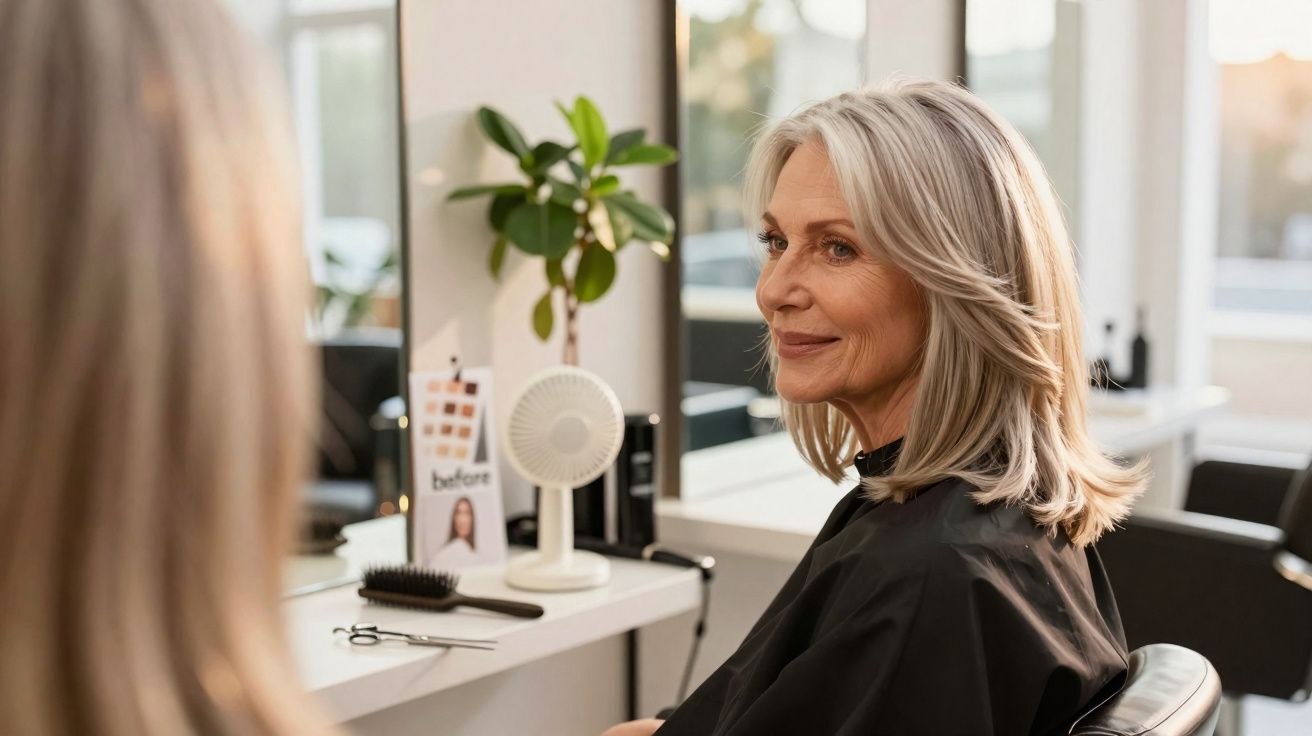
How hairdressers choose the perfect single, uniform shade
To get the effect right, it isn’t enough to say “just make it all brown” or “go fully blonde”. Professionals weigh up several factors:
- Skin undertone: warm, neutral or cool-this guides whether an ashy or golden result will suit best.
- Eye colour: green eyes often sit well with copper and red undertones, while brown eyes tend to pair beautifully with rich browns and coffee tones.
- Hair type: curls carry strong colours differently from straight hair, and fine hair often benefits from slightly softer shades.
- Everyday life: if you don’t have much time for upkeep, you’ll usually be steered towards a more muted, natural-looking colour rather than an ultra-clean platinum blonde.
Many salons now combine colour with gloss treatments, demi-permanent toners and gentler colour creams that don’t just shift the shade, but also help smooth the hair’s texture. The result is that “fresh-from-the-salon” look that’s currently everywhere.
Which colour directions are most in demand this spring
The rule is set-one colour, no gradient-but within that framework, hairdressers are repeatedly asked for a few key directions this season:
- Soft light tones: lighter shades without harsh iciness-more creamy than frosty. Ideal for anyone who loves blonde but doesn’t want it to look artificial.
- Rich browns: coffee, dark chocolate, hazelnut-deep, glossy browns that make hair look strong and well cared for.
- Intense black: sleek, deep black with a mirror sheen that looks especially graphic on straight lengths.
- Bright copper: from softer earthy tones to bold orange-copper-a colour that feels particularly lively in spring.
What’s interesting is that even when influencers present their look as “natural”, it’s often built on an extremely precise, single-tone colouration tailored exactly to their colouring.
Risks and what to consider before colouring
As appealing as the return to full colour may be, it isn’t risk-free. The wrong shade can make the face look washed out or add harshness. And if you’re coming from heavily lightened lengths, you’ll usually need several steps to reach a rich, uniform colour without overstressing the hair.
That’s why hairdressers recommend a thorough consultation in advance, and often a staged plan: first darkening or balancing gently, then setting the final tone at a second appointment. Extra care-such as masks, bonding treatments and heat protection products-is essential if you want the colour to stay glossy for longer.
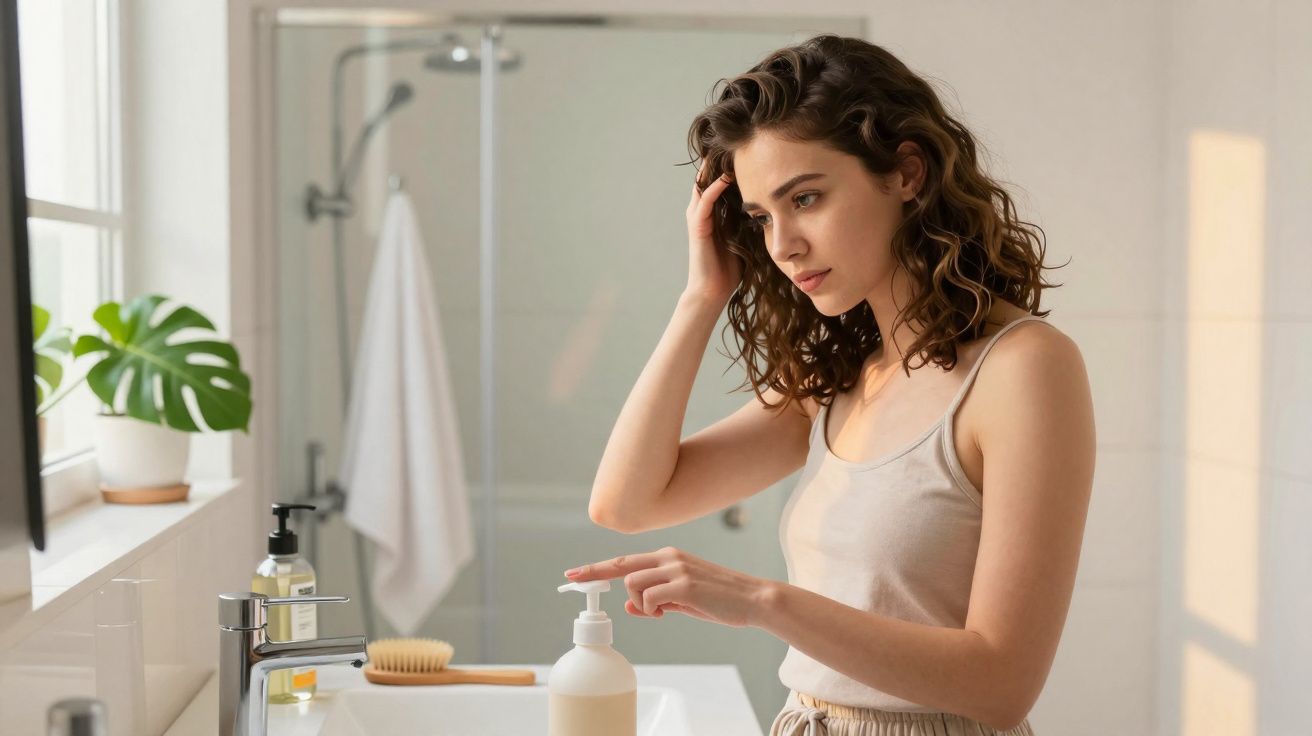
How to maintain the new uniform colour at home
To stop the effect fading in everyday life, a few simple routines help:
- Shampoo and conditioner formulated for coloured hair to keep the tone stable
- A moisture or shine mask once a week
- Heat protection before using a hairdryer, straighteners or curling wand
- Regular trims to keep the colour “block” looking crisp at the ends
It can also be worthwhile booking a glossing treatment at the salon every few weeks. This clear or lightly tinted service revives shine without demanding a full recolour each time.
Why this trend could last beyond a single season
Single-tone colouration meets several needs at once: a cared-for look, the appearance of more density, less pressure to book constant appointments, and a finish that photographs beautifully. That combination is what makes it so powerful. For many who’ve worn highlights for years, the first full colour can feel like a real “reset for the head”.
It’s also striking how easily a uniform hair colour pairs with other trends-minimalist cuts, clean make-up looks, or glossy, sleek styling. And if you want to play with nuance later on, you can add a subtle shimmer towards gold or ash without returning to complex highlight patterns.
For hairdressers, that can mean less time spent on fiddly foils and more room for tailoring the shade and building a care plan. For clients, it means a clearly defined hair colour that looks great without tricks-and that’s exactly why it’s so sought-after this spring.

Comments
No comments yet. Be the first to comment!
Leave a Comment