
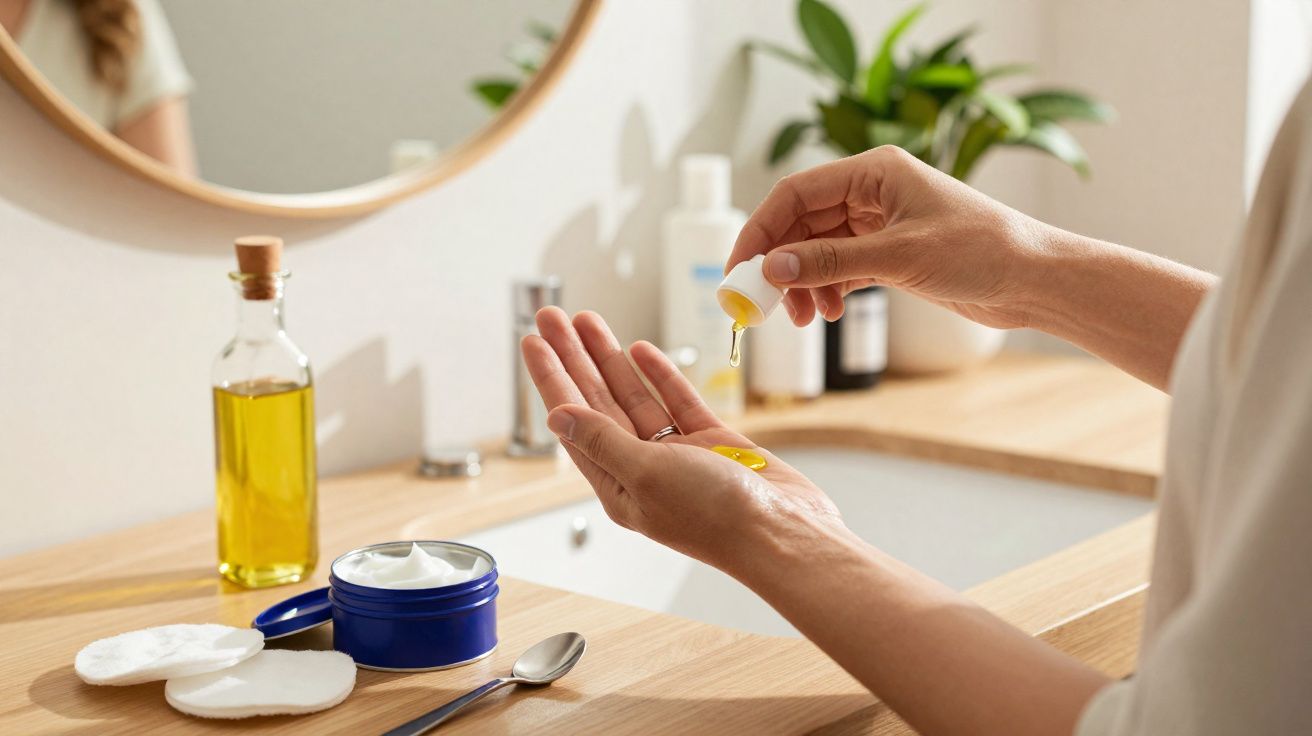
The combination sounds almost laughably basic: everyday olive oil paired with classic Nivea cream. Supporters say it increases glow, relieves that tight, uncomfortable feeling, and helps make-up sit more smoothly. The concept has been around for years, but it’s gaining fresh traction as people look for low-cost routines that still feel soothing and reliably effective.
What sparked the trend
Short-form videos and online forums have pushed renewed interest in old-fashioned “layering” for moisture. Many viewers are after fewer steps, a smaller spend, and skin that looks plumper by morning. That’s where two familiar products have returned to centre stage: Nivea cream for its nostalgic, seal-it-in feel, and olive oil for its cushiony slip, subtle sheen, and that cupboard-to-skincare appeal.
The iconic blue tin, revisited: Nivea cream
Nivea cream is famously rich - and that weight is the point. It relies on occlusive ingredients to slow water loss from the skin’s surface. Plenty of people also reach for it as a speedy make-up remover or as a 10-minute “hydration mask”. Some pat a small amount beneath the eyes at night for extra comfort and padding. It won’t erase lines, but by holding in moisture it can soften the look of dryness and fine crêpiness.
Why olive oil keeps showing up
Olive oil contains plenty of oleic acid plus natural antioxidants, including vitamin E. It helps products spread, makes facial massage easier, and leaves a dewy finish that dry skin often lacks.
That said, olive oil isn’t a universal win. Because it’s high in oleic acid, some sensitive or acne-prone skin can feel greasy or notice more congestion. Extra-virgin olive oil offers more antioxidants, but it also carries more naturally occurring fragrance compounds, which can bother a small number of users.
Mixing the two builds a heavy, protective layer that reduces transepidermal water loss. The skin holds onto water longer, so it looks smoother and bouncier by morning.
What dermatology says right now
Occlusives (such as petrolatum-based products) are well known for reducing water loss and supporting the skin barrier. Blending an occlusive cream with an oil tends to change the “slip” and sensory feel more than the underlying performance.
Research on olive oil is mixed: small studies suggest it may disrupt the barrier in certain sensitive skin types, while many people use it without issues. Sunflower seed oil and squalane are often gentler options for a wide range of skin types. Classic Nivea cream can be very effective but undeniably heavy; in humid weather or on breakout-prone areas it may simply feel too much.
Potential downsides to watch
- Clogging risk: thicker layers can congest pores, especially across the T-zone (nose, chin and forehead).
- Sensitivity: fragrance in Nivea and natural compounds in olive oil can irritate reactive skin.
- Layering conflicts: oils may interfere with certain make-up and sunscreen textures if applied underneath.
- Shine: the finish can read as greasy in daylight or on camera.
| Skin type | Likely feel | Suggested tweak | Frequency |
|---|---|---|---|
| Very dry or mature | Comforting, rich | Apply over damp skin; keep full ratio | 2–3 nights/week |
| Normal to dry | Rich at first | Use half the oil; tissue off excess | 1–2 nights/week |
| Combination | Heavy on T-zone | Spot-treat cheeks only | As needed |
| Oily or acne-prone | Greasy, pore risk | Swap olive oil for squalane; thin layer | Occasional |
| Sensitive | Varies | Patch test; try sunflower oil or skip oil | Trial basis |
How people mix and apply it
The version circulating online is simple and takes minutes.
- Combine 2 tablespoons of Nivea cream (about 30 ml) with 1 tablespoon of extra-virgin olive oil (about 15 ml) in a clean dish, using a clean spoon.
- Smooth over clean, slightly damp skin and massage in small circular motions.
- Leave it for 15 minutes, then lightly blot away any excess with tissue - or rinse with lukewarm water if you prefer a less heavy feel.
People use the blend on the face, neck, hands, elbows and knees. Night-time is usually best, around one to three evenings per week, depending on how dry your skin is and what the climate is doing.
Who might benefit most
This mix tends to suit very dry, tight-feeling or mature skin. It can also help with winter-flaky cheeks and hands that split after frequent washing. Some use it as a short-term “seal” over a hydrating serum when central heating or air conditioning is constantly running.
Who should skip or tweak
If your skin is acne-prone, oily, or easily congested, you may not enjoy it on the T-zone. If you have seborrhoeic dermatitis, it’s wise to patch test first. Anyone sensitive to fragrance should remember that classic Nivea cream is scented. If you react easily, consider fragrance-free occlusives, or swap olive oil for squalane.
Patch test on the jawline or inner arm for 24 hours. Start with a pea-sized amount on the face, and use it at night to avoid daytime shine.
Cost check and practical recipe
Using 2 tablespoons of Nivea cream plus 1 tablespoon of olive oil usually gives enough product for several face-and-neck applications. If a 150 ml tin costs roughly the price of a couple of coffees, each mixed batch works out at only a few pence. In tighter times, that “stretch what you already own” practicality is a major part of the appeal.
Storage and hygiene
- Mix only what you’ll use that night to reduce the risk of contamination.
- Scoop from the tin with a clean spatula or spoon rather than fingers.
- Seal the lid properly, and store the oil away from heat and direct sunlight.
Smart ways to tweak the hack
No olive oil in the house - or simply not a fan? A few drops of squalane can give a lighter, less greasy glide. Sunflower seed oil is often better tolerated by reactive skin than olive oil.
Another approach is to apply a hydrating serum (such as glycerin or hyaluronic acid) onto damp skin and then use Nivea on top, on its own, to lock it in. That keeps the barrier-support feel without adding extra oil.
How to fit it into a routine
- Keep it to night-time, after cleansing, and avoid applying directly into the eye area.
- If you use retinoids, wait 15 minutes and then apply the mix to buffer potential dryness.
- Don’t combine it with sunscreen - apply sunscreen in the morning on clean, dry skin.
Think of the blend as a cold-weather or crisis product: pull it out when skin feels rough, tight, wind-burned, or post-flight.
Extra notes that matter
Extra-virgin olive oil tends to contain more antioxidants, but it can smell stronger and vary more from batch to batch. Refined olive oil often feels lighter, though it contains fewer protective compounds. If your oil smells sharp or stale, it may be oxidised - don’t use it on your face.
Results also shift with season and location. In dry winter air, this mixture can really come into its own. In hot, humid months, use a thinner layer or avoid the T-zone altogether. On hands, elbows and heels, it can be useful year-round. If you’re prone to closed comedones, keep it mainly to the cheeks and patch test frequently.
A final practical point: how you massage it in makes a difference. Work from the centre of the face outwards with light pressure for 60 seconds. The added slip reduces tugging, warmth helps it spread, and the short pause gives the cream time to settle. Only blot or rinse if you want to minimise residue on your pillow.




Comments
No comments yet. Be the first to comment!
Leave a Comment