
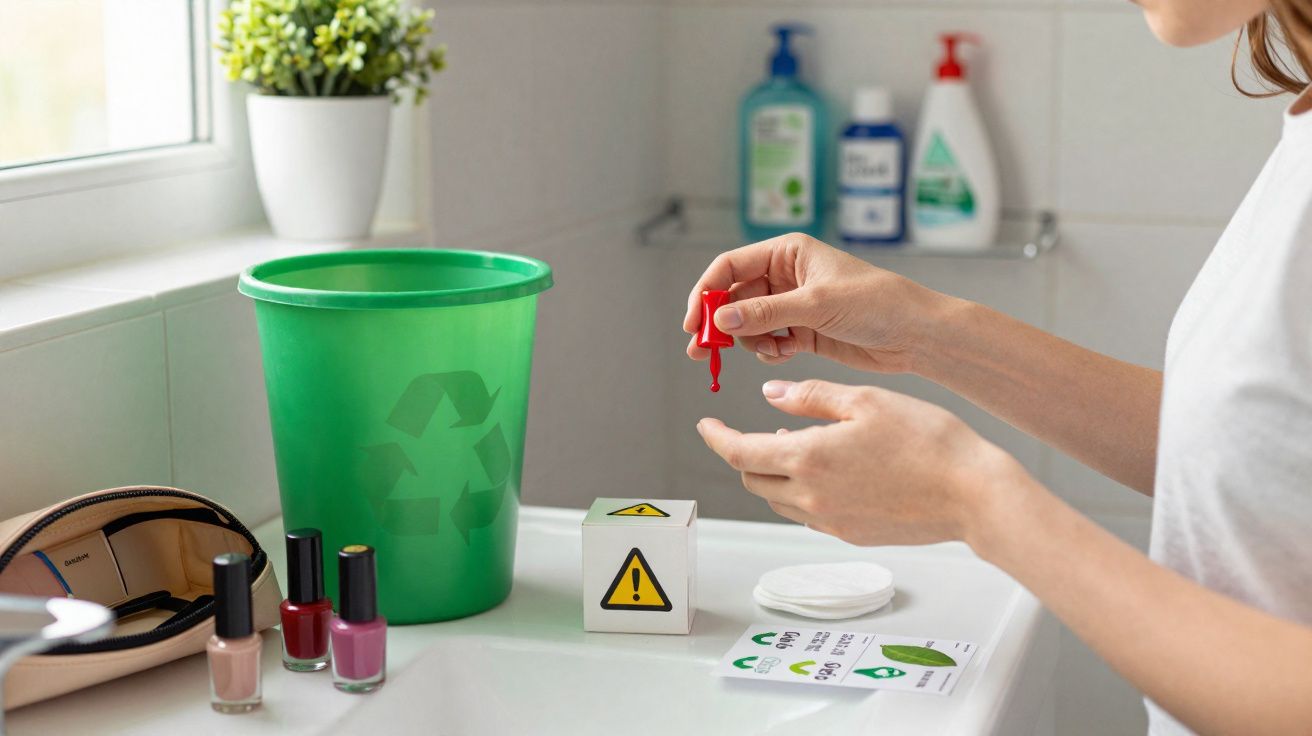
When tidying the bathroom, old nail varnish often ends up in the bin almost automatically - a small reflex with awkward consequences for the environment, health and your wallet.
During a spring clean, many people clear out dried-up cosmetics and toss old nail varnish alongside cotton pads and empty tubes. It sounds harmless, but it isn’t. Nail varnish is one of those wastes that can become tricky once it reaches the disposal system - because of its ingredients, its fire risk and the potential for fines. One unassuming bottle can create several issues if it goes into the wrong container.
Why that small glass bottle does not belong in the glass bank
The common bathroom recycling mistake
Plenty of people sort nail varnish the way they sort jam jars or wine bottles. Glass goes in the glass bank, so in it goes - that’s the thinking. That rule works for bottles and preserving jars, but not for cosmetic packaging that still contains chemical residues.
Not all glass is the same. Industry uses various types of glass with different formulations, and that is exactly why nail varnish bottles can disrupt glass recycling.
What makes nail varnish bottles different from ordinary glass
Packaging for cosmetics is often specially processed:
- tinted or coated to protect the contents from light
- reinforced so the glass is less likely to break
- made with a chemical composition that differs from standard container glass
The shape also matters: small, thick bottles with narrow necks. In sorting facilities, these tiny containers can slip through conveyor systems more easily or be misread by sensors.
Nail varnish bottles interfere with the recycling process - and, with brushes and chemical residues inside, they become contaminants in the waste-glass stream.
Inside there are almost always traces of varnish, plus a plastic brush and often a cap containing metal and/or plastic. These residues contaminate the glass fragments (“cullet”) so heavily that hygienic bottles can no longer be produced from them. For the glass industry, that is a major quality issue.
Nail varnish as an environmental problem: what is really in the bottle
Hazardous substances in bright colours
Nail varnish may look like a harmless fashion item, but chemically it is a complex blend. Many formulations contain solvents and additives that, in larger quantities, can harm the environment and health. Common examples include:
- solvents that evaporate easily and add to air pollution
- plasticisers that can accumulate in the environment
- hard resins and plastics that break down only slowly
If a bottle with leftovers is simply incinerated with general rubbish, toxic fumes can be produced, placing extra strain on filtration systems at waste-to-energy plants. If such substances end up on landfill or in fly-tipped waste, they can contaminate soil and groundwater over the long term.
Fire risk in wheelie bins and refuse lorries
Nail varnish is not only chemically problematic - it is also highly flammable. This is particularly true for fresh or half-full bottles and products with a high solvent content.
In collection vehicles, waste is compressed hydraulically. Bottles can shatter in the process. If the released solvents meet other materials or a spark occurs, the mixture can, in extreme cases, ignite.
A small glass bottle can trigger a fire in a refuse lorry - a real risk for waste workers and local residents.
Flammable chemicals also increase the danger in waste bunkers at incineration plants or in overfilled shared bins in basements. Disposing of nail varnish incorrectly exposes people in the waste sector to unnecessary risks.
Empty or half-full: what happens to the contents makes all the difference
The almost mythical scenario: completely empty and spotless
In theory, a container that is entirely empty and genuinely clean could be handled like ordinary packaging. In practice, that is nearly impossible with nail varnish.
A narrow neck, a viscous product and the brush inside mean there is almost always some residue left behind. To rinse the glass properly you would have to use a lot of solvent - which merely shifts the problematic substances into the liquid and creates additional hazardous waste.
The usual scenario: a residue that makes it hazardous
In most homes, bottles end up being thrown away even though there is still a small layer of varnish at the bottom. Sometimes it is thick, sometimes sticky, sometimes almost gone - but rarely truly empty.
As soon as there is still varnish in the bottle, it no longer counts as normal packaging but as hazardous waste.
That small remainder is enough for the product to be classified as special waste. Disposal then no longer follows standard household-waste rules, but specific requirements for chemicals and flammable substances.
An expensive mistake: what fines you could face
When incorrect sorting costs councils money
In recent years, towns and councils have tightened up checks. Mis-sorted waste creates significant extra costs in sorting facilities and disposal, so waste services are paying closer attention.
If inspectors find materials in a bin or in yellow recycling sacks that should not be there - such as solvents, paint residues or other problematic substances - it may be treated as incorrect disposal. Many local authorities apply either a warning charge or a flat fee for this.
From €35 to €75 - and higher
If you are caught disposing of items incorrectly, you often have to expect at least around €35. Refuse crews or contracted inspectors can charge this where prohibited substances are clearly identified in household waste.
A small bottle of nail varnish can quickly lead to a fine, with extra charges for late payment or repeat offences.
If payment is delayed or further breaches occur, the amounts can rise quickly. For illegal dumping - for instance, if someone leaves chemicals in a park, woodland or by the roadside - several hundred euros may be due. In some cases, criminal proceedings may also follow if the environmental damage is substantial.
Where to put old nail varnish: how to dispose of it correctly
What “hazardous waste in small containers” actually means
Legally, nail varnish is usually grouped with household problem wastes that also include leftover paints and varnishes, aerosol cans, adhesives or pesticides. These substances are incinerated in specialist facilities at very high temperatures. Filter systems ensure that no, or only very small, quantities of pollutants reach the air.
The costs of this system are ultimately covered through levies and disposal charges - and, in the end, also by manufacturers. For private households, dropping such items off at collection points is free in many areas.
How to find the right collection point near you
The safest option is your local council recycling centre. Almost every larger local authority has a central site, and some towns also run mobile collection services that stop in neighbourhoods or market squares on set days.
- Search your council or county website for “recycling centre” or “household hazardous waste collection”
- Check opening times and acceptance rules
- Group nail varnish with old cleaners, aerosol cans and similar items
- Transport everything in a sturdy box, keeping bottles upright where possible
At the recycling centre, staff usually take the items directly from you and place them into dedicated containers. That way, they are guaranteed to follow the correct disposal route.
Before you throw it away: extend the life of your nail varnish
Tips to make thickened nail varnish runny again
Many products do not need to become waste so quickly. If nail varnish starts to thicken, a few simple rescue attempts can help.
- Add a few drops of a dedicated nail varnish thinner to the bottle
- Roll the bottle between your hands rather than shaking it vigorously
- After a short rest, test the varnish and add a little more if needed
With minimal effort, many varnishes can stay usable for several more months - less waste, less hazardous material.
Experts advise against using standard nail varnish remover as a thinner: it changes the product’s formulation, can reduce adhesion and shine, and creates chemical residues all over again.
If you no longer like the colour: pass it on or use it creatively
Bottles often get thrown away not because they are empty, but because you have grown tired of the shade. Before they sit unused in a cupboard, it is worth reconsidering:
- ask friends, colleagues or neighbours whether anyone would like it
- contact social enterprises or projects in beauty and personal care
- use it for craft projects, such as marking keys or decorating small items
Nail varnish adheres well to metal, stone and plastic. If you enjoy crafts, you can colour-code keys, mark screw heads, paint small stones or differentiate garden tools. That turns a potential hazardous waste item into a practical everyday tool.
What nail varnish reveals about how we handle household chemicals
Nail varnish is just one example of many products we use at home without much thought: hairsprays, cleaners, glues, solvents, air fresheners. All of them contain chemicals that have to end up somewhere. Taking a moment to dispose of them properly helps protect waste workers, neighbours and the environment.
A simple rule of thumb applies: anything that smells strongly, dissolves, sticks, burns or comes with warnings does not belong in ordinary household waste - it belongs in the household hazardous waste collection. Following that principle avoids trouble with fines and helps prevent seemingly harmless everyday products from becoming genuine environmental traps.






Comments
No comments yet. Be the first to comment!
Leave a Comment