
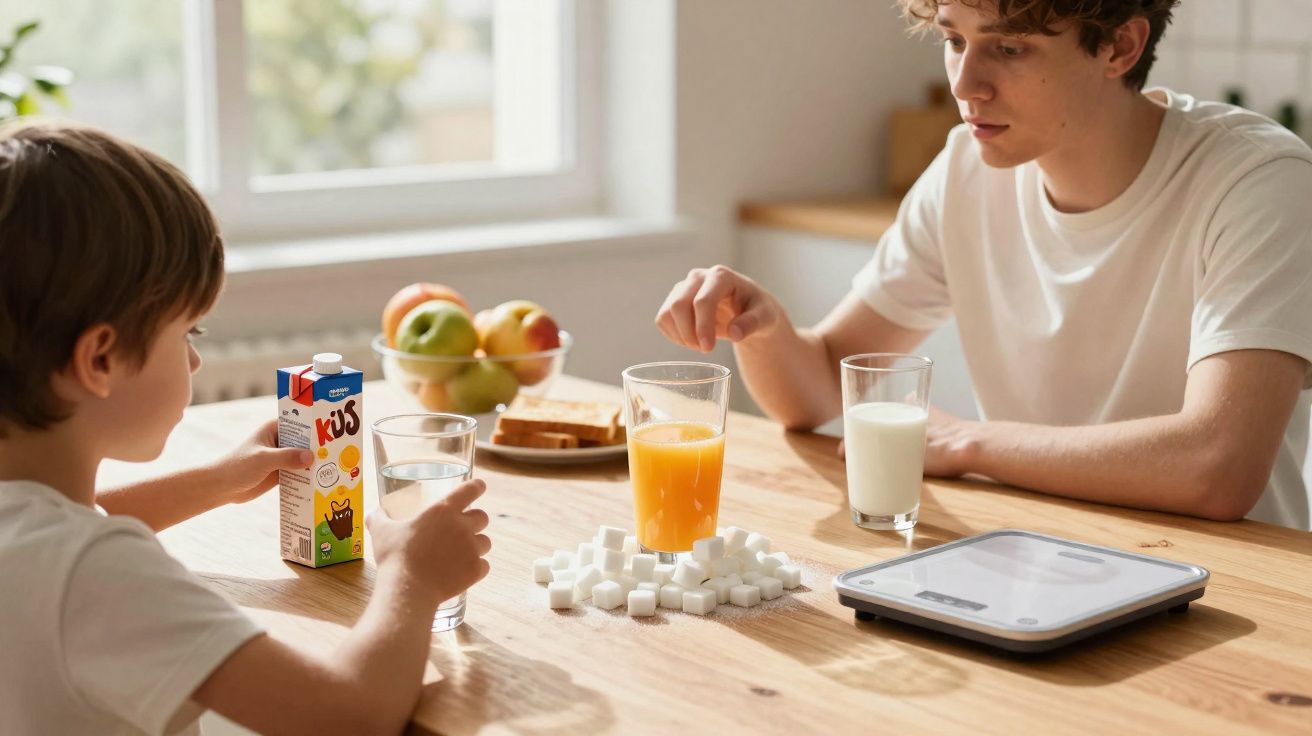
Orange juice in a glass, cocoa in a mug, perhaps a packaged smoothie too: what looks wholesome and caring often turns out, on closer inspection, to be liquid sweetness. A nutrition expert warns that, particularly at breakfast, parents seriously underestimate how much sugar is hiding in seemingly innocent children’s favourites - and what that can mean for concentration, hunger and long-term health.
Popular breakfast drinks - why they can be misleading
A familiar sight on many breakfast tables is a large glass of orange juice. The carton says “100% fruit”, no added sugar, maybe it even carries an organic label. Plenty of parents feel that makes it a sensible choice. From a nutritional perspective, however, it is viewed far more critically.
“A glass of juice affects the body almost like a soft drink - just with a healthy image.”
The reason is straightforward: when fruit is juiced, the fibre from the whole fruit is removed. What remains is a drink high in so-called “free sugar”. Because this sugar is dissolved, it reaches the bloodstream more quickly and pushes blood glucose up fast.
The expert breaks it down like this: one large glass of orange juice can easily contain around 18 grams of sugar - more than five teaspoons. The World Health Organization recommends, depending on age, roughly 25 grams of free sugar per day as an upper limit for children. That means a single breakfast drink can already account for most of the daily allowance.
The much-loved cocoa drink is often just as problematic. Many instant powders parents stir into milk are made up largely of sugar; cocoa is frequently listed only second on the ingredients. In plain terms, the child is effectively drinking sweetened cocoa water - not a “good milk-based meal”.
How liquid sugar affects the body
Sugar in a drink does not behave the same way as sugar in solid food. Bite into an apple and you have to chew; you eat more slowly, and the fibre helps slow the release of sugar into the blood. With drinks, children often down the portion in just a couple of minutes.
“The result: a rapid rise in blood sugar - followed by an equally rapid crash.”
Typical effects of this kind of morning “sugar hit” include:
- A brief burst of energy: the child may seem hyper or unusually alert.
- After 60 to 90 minutes, a noticeable dip: tiredness, irritability and lapses in concentration.
- Hunger returning quickly, especially cravings for sweets and snacks.
At school, that can become a real issue. If a child drops into a blood-sugar low during the first or second lesson, it is harder to concentrate, listen or sit still. Teachers repeatedly report that children are more restless and switch off sooner after an overly sugary breakfast.
How much sugar is really in the glass?
Checking labels helps - but it can also be confusing. Packaging usually lists sugar in grams per 100 millilitres or per serving. Converting that to teaspoons makes it easier to visualise.
| Drink (example) | Sugar per 200 ml | Roughly equivalent to |
|---|---|---|
| Orange juice, 100% fruit | 16–20 g | 4–5 teaspoons of sugar |
| Cocoa drink made with instant powder | 18–25 g | 4.5–6 teaspoons of sugar |
| “Fruit nectar” or “fruit juice drink” | 20–25 g | 5–6 teaspoons of sugar |
| Sweetened iced teas | 16–22 g | 4–5.5 teaspoons of sugar |
Many children do not stop at one glass. If a cup is topped up at breakfast and then offered again later in the morning, 30 to 40 grams of sugar can quickly end up in the body from drinks alone - before you even add sweet spreads, cereal or pastries.
Why children barely “notice” liquid sugar
One of the biggest pitfalls is that calories in drinks do little to fill you up. Feeling full depends heavily on stomach volume, chewing time and the presence of fibre - all of which are largely missing in sugary drinks.
At the same time, the liver receives a large sugar load in one go and converts some of the excess into fat. Over the long term, frequent high-sugar drinks increase the risk of excess weight, fatty liver, dental problems and metabolic disturbances.
“The body takes in liquid sugar on the side - without feeling full.”
In the moment, mornings can seem easier for parents: the child is content, eats well, happily drinks. Over time, though, a pattern forms in which taste becomes strongly tuned to sweetness. Unsweetened drinks then seem dull or “bitter”.
Breakfast drinks for children: what to offer instead in the morning
The good news is that nobody has to completely overhaul the breakfast table. A few clear choices can significantly reduce sugar spikes without making a child feel they are missing out.
- Make water the default drink: put tap water or still mineral water on the table - for children and adults.
- Unsweetened herbal or fruit teas: served lukewarm or slightly cooled, these are popular with many children.
- Milk on its own, or with very little cocoa: if cocoa is non-negotiable, cut the powder quantity substantially.
- Diluted juice: one part juice to two parts water - this halves the sugar in the glass.
- Occasionally, a small juice: a small glass (100 ml) at breakfast is manageable if the rest of the day is otherwise low in sugar.
What matters is a simple rule: thirst is quenched with water. Sweet drinks are not thirst-quenchers - they are closer to a dessert or an occasional treat.
How to switch without tears
Many parents worry their child will strongly object if juice or cocoa is reduced. In reality, change is often smoother than expected when it happens gradually.
- Reduce the amount slowly: rather than stopping overnight, pour a little less juice each day.
- Mix with water: start at 50:50, then move to more water and less juice over time.
- Cut back the sweetness: for cocoa, remove one teaspoon of powder; after a week, remove another.
- Create new routines: colourful cups, ice cubes, cucumber slices or a wedge of lemon can make water feel more interesting.
- Lead by example: parents who drink water themselves are more convincing than any explanation.
“Taste is learned: children get used to less sweetness faster than many people think.”
It also helps to involve children in an age-appropriate way: explain that too much sugar can make you tired, harm teeth or cause tummy aches. Many children respond surprisingly well to “challenges” - for example, who can manage a whole week of drinking only water in the morning?
Liquid sugar, free sugar - what do these terms actually mean?
In discussions about healthy eating for children, the term “free sugar” comes up a lot. It refers to all sugars added to foods, as well as sugars naturally present in juices, syrups and honey. Free sugar is different from the sugar in an unprocessed piece of fruit, where it is bound within the cell structure.
An apple contains sugar, but it also provides fibre, vitamins and plant compounds. Digestion takes time, so blood sugar rises more slowly. A glass of apple juice, by contrast, can contain the sugar from several apples at once - without the fibre. That makes juice act much “faster” in the body and more taxing.
Why small changes can make a big difference
No one is asking parents to eliminate all sweetness from everyday life from tomorrow. What counts is the total over weeks and months. Swapping a large beaker of juice in the morning for a small glass, and offering water alongside it, noticeably reduces daily sugar intake.
Other routines can be adjusted too: choose oats with fresh fruit instead of sugary cereal; opt for nut butter with no added sugar more often than chocolate spread; pack a handful of nuts or a piece of cheese for school instead of sweets. Combined with lower-sugar drinks, a child’s preferences gradually shift.
“The real trap isn’t the one mug of cocoa - it’s the long-term habit of sweet drinks.”
Starting early builds a foundation: children who grow up with water and unsweetened drinks tend to ask for fizzy drinks and juice spritzers far less later on. For parents, that often means less conflict at the breakfast table - and for children, a start to the day that genuinely supports both body and concentration.




Comments
No comments yet. Be the first to comment!
Leave a Comment