
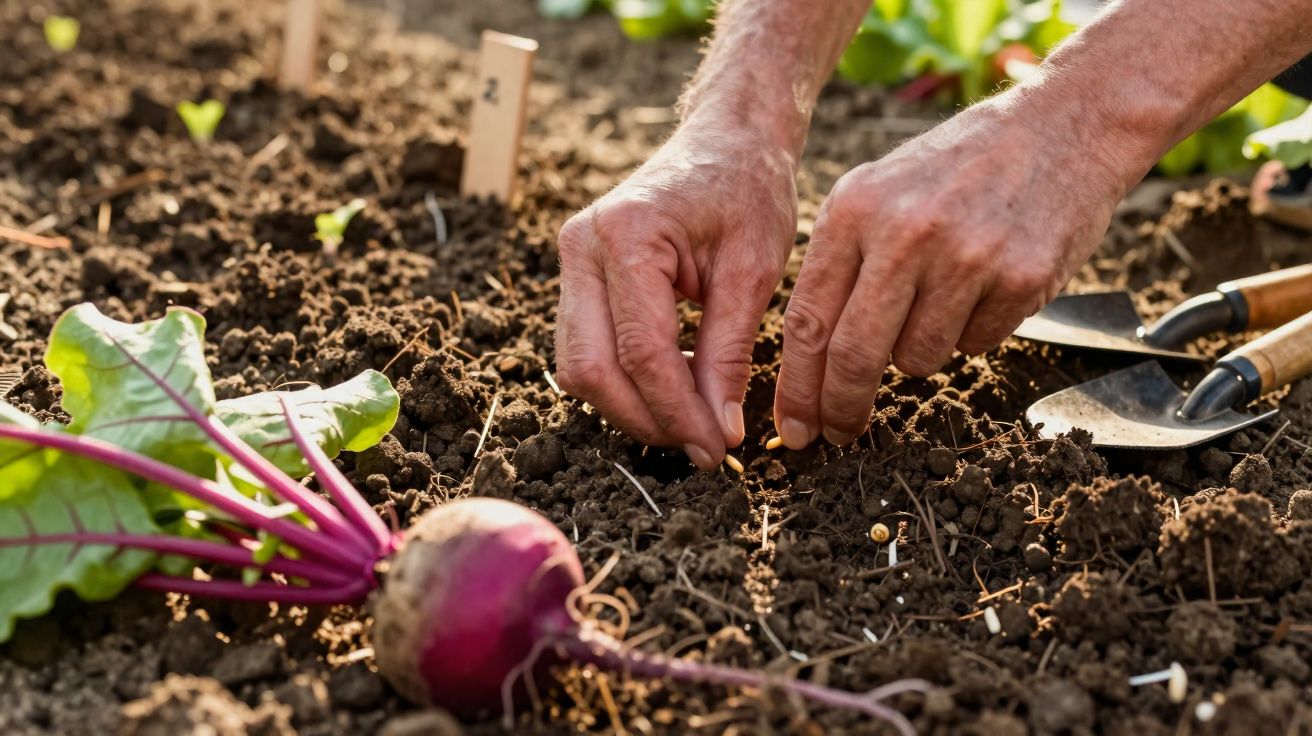
Plenty of gardeners sow beetroot in spring with enthusiasm - then later wonder why they end up with long, misshapen roots instead of neat, round bulbs.
The sowing window can be spot on, the soil can look nicely loose, and yet the bulbs still stay small or turn pointed. The secret behind perfectly rounded beetroot roots is often not a miracle feed, but a nearly forgotten little move in the seed furrow - it costs nothing and takes only seconds.
Why beetroot so often fails to grow round
Beetroot is one of the tougher vegetables to grow in a bed. Sowing in April is, in principle, the right call. Even so, the results are frequently underwhelming: elongated beets, bent roots, cracking, or knobbly shapes.
“The shape of the bulb is decided in the first few weeks after sowing - especially in the area directly beneath the seed.”
At first, the main root drives straight down. If the ground beneath the seed is loose at depth, it simply keeps descending. The plant then invests its energy in growing downward rather than outward. The outcome is a more spindle-like root instead of the round storage bulb you were hoping for.
That is exactly where the “forgotten” technique comes in: deliberately firming the soil at the base of the seed furrow.
A well-made seedbed: the first step towards attractive bulbs
Before the actual trick comes into play, beetroot still needs a properly prepared seedbed. Without that foundation, even the best tip won’t deliver much.
Preparing the soil correctly
Loosen the soil only in the top few centimetres rather than digging deeply. Light surface loosening with a garden fork or cultivator tine is usually more than enough.
- Prepare the top 5–10 cm into a fine crumb, ideally like tiny semolina grains
- Remove stones and large clods thoroughly
- Work in mature compost, but don’t overdo it
- Wait until the soil has warmed after a few sunny days
Cold, wet ground encourages seed rot. A little patience often pays back with more even germination and sturdier young plants.
The almost forgotten trick for beetroot: firm pressure at the bottom of the seed furrow
Now for the key action that encourages the root to bulk out rather than dive down.
How firming the seed furrow works
First, draw a seed furrow around 2–3 cm deep. Normally you would drop the seed in straight away - this is the step to change: compact the base of the furrow before sowing.
Use the back of a rake, the edge of a wooden board, or simply the heel of your shoe, and press the bottom of the furrow down firmly. You are creating a solid “floor” beneath where the seed will sit.
“When the main root meets this compacted layer, it stops going deeper - the beet begins to grow outward.”
The plant diverts sideways; its energy no longer goes into a long taproot but into a tighter, rounder bulb. That shift is what produces the desired shape.
Common mistakes at this stage
- Tapping lightly rather than pressing down properly
- Compacting the whole bed instead of only the narrow line in the furrow
- Firming the surface after sowing as well - which makes emergence harder
Key point: make only the furrow base firm. Keep the soil above loose so seedlings can push through easily.
Correct sowing distances: less really is more
Beetroot seeds are clustered into small lumps called glomerules. Each glomerule contains several seedlings. If you sow too close together, you end up with a tangle of roots competing for space.
A simple rule of thumb helps:
| Step | Spacing |
|---|---|
| Placing the seed clusters in the furrow | about 5 cm between glomerules |
| Final spacing after thinning | about 20 cm between plants |
After placing the glomerules, cover them with fine, crumbly soil. Only draw it over lightly-don’t press it down. A gentle smoothing with your hand is enough for seedlings to break through in around ten days.
Thinning out: painful, but essential
As soon as the young plants have three to four true leaves, the bed becomes crowded. This is the time for thinning. Many hobby gardeners hesitate because every seedling looks healthy. Leaving them all in place costs you yield and quality later.
“Only those who remove weaker seedlings consistently create space for strong, well-shaped bulbs.”
Keep roughly 20 cm between the plants you leave. Don’t yank the extras out; instead, twist them out carefully or sever them with a small knife so you don’t damage neighbouring roots.
Care during the growing period
Consistent moisture instead of extremes from the hose
Beetroot dislikes sharp swings between drought and waterlogging. Irregular watering often leads to cracking and tough texture.
- During dry spells, water regularly but moderately
- Apply water directly to the root zone rather than sprinkling widely
- Keep the leaves as dry as possible to reduce fungal problems
A thin mulch layer made from dried grass clippings or shredded leaves helps retain moisture, reduces surface capping, and protects against severe drying.
Keep weeds under control
Weeds compete with the crop for both water and nutrients. In the first weeks especially, many weeds outpace beetroot.
It’s better to hoe or pull little and often every few days than to battle dense, well-rooted mats later. A tidy bed noticeably improves bulb development.
How to recognise the right time to harvest
Depending on the variety and weather, it takes around two to four months from sowing to harvest. A quick look at the bulb “shoulders” tells you a lot.
- The top of the bulb starts to push slightly above the soil
- The surface looks smooth, without deep cracks or heavy woodiness
- The skin shows an even colour, with no glassy patches
That is the ideal point to lift the root carefully with a garden fork and pull it out. Waiting too long can lead to woody flesh and loss of flavour.
What the compacted furrow base actually does
The pressure at the bottom of the furrow works like an invisible barrier. Specialists describe this as a disrupted taproot. Faced with the obstacle, the plant responds by producing side roots and increasing bulb growth in the upper zone.
Farmers have used this principle for a long time with different root vegetables. In home gardens, it has often been forgotten because soils are now commonly loosened deeply. This is where a deliberate counterbalance helps: loosen the surrounding soil well, but compact only the narrow strip at the base of the seed furrow.
More practical tips for even better results
If you want to refine bulb shape further, also pay attention to variety choice and companion planting. Rounder varieties naturally grow more compact. Combined with a firmed seed furrow base, the result looks especially even in the bed and on the plate.
Beetroot grows well alongside onions, lettuce, or French beans. Right next to heavy-feeding cabbages, it often suffers from competitive pressure. Rotating the position every few years reduces disease pressure and helps keep plants healthy.
With finely prepared soil, a firmly pressed furrow base, restrained sowing, and consistent thinning, a simple technique becomes a reliable method. Many disappointing beetroot harvests come down less to a lack of “green fingers” and more to this small, easily missed step in the seed furrow - which ultimately decides between thin roots and plump, round bulbs.





Comments
No comments yet. Be the first to comment!
Leave a Comment