
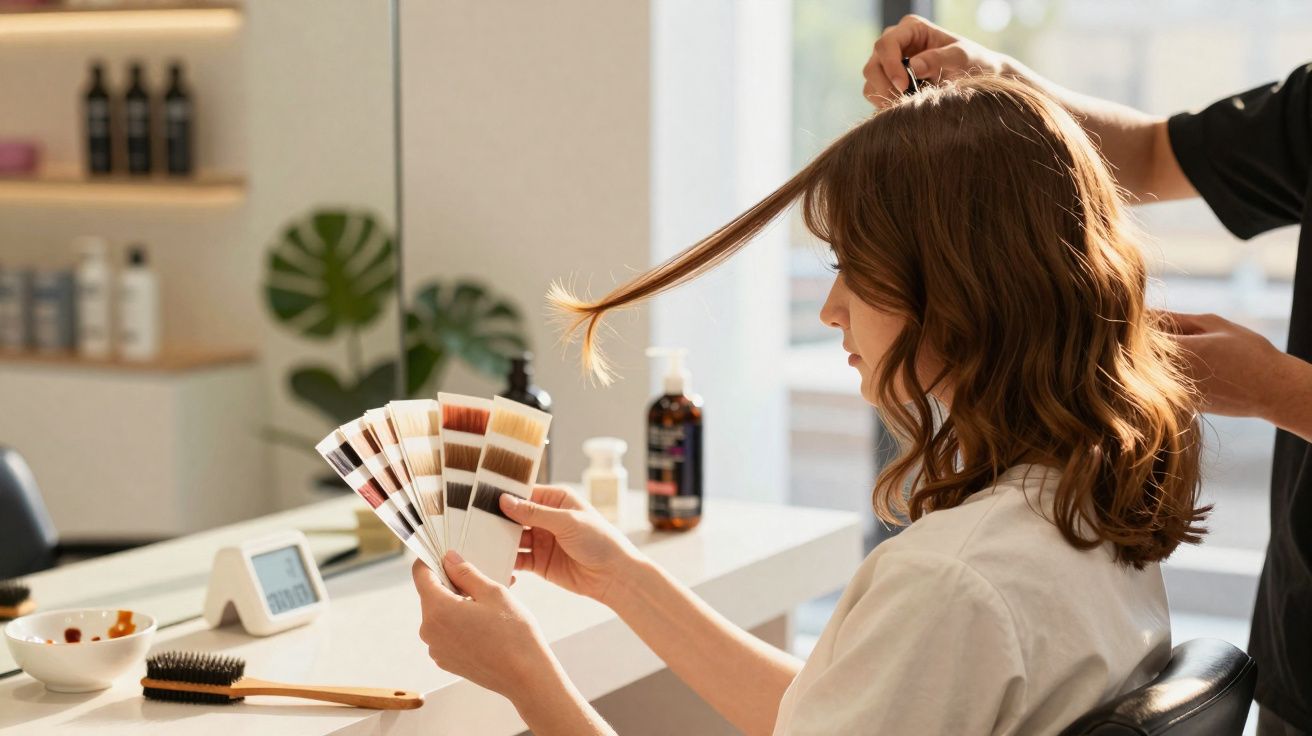
Yet your hair keeps a record of every chemical you put it through.
Hair colour trends change at a pace most of us struggle to match. Social media feeds encourage constant shade swaps, salons package up “creative colour” as a service, and box kits claim you can reinvent yourself in 30 minutes. Between the slick before-and-after shots sits the practical question: how frequently can you realistically dye your hair before you tip it into lasting damage?
What hair dye does to your strands
To judge how often you can colour your hair, it helps to understand what dye actually does to the hair fibre. One colouring appointment can alter the structure of the hair shaft permanently - not just its tone.
Permanent dyes and bleaches work by prising open the cuticle, the outer “shingle-like” layer that shields the inner cortex. Ammonia (or similar alkalising ingredients) raises the cuticle. Peroxide then removes natural pigment and allows new colour molecules to lodge inside.
Hair can handle a surprising amount of chemical stress, but damage builds up quietly long before you see breakage.
With each intense round of colouring, you can:
- Wear down the cuticle, leaving hair coarse and more porous
- Disrupt keratin bonds, which lowers strength and elasticity
- Raise dryness and frizz by compromising the natural lipid layer
- Make strands snag, knot and snap more readily under tension
Semi-permanent and temporary colours generally coat the surface more than they restructure the inside, and they tend to rely on gentler chemistry. They can still affect how hair feels, but typically not to the same degree as frequent bleaching or high-lift colour.
How often can you dye your hair safely? (hair dye timing)
There isn’t one universal “safe” interval. Your baseline hair health, what you’ve done to it before, and the type of product you’re using all influence when “too often” starts. In practice, colourists rely on ranges and rules of thumb rather than a single fixed number.
| Type of colouring | Typical safe frequency | Key conditions |
|---|---|---|
| Root touch-up (permanent) | Every 4–6 weeks | Keep application on regrowth only and don’t overlap onto the lengths |
| Full-head permanent colour (no bleach) | Every 8–12 weeks | Revive mid-lengths/ends with a gloss or toner instead of re-dyeing everything |
| Bleaching / lightening | Every 8–12 weeks minimum | Leave a longer gap if hair is fine, curly or already damaged |
| Semi-permanent colour | Every 3–4 weeks | You may go more often if your hair’s condition stays consistent |
If your hair still feels fragile after your last colour, the clock has not reset yet, no matter how long it has been.
Why hair type changes the rules
Two people can stick to the same colouring calendar and still end up with completely different outcomes. Your genetics, texture and strand thickness affect how much stress the fibre can tolerate.
Fine and thinning hair
Fine hair has a smaller overall diameter and often a more delicate cuticle. Bleach and high-lift dyes can process quickly on it - which may seem convenient, but it also increases the odds of breakage.
- Push appointments as far apart as your regrowth realistically allows.
- For tone shifts, lean towards semi-permanent colour or low-ammonia options.
- Skip double-processing (bleach plus permanent colour on the same day) unless a professional confirms it’s safe for your hair.
Curly and coily hair
Curly and coily patterns contain natural “bend points” along the strand where weakness is more likely. Those areas tend to dry out sooner and break more easily, and repeated colouring can amplify both issues.
Specialists frequently recommend:
- Longer intervals between colour services, often 10–12 weeks or more
- Partial methods such as balayage or highlights so some roots and lengths stay untouched
- A plan that includes both protein and moisture treatments alongside colouring
Virgin hair vs previously coloured hair
Hair that has never been dyed or bleached often tolerates the first change more easily. After it’s processed, the fibre never truly “goes back” to its original condition. Any additional chemical work stacks on top of what’s already been done.
Think of coloured hair as having a damage budget. Every bleaching session spends more of that budget, and you never get a full refund.
Bleach: the factor that changes your schedule
Bleach earns its reputation as the most aggressive colouring step. It doesn’t deposit colour; it removes pigment, and if pushed hard it can erode parts of the cortex.
Colourists typically stick to these baseline rules:
- Avoid full-head bleaching more often than every 8–12 weeks.
- Keep root-only bleaching to every 4–6 weeks at most, and prevent overlap onto previously lightened hair.
- Do strand tests before major shifts, particularly when moving from dark box dye to blonde.
If, when wet, your hair feels gummy and overly stretchy, if ends are breaking, or if you notice white dots along the hair, it’s a strong sign you’ve hit your bleaching limit for the next several months.
Signs you’re colouring too often
Most people only clock damage once it becomes obvious - hair collecting in the shower plughole or a frizzy halo no product can smooth. In reality, hair tends to flag problems earlier if you know what to look for.
Look out for these warning signs between dye sessions:
- Hair takes an unusually long time to dry, which can indicate high porosity and water retention.
- Strands break with gentle brushing, even when you use detangling spray.
- Ends feel rigid and rough despite conditioning.
- Colour turns uneven or patchy because compromised sections grab pigment differently.
- Your scalp burns or itches faster during processing than it used to.
When your hair starts misbehaving in new ways, the answer is rarely “more dye” – it is usually “more recovery time”.
Keeping hair healthier between colour sessions
The time between appointments matters just as much as the appointments themselves. Your routine during the gap either helps the fibre recover or nudges it closer to breakage.
Adjust your washing routine
Washing often can strip natural oils and fade colour sooner, which makes early top-ups more tempting. Many colourists recommend:
- If your routine allows, wash only two or three times per week.
- Use lukewarm water rather than very hot water, which can lift cuticles further.
- Choose sulphate-free shampoo, or gentle formulas labelled for coloured hair.
Focus on targeted treatments
Coloured hair generally does best with a balance of moisture and protein, not an overload of one. Excess protein can leave hair hard and fragile; too much moisture can make it feel limp.
A straightforward rotation can look like this:
- Once a week: a hydrating mask featuring ingredients such as glycerin, aloe or plant oils.
- Every 2–3 weeks: a strengthening step using proteins, peptides or bond-repair technology.
- Daily or as required: a light leave-in conditioner through mid-lengths and ends.
Dial down heat styling
Straighteners and curling wands can push already-processed hair past what it can handle. Pairing frequent colour with high heat tends to speed up damage.
To lower the strain:
- Let hair air-dry partway before you blow-dry.
- Apply heat protectant every time - including for “quick” touch-ups.
- Keep styling tools below 180°C / 356°F unless your hair is extremely resistant.
Smart colour strategies that reduce damage
Staying near your natural shade usually gives you more breathing room. Big jumps typically require stronger chemistry and more frequent maintenance.
Choose techniques that need less upkeep
Some approaches help you extend time between full services without looking like you’ve “let it go”:
- Balayage or foilyage keeps the root area softer, so regrowth lines appear less harsh.
- Shadow roots intentionally blend natural colour into the coloured lengths.
- Lowlighting adds depth back into over-bleached hair, which can reduce the pressure to lighten again.
The most sustainable hair colour is often the one that works with your natural base instead of fighting it every four weeks.
Use glosses and toners rather than full dyes
If your colour has gone flat but you don’t have much regrowth, a gloss or toner can restore tone without the full chemical burden. These options usually avoid strong developers and concentrate on shine and subtle adjustment.
Many salons now work in alternation: one visit for regrowth, the next for a gentle gloss through the lengths. That rhythm keeps hair looking fresh while giving it more rest.
When it’s time to take a colour break
At times, the best decision for hair health is to pause chemical services for a few months. It can feel extreme - especially if colour is part of your identity - but it often stops mild damage turning into something much worse.
A break is worth considering if:
- You can see obvious breakage near the roots or through mid-lengths, not only at the ends.
- Your stylist has to cut processing time sharply to avoid burning.
- Trims, masks and serums no longer change how your hair looks or behaves.
While you pause, temporary root sprays, hair mascaras or coloured powders can help blend regrowth. Scarves, headbands and a well-placed change of parting can also make the transition easier.
Extra angle: scalp health and long-term colouring
Hair dye discussions often fixate on the shaft, but your scalp matters too. Repeated exposure - especially to strong developers - can make the skin more reactive over time.
If you colour often, watch for:
- Ongoing itching or burning that lasts beyond a day after colouring
- Flaking or tightness that begins after trying a new product
- Small blisters or swelling around the hairline
Doing patch tests before changing brands or formulas lowers the risk of serious reactions. Some dermatologists also suggest that people who colour for decades keep a record of the products they’ve used, particularly if sensitivity increases with age.
Looking ahead: balancing self-expression and hair biology
Colour can boost your mood, mark a life shift, or simply make day-to-day styling more enjoyable. The chemistry behind those shades, however, isn’t influenced by trends. Hair fibres respond to timing, pH, heat and cumulative exposure - not how much you want a new look.
If you’re considering a major change, such as moving from black to platinum, it’s usually safer to treat it as a staged project rather than a single impulsive session. Spacing appointments, adding bond-protecting steps and accepting an in-between phase with softer tones can preserve years of length and texture. That route requires patience, but it keeps more options available if trends - or your preferences - shift again in six months.






Comments
No comments yet. Be the first to comment!
Leave a Comment